Home / Locations / Galle

Galle

A 17th-century Dutch fort that's still lived-in, not a museum piece — with a café, coworking and boutique-wellness scene that's grown up around it in the last decade.
CultureCoworkingCafésBoutique yoga
Region
South Coast
Best season
November–April
Known for
Fort, Cafés, Boutique hotels
Budget
USD 60–160/night
boutique fort hotels
About Galle

Galle isn’t a wellness town in the way Ahangama or Hiriketiya are — it’s a UNESCO-listed Dutch fort city, alive with residents and restaurants rather than preserved as a museum, and that’s rightly the main draw. But sitting at the exact midpoint of the south coast’s wellness corridor, with a growing café, coworking and boutique-yoga scene of its own, makes it the natural base for pairing ramparts and history with a short tuk-tuk ride to everything else.

Quick gut-check

Is Galle actually right for you?

Right for you if
You want history and architecture as the main event, with wellness as a convenient add-on.
You're using Galle as a strategic midpoint base for exploring the wider south coast wellness corridor.
You want proper restaurants, boutique shopping and a night out, not just beach-town cafés.
You can work around occasionally unreliable wifi and power if combining the trip with remote work.
Look elsewhere if
×
You want an untouched, non-gentrified old town experience — that version of the fort is largely gone.
×
You're coming purely for beach time — the fort itself has no beach; Unawatuna is a short trip away.
×
You want a serious, dedicated surf trip — Weligama and Hikkaduwa are both better equipped for it.
×
You need dependable, fast internet for demanding remote work — treat Galle's coworking scene as workable, not bulletproof.
Good to know before you go

About Galle

A fort that's still lived-in, not a museum piece

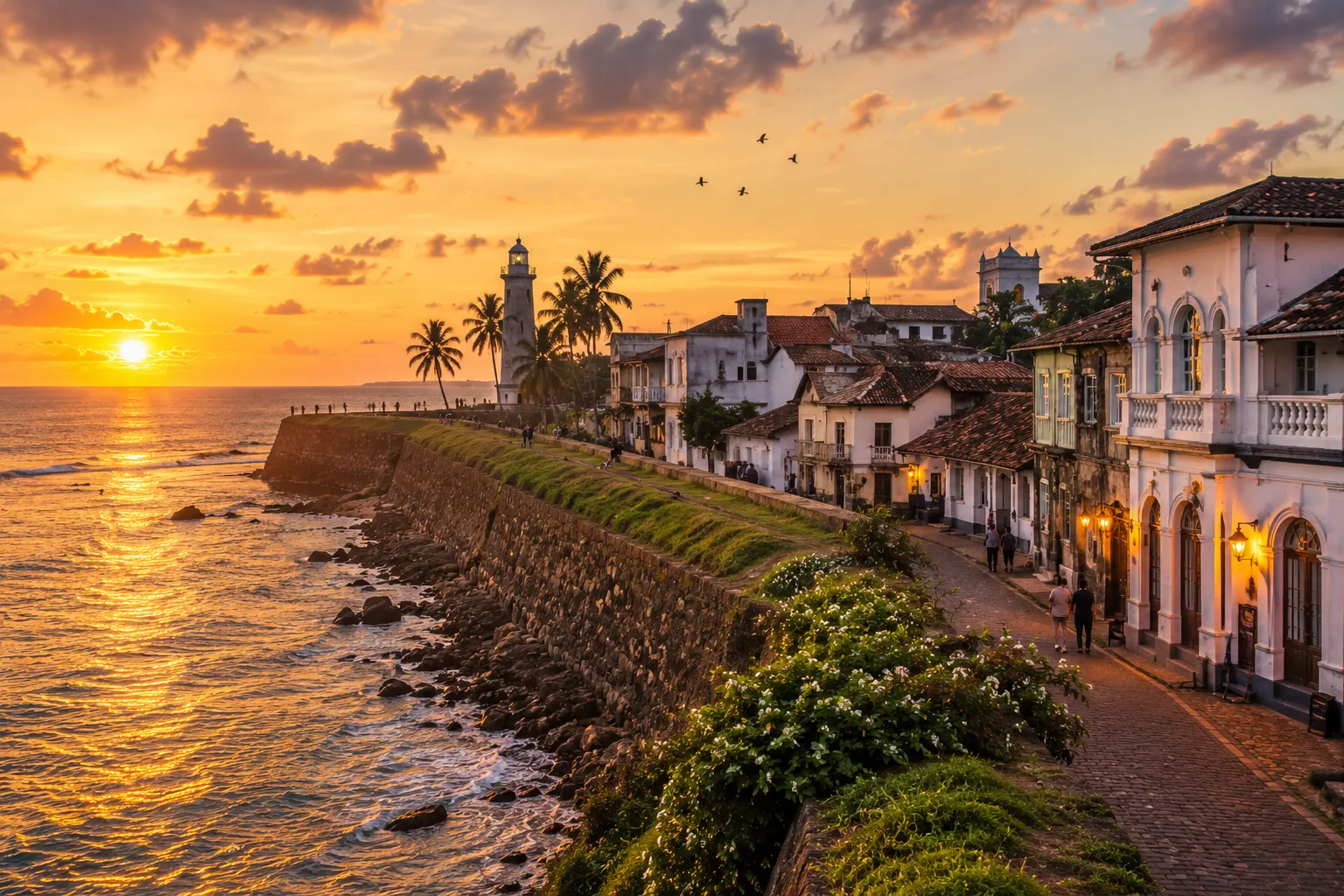
Galle Fort is a UNESCO World Heritage Site, first built by the Portuguese in 1588 and almost entirely rebuilt and expanded by the Dutch from 1649 onward, who encircled the full peninsula with roughly 2 kilometers of coral, granite and limestone walls. What sets it apart from many heritage sites is that people still live inside it — restaurants open for dinner, boutiques sell real things, and the rampart walk at sunset remains one of the best experiences in the country rather than a roped-off relic.

The gentrification is real, and worth naming honestly

Over roughly the last 15 years, much of the fort has shifted from a lived-in Sri Lankan neighborhood to a concentration of boutique hotels and design shops, and prices for food and rooms inside the walls now rival parts of Europe. Walk a kilometer outside the fort gate into the old town and Main Street, and both the prices and the crowd shift back toward something more local and considerably cheaper for equally good food.

Wellness as an add-on to culture, not the reason to come

A café, coworking and boutique-wellness scene has grown up around the fort in recent years, largely serving the same digital-nomad and long-stay travelers who fill Ahangama and Weligama down the coast — a rooftop yoga class or an Ayurvedic spa treatment at a boutique hotel, rather than a dedicated studio scene. It's a legitimate stop on a wellness-focused itinerary precisely because of its location at the midpoint of the corridor, not because Galle itself is a retreat town.

Want to go deeper

Everything else worth knowing

Explore nearby
Galle Fort ramparts
1.5 km of walkable Dutch-built fort walls, up to 10 meters high — the western and southern stretches give ocean views and some of the best sunset angles in the country. Free and always open; best light 5–6:30pm.
within the fort
Jungle Beach
A small, rocky snorkeling cove about 1 km from the fort — the nearest beach access if you don't want to go as far as Unawatuna.
~1 km
Unawatuna
A calm, swimmable horseshoe bay 5 km east — the natural beach day-trip from a fort-based stay.
10–15 min
Hikkaduwa
Reef diving, snorkeling and a livelier surf-and-nightlife scene than Galle itself offers.
20–25 min
Weligama
The south coast's best-built-out beginner surf town, if Galle's own reef break at Lighthouse Point isn't what you're after.
25–30 min
Koggala Lake
A mangrove boat trip and bird sanctuary 12 km east, with the classic stilt-fisherman photo stretch nearby — arrive early for the chance of seeing genuine dawn fishing rather than a posed session.
~12 km
Ahangama
The south coast's deeper, more established yoga and surf-culture hub, for anyone whose Galle stay leaves them wanting more daily practice.
25–35 min
Food and nightlife
Fort Printers
A heritage press building converted into a restaurant — wood-fired pizza and Sri Lankan curries in one of the fort's most atmospheric settings.
Church Street Social
A cocktail bar with Sri Lankan fusion food — one of the fort's better evening spots for a proper drink rather than just a beachfront beer.
Remote work
Nook
A coworking space inside a colonial fort building — stone floors, ceiling fans, antique desks — one of the more atmospheric places on the south coast to actually get work done.
Practical info
From Colombo
~1h45 via the Southern Expressway, or 2h45–3h on the scenic coastal train (Galle station is a 5-minute walk from the fort gate).
Best months
November–April for dry, clear weather; the fort is fully accessible year-round since the appeal is architectural, not beach-dependent. The Galle Literary Festival, usually held in January, fills accommodation 3–4 months ahead.
Recommended stay
2 nights minimum for the fort and a half-day at Unawatuna beach; 3 nights if combining with onward travel down the coast.
Cash and connectivity
ATMs cluster on the main road outside the fort — the ones inside the walls are limited and often queue-heavy. Wifi is workable but not bulletproof; occasional power outages affect remote work reliability.
Before you ask

Frequently asked questions

1 Is Galle a wellness destination, or just a culture stop? +
Honestly, culture first — Galle Fort is a UNESCO World Heritage Dutch fortification, and that's rightly what draws most visitors. But it sits at the exact midpoint of the south coast's wellness corridor, and several boutique hotels inside and just outside the fort now run small yoga sessions or Ayurvedic spa treatments alongside their rooms. Treat it as a legitimate stop on a wellness itinerary, not the main event.
2 Has Galle Fort been over-gentrified? +
Substantially, and it's worth knowing before you arrive expecting an untouched old town. Over roughly the past 15 years, many of the Sri Lankan families who used to fill the fort's streets have been replaced by boutique hotels and design shops, and prices inside the walls for food and accommodation now rival parts of Europe. The architecture and the ocean views remain extraordinary regardless — walk 1 km outside the fort gate for the old town's better-value local food and a less curated version of the same streets.
3 Can I surf in Galle? +
There's a real reef break at Lighthouse Point just outside the fort walls, but it's better suited to confident or bodyboarding surfers than beginners. If surfing is the priority, Weligama (20 minutes east) or Hikkaduwa (18 km north) are the better-built-out choices — Galle's surf is a bonus, not the reason to base here.
4 How many days should I plan to stay in Galle? +
Two nights minimum to see the fort properly — one day for the ramparts, museum and streets, plus a half-day trip to Unawatuna beach 5 km away. Three nights works well if you're combining it with onward travel to Mirissa or the wider wellness corridor.
5 Is Galle good for remote work? +
Workable, with some caveats. A handful of proper coworking spaces have opened inside and near the fort, and several cafés are fine to sit and work in, but the café-and-coffee culture is less developed than you'd expect, and both internet stability and occasional power outages can be a real limitation. Nearby Unawatuna has at least one hotel/coworking hybrid with more reliable wifi if that's a dealbreaker.
6 What's actually near Galle worth a day trip? +
Unawatuna (5 km) for beach and snorkeling, Hikkaduwa (18 km) for surf and reef diving, Weligama (20 km) for beginner surf, and Koggala Lake (12 km) for a mangrove boat trip and bird sanctuary. The stilt fishermen near Koggala are also within easy reach, if you understand going in that most of what's posed for photos there is a paid demonstration rather than documentary fishing.
Keep exploring

Continue your journey

Not sure Galle is right?
Find your perfect base on the island.
Take the 5-question quiz →
Ready to experience Galle?
See what's actually bookable here.
Explore retreats →