Home / Locations / Tangalle

Tangalle

Far enough east that the coach tours don't reach it — long empty beaches, serious turtle conservation, and retreats built for a full stay, not a drop-in class.
QuietBeachfrontHolistic retreatsAyurveda
Region
South Coast (further east, quieter)
Best season
November–April
Known for
Empty beaches, Retreats, Ayurveda
Budget
USD 55–140/night
boutique retreats
About Tangalle

Tangalle trades the south coast’s busier towns for long, wild beaches, one of Sri Lanka’s most important sea turtle nesting sites, and a small but genuine cluster of holistic retreat properties built around full week-long stays rather than a single drop-in class. It’s further east, functional rather than charming as a town, and exactly that distance is the point.

Quick gut-check

Is Tangalle actually right for you?

Right for you if
You want genuinely empty beaches, not just quieter-than-Mirissa ones.
A weeklong, fully-booked holistic or Ayurveda retreat appeals more than mixing and matching drop-in classes.
You want a real, ethical wildlife encounter alongside your wellness time — the Rekawa turtle watch delivers on that.
You're happy using Tangalle as a base for a Yala safari day trip.
Look elsewhere if
×
You want a lively town with restaurants and nightlife to walk to — Tangalle town itself is functional, not charming.
×
You want the widest choice of yoga studios and facilitators — the scene here is real but genuinely small and spread out.
×
You're not confident swimming in open water with current — some of Tangalle's beaches are more exposed than they look.
×
You want everything within a short walk — retreat properties here are scattered, not clustered.
Good to know before you go

About Tangalle

Far enough east that the coach tours stop coming

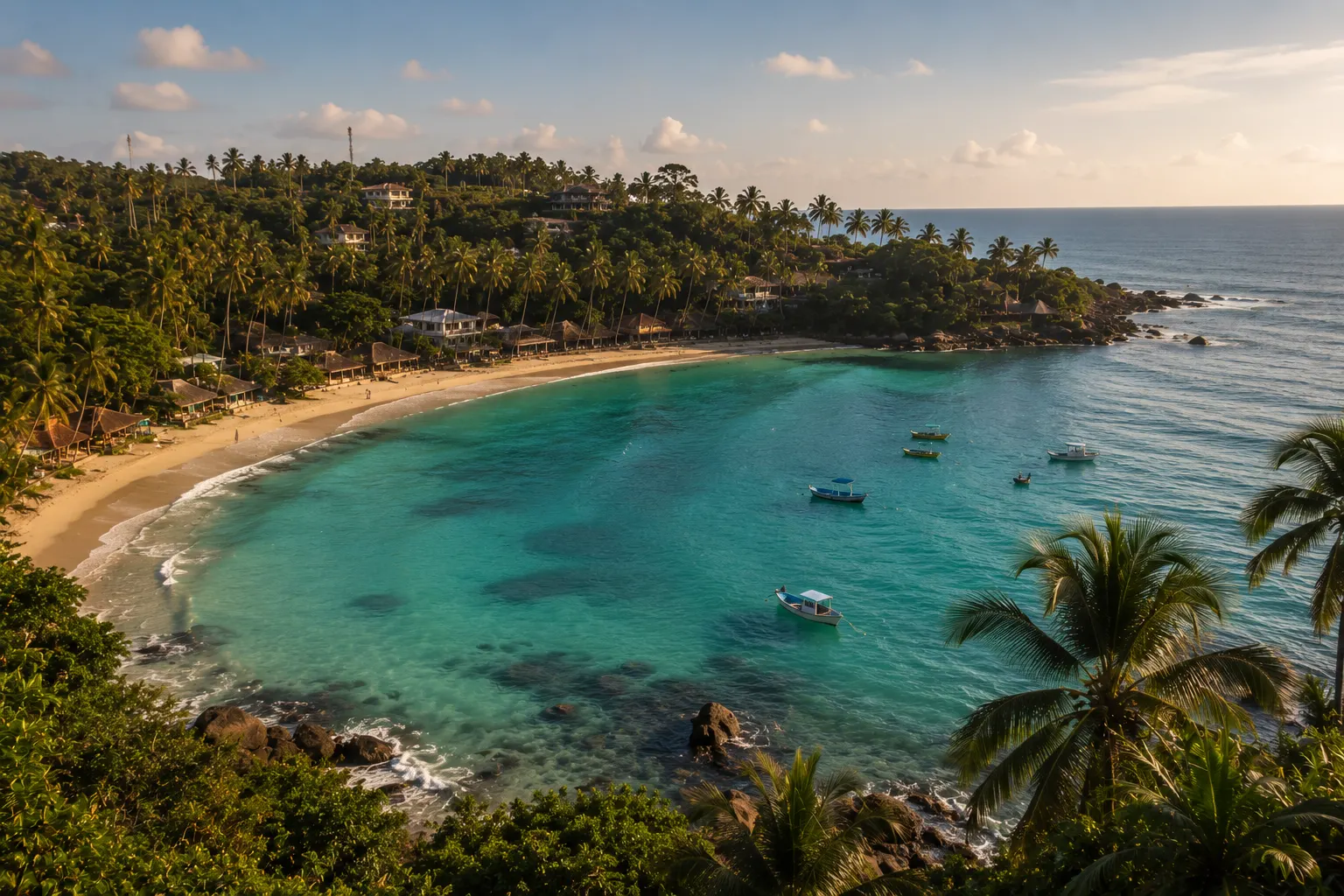
Tangalle sits 90 km east of Galle — far enough that Colombo's day-tripping coach tours don't reach it, and close enough to Yala National Park to double as a southern safari base. That distance is the whole appeal: long, wild, largely empty beaches by the standard of any south coast stop in peak season, a working fishing port rather than a tourist strip, and a noticeably slower rhythm than Mirissa or Unawatuna.

A retreat scene built for a full stay, not a drop-in class

A small but genuine cluster of boutique and holistic retreat properties sits scattered along the coast around Marakolliya, Goyambokka and Rekawa, several built specifically around week-long yoga, Ayurveda, silence or digital-detox programs — Sen Wellness Sanctuary near Rekawa Beach is one genuine reference point. It's a much smaller, more spread-out scene than Ahangama's studio density, which is exactly the trade-off: less choice, more actual seclusion.

The turtles are the real headline act

Rekawa Beach, about 8 km from Tangalle, is one of Sri Lanka's most important sea turtle nesting sites — five species (green, loggerhead, leatherback, olive ridley, hawksbill) come ashore here, protected by a community-based conservation project running since the 1990s. The beach closes to the public overnight specifically to protect nesting turtles, and guided night watches with a conservationist guide, strict no-flash and no-touch rules, are how visitors see one. December–January is peak season, with 5 to 15 turtles a night not unusual.

Want to go deeper

Everything else worth knowing

Explore nearby
Rekawa Beach
One of Sri Lanka's most important sea turtle nesting sites — five species nest here, with guided, strictly no-flash night watches run by a community conservation project since the 1990s.
~15 min (8 km)
Medaketiya Beach
A long, wild, largely empty beach 2 km east of Tangalle town — good for walking and swimming in calm conditions, with no facilities or vendors.
2 km
Rekawa Lagoon
A quiet lagoon with birdlife — painted storks, cormorants, purple herons, monitor lizards — reachable by informal boat tours arranged at the lagoon mouth.
~10 km
Hiriketiya
The much-talked-about horseshoe surf bay just west of Tangalle — a good half-day change of scene if the retreat pace gets too quiet.
~15–20 min
Yala National Park
One of Sri Lanka's best leopard-sighting national parks, reachable as a full-day safari from a Tangalle base.
~1 hr
Mirissa
Whale watching (peak December–April) and a livelier beach-bar scene, if Tangalle's quiet turns out to be too much of a good thing.
~1 hr
Amanwella
One of Sri Lanka's most striking luxury properties, 6 km west of Tangalle town — worth knowing about even if only as a lunch or sundowner stop rather than a stay.
6 km west
Practical info
From Colombo
~3.5–4 hr by car; the nearest train station is Matara, about 25 km away, with a tuk-tuk needed for the final stretch.
Best months
November–April is dry season. Turtle nesting at Rekawa runs October–March, peaking December–January — the sweet spot for combining calm swimming conditions with active nesting season.
Recommended stay
1–2 days for the beaches and a turtle watch; retreat stays are typically booked separately as week-long programs.
Cash and safety
ATMs are in Tangalle town center (Commercial Bank, People's Bank) — withdraw enough to cover Yala-area travel too, where options are sparser. Ask locally about currents before swimming, especially at Medaketiya.
Before you ask

Frequently asked questions

1 Is Tangalle worth the extra distance from Galle or Ahangama? +
If what you want is genuine quiet, yes. Tangalle sits 90 km east of Galle — far enough that Colombo's day-tripping coach tours don't reach it — and the beaches (Medaketiya, the stretch toward Rekawa) are correspondingly wilder and emptier than anything closer to Galle. Tangalle town itself is functional rather than charming; the appeal is the wider coastline, not the town center.
2 Can I really see sea turtles nesting at Rekawa Beach? +
Yes, and it's one of the more ethical wildlife experiences in Sri Lanka. A conservation project has run guided night watches (roughly 8pm–1am) at Rekawa since the 1990s, with strict no-flash, no-touch rules enforced by a conservationist guide. Five species nest there — green, loggerhead, leatherback, olive ridley and hawksbill — with the season running October–March and peaking December–January. Book directly through the conservation project rather than through a hotel reception, which typically adds a commission.
3 Is the sea safe for swimming in Tangalle? +
Take it seriously — Tangalle's exposed beaches can have strong currents even in dry season. Ask locally before swimming, especially at Medaketiya, and don't assume calm-looking water is safe water.
4 Can I use Tangalle as a base for Yala National Park? +
Yes — it's a genuinely practical southern launch point, with the main Yala gate about 50 km east (roughly an hour's drive). Treat it as a full-day excursion, not a rushed half-day: most safari operators recommend departing around 5:30am and returning mid-afternoon.
5 What kind of retreats does Tangalle actually have? +
A small but real cluster of boutique and holistic properties scattered along the coast around Marakolliya, Goyambokka and Rekawa — several, like Sen Wellness Sanctuary near Rekawa Beach, are built specifically around week-long yoga, Ayurveda or digital-detox stays rather than single drop-in classes. It's a much smaller scene than Ahangama's, but a more genuinely secluded one.
6 How many days should I plan to stay? +
1-2 days covers the beaches and a turtle watch; a proper retreat stay is typically booked as its own week-long program rather than added onto a shorter general visit.
Keep exploring

Continue your journey

Not sure Tangalle is right?
Find your perfect base on the island.
Take the 5-question quiz →
Ready to experience Tangalle?
See what's actually bookable here.
Explore retreats →