One of the world's highest recorded leopard densities — and a genuine crowding problem in the most-marketed zone that's worth planning around.
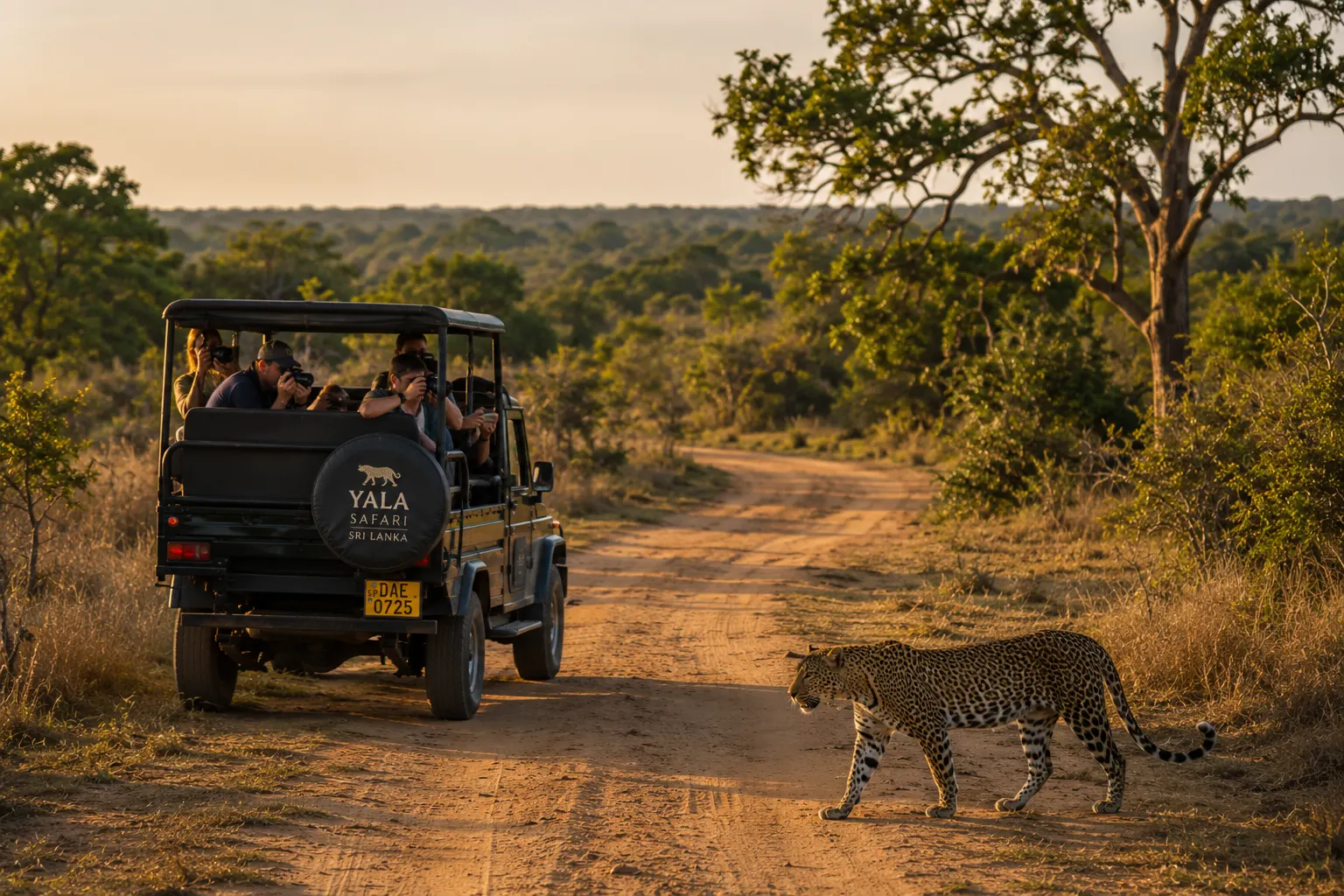
Yala National Park holds one of the world’s highest recorded leopard densities, alongside elephants, sloth bears and rich birdlife — reason enough for the trip on its own. The real planning decision is which block to drive through: Block 1 delivers the highest sighting odds and the highest crowds, while quieter sectors trade a longer drive for a genuine, uncrowded bush experience that pairs naturally with a slower few days on the nearby south coast.
Yala holds one of the highest recorded leopard densities anywhere in the world, alongside elephants, sloth bears, crocodiles and rich birdlife — a genuine, well-earned reputation. What tour operators don't prominently advertise is that Block 1, the most accessible and most-marketed zone, can see 60 to 80-plus jeeps simultaneously at peak times, creating a crowded, circus-like atmosphere around sightings that can rattle even experienced safari-goers.
Most safari days run as an early-morning and late-afternoon jeep drive, leaving the middle of the day free — a rhythm that's encouraged a small, growing set of nearby lodges to add sunrise yoga, meditation, or simply unstructured downtime to the standard format. It's a different register from a beach retreat, built around presence and being somewhere genuinely wild rather than a structured class schedule, but the two overlap more than they first appear to.
The single biggest decision at Yala isn't which hotel to book, but which part of the park to actually drive through. Block 1 delivers the highest sighting odds and the highest crowds; Block 5 (Weheragala) and other less-marketed sectors trade a longer, pricier drive for a genuine bush experience without the jeep traffic. A knowledgeable private guide willing to leave the pack when it masses around one sighting makes a bigger difference to the experience than any accommodation upgrade.