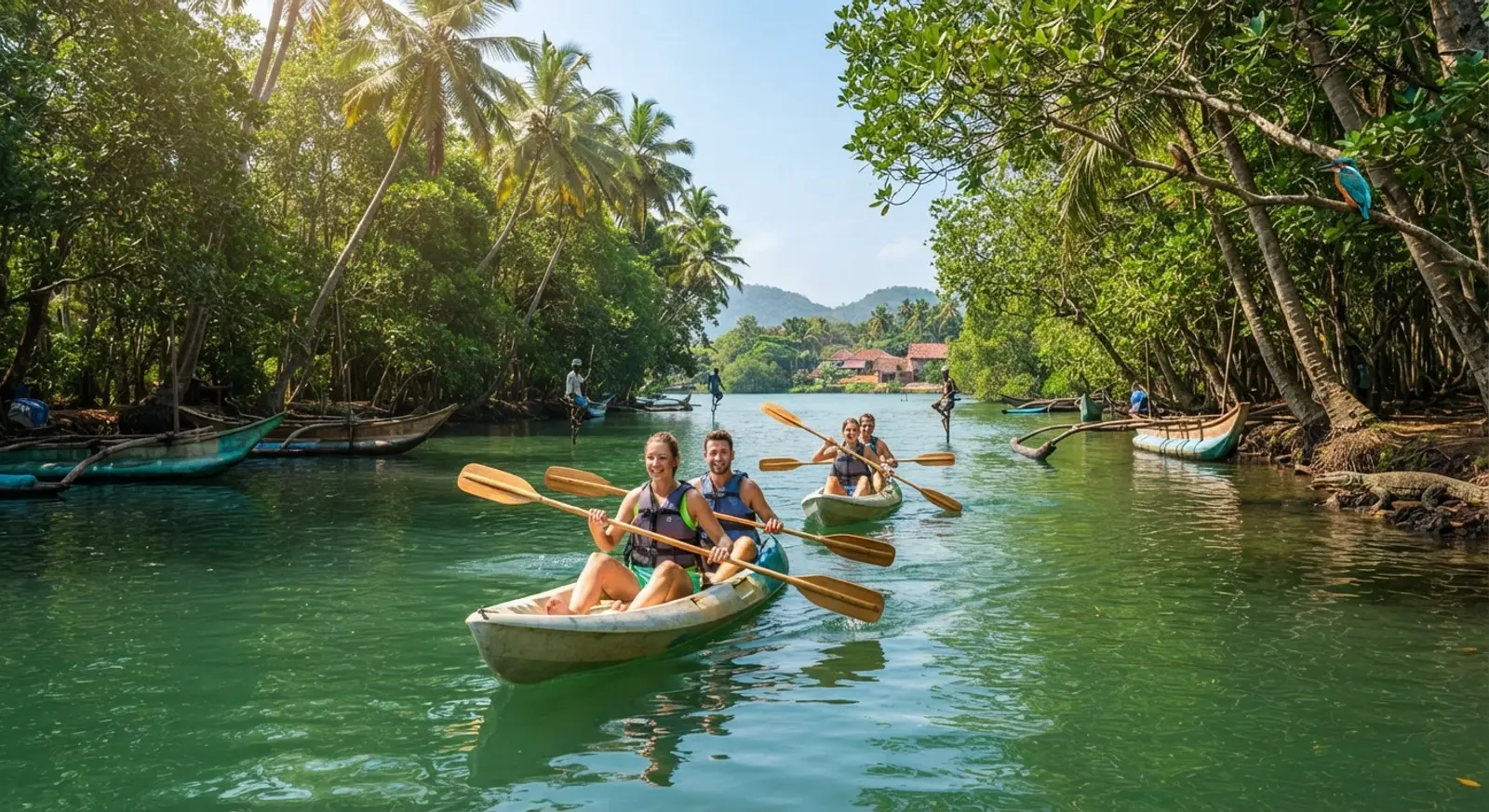
Violent crime against solo female travelers is rare in Sri Lanka. Unwanted staring and transport hassle aren't. What to actually plan around, region by region.

Yes, Sri Lanka is a realistic and increasingly common solo female destination — violent crime against tourists, including solo women, is rare. The actual friction is lower-stakes and more constant: unwanted staring, occasional comments, tuk-tuk drivers who quote a higher fare to a woman traveling alone, and public transport that's more comfortable navigated with a few specific habits (booking reserved seats, sitting near families) than left to chance. None of it is dangerous. All of it is easier with a plan than without one.
Solo female travel to Sri Lanka has grown fast, and for good reason — but most general safety content answers the wrong question. Violent crime against solo women is genuinely rare here. The actual planning problem is a set of smaller, constant frictions that shape how a trip feels far more than crime statistics do.
Our own research into what actually puts travelers at risk in Sri Lanka found ocean currents and road accidents are the two real dangers here, not crime — and that holds just as true for solo women as for anyone else. What’s specific to traveling alone as a woman is lower-stakes: unwanted staring, occasional comments, and being an easier target for a driver who skips agreeing a fare upfront. None of it is dangerous. All of it is more manageable with a few specific habits than left to chance.
Staring at anyone who looks visibly foreign is common across Sri Lanka, and solo women notice it more than travelers in a group or couple — it’s rarely aggressive, more a mix of curiosity and small-town attention, but it’s worth knowing going in so it doesn’t rattle you the first time it happens. Occasional comments from men happen, more often in less touristy areas than on the established south-coast route. The practical response most solo travelers land on: a confident, brief acknowledgment or none at all, rather than extended engagement with strangers who initiate conversation on the street.
The south coast — Ahangama, Weligama, Mirissa, Unawatuna, Galle — has the most established solo-traveler infrastructure on the island: hostels and guesthouses used to hosting women alone, walkable town centers, and a well-worn route other solo travelers are also on, which itself reduces friction. The hill country (Ella, Kandy, Nuwara Eliya) is similarly comfortable and arguably even more relaxed day to day, with a slower pace and less of the beach-town crowd dynamic. Rural areas away from the main tourist routes, and the far north and east’s former conflict zones specifically, warrant more caution and planning — not because of any pattern of targeting solo women, but because there’s simply less tourist infrastructure and English-language support the further you get from the established circuit.
The core scams here target any visible tourist — an unagreed tuk-tuk fare that triples at the destination, or a gem-shop tout with a driver on commission pushing cut glass as a rare stone — but both sometimes get pushed more persistently at a woman traveling without a companion, on the (often correct) assumption she’s less likely to push back hard. The fix is identical regardless of gender: agree the fare before the ride, and never buy a gem you haven’t had independently appraised.
Plenty of solo women travel Sri Lanka entirely independently and have a great trip doing it. What a retreat or organized wellness stay specifically removes is a category of small daily decisions — arranged transport instead of negotiating a tuk-tuk fare alone each time, a venue that already knows which stretch of beach is calm this week, and built-in company for meals and evenings rather than every one of them being a solo choice. It’s not a safety requirement; it’s a different trade-off some travelers prefer and others don’t need. Group experiences are also an easy way to meet people for a day without committing to a full week.
The advice solo female travelers actually need skews away from what most safety content leads with. Crime isn't the real planning problem here — it's a hundred small frictions (staring, fare inflation, an unreserved seat on a packed train) that don't show up in a generic "is it safe" answer but genuinely shape how a trip feels day to day.