Every real dish, condiment, dessert and drink worth knowing — rice and curry, hoppers, kottu, watalappan, king coconut — and how it changes region by region.
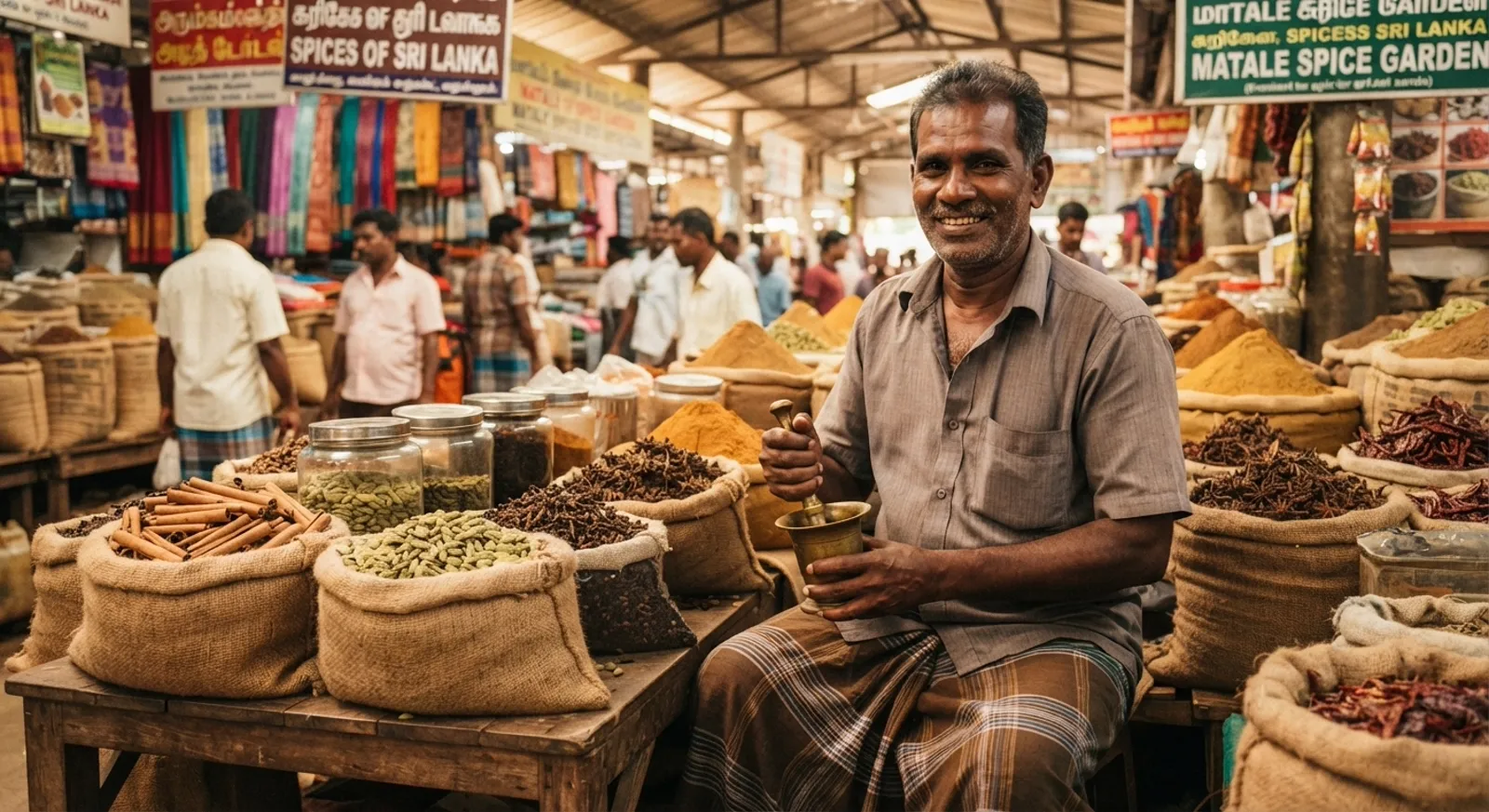
Start with rice and curry — not a single dish but a format: rice plus several small curries (a dhal, a vegetable curry or two, and usually fish, chicken or egg), a completely different meal at every table you sit at. Beyond that: hoppers for breakfast, kottu roti at night, short eats between meals, and a dessert culture built around coconut, jaggery and cardamom that most first-time visitors never get pointed toward — watalappan, curd and treacle, love cake. Sri Lanka is also one of Asia's easiest places to eat well as a vegetarian, and a genuinely cheap one: a full local meal routinely costs under a dollar or two away from tourist strips.
Rice and curry gets described as “the national dish” so often that it undersells what it actually is: a format, not a recipe. Order it at a hill-country guesthouse and you’ll get a milder, coconut-heavy dhal and a handful of vegetable curries. Order it at a Jaffna Tamil restaurant in the north and you might get a fiery crab curry that bears almost no resemblance. And that’s before the desserts, the drinks, and the short eats most visitors never get steered toward at all. This covers all of it — the everyday plate, the dishes that only show up at celebrations, and the sweet and liquid side of the cuisine that a lot of first-time trips miss entirely.
Sri Lankan food isn’t one lineage — it’s four, layered on top of each other over centuries, and knowing this explains a lot of what you’ll actually encounter. The Sinhala Buddhist majority tradition, strongest in the south, west and hill country, is built around rice, coconut and vegetable- and dhal-heavy curries, shaped by centuries of Buddhist and Hindu dietary practice that avoids beef and often meat generally. The Tamil Hindu tradition, concentrated in Jaffna and the north, runs hotter and more distinct — crab curry, mutton curry, and dishes like dosa that share more with South Indian cooking than with the south coast. The Muslim Malay community, descended from Malay and Javanese settlers brought by Dutch colonizers, gave the island watalappan, biryani (locally spelled buriyani) and achcharu pickle, all now eaten across every ethnic group rather than staying confined to their community of origin. And the small Dutch Burgher community — descendants of Dutch and Portuguese colonial settlers — contributed lamprais, the elaborate banana-leaf-wrapped rice parcel that’s become one of the island’s most labor-intensive, celebration-grade dishes. None of this shows up as separate menus; it shows up as one integrated food culture where a Sinhala household might serve a Malay dessert at a Tamil-adjacent spice level, and nobody finds that unusual.
A rice-and-curry plate is built the same way everywhere — a mound of rice with three to six (sometimes more) small curries around it, almost always including a dhal (parippu, lentil curry) and at least one vegetable curry, plus fish, chicken, mutton or egg if it’s not a vegetarian household. What varies is everything else: the spice blend, the amount of coconut milk, the heat level, and which specific vegetables show up depending on season and region. Some of the most memorable versions run to eight or nine separate curries on a single plate. This is also why “have you tried rice and curry” is a slightly odd question to a Sri Lankan — it’s closer to asking if you’ve tried “a sandwich.”
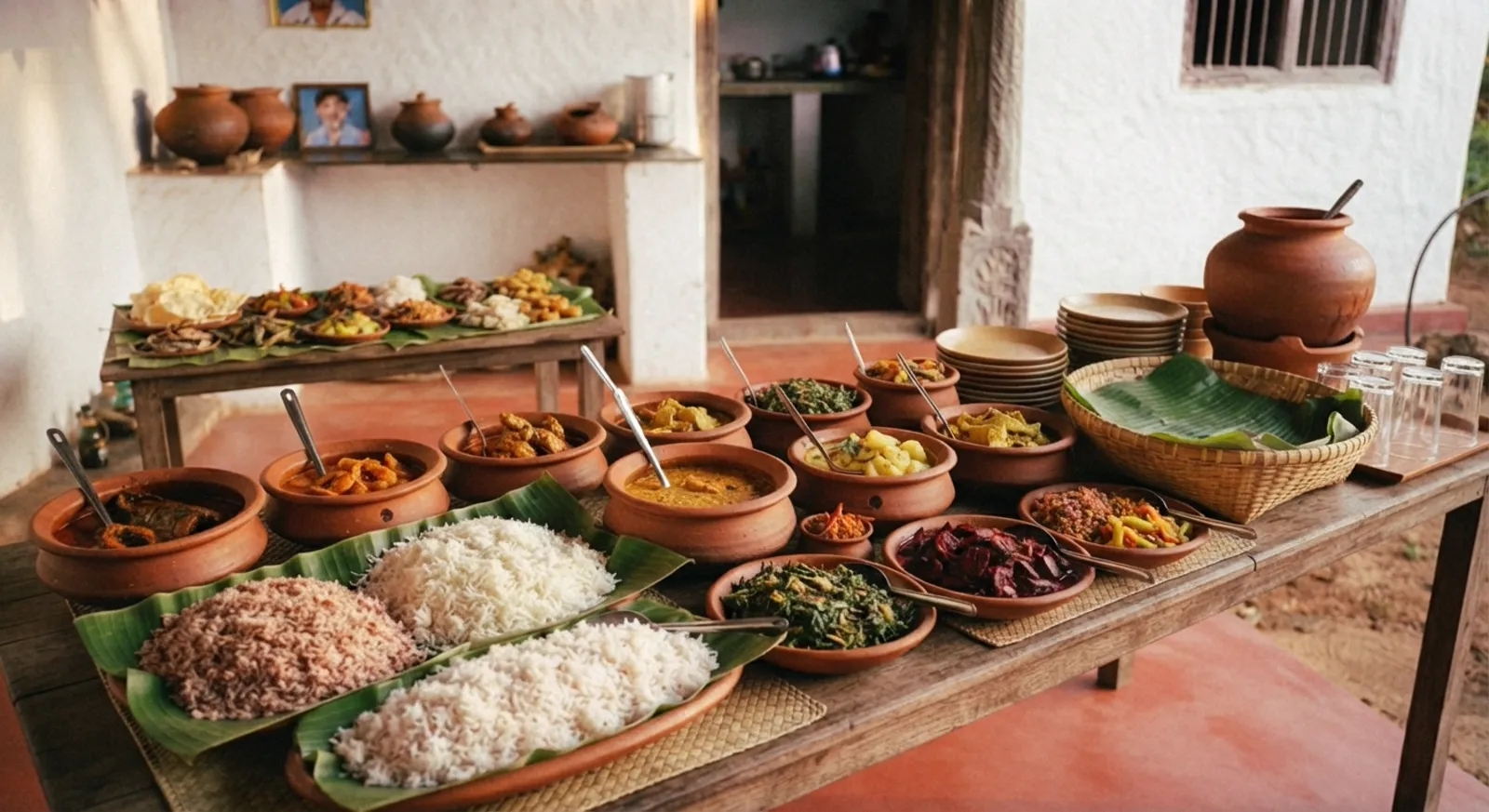
Curry in Sri Lanka is a method, not a flavor — almost anything can be curried, and the specific names below are worth knowing so you can actually order what you want rather than pointing at a buffet tray.
Beyond these, expect to encounter potato, beetroot, carrot, pumpkin, bitter gourd, banana flower and even pineapple or ambarella (a tart local fruit) cooked into curry form — the technique applies to almost any vegetable, fruit or protein available.
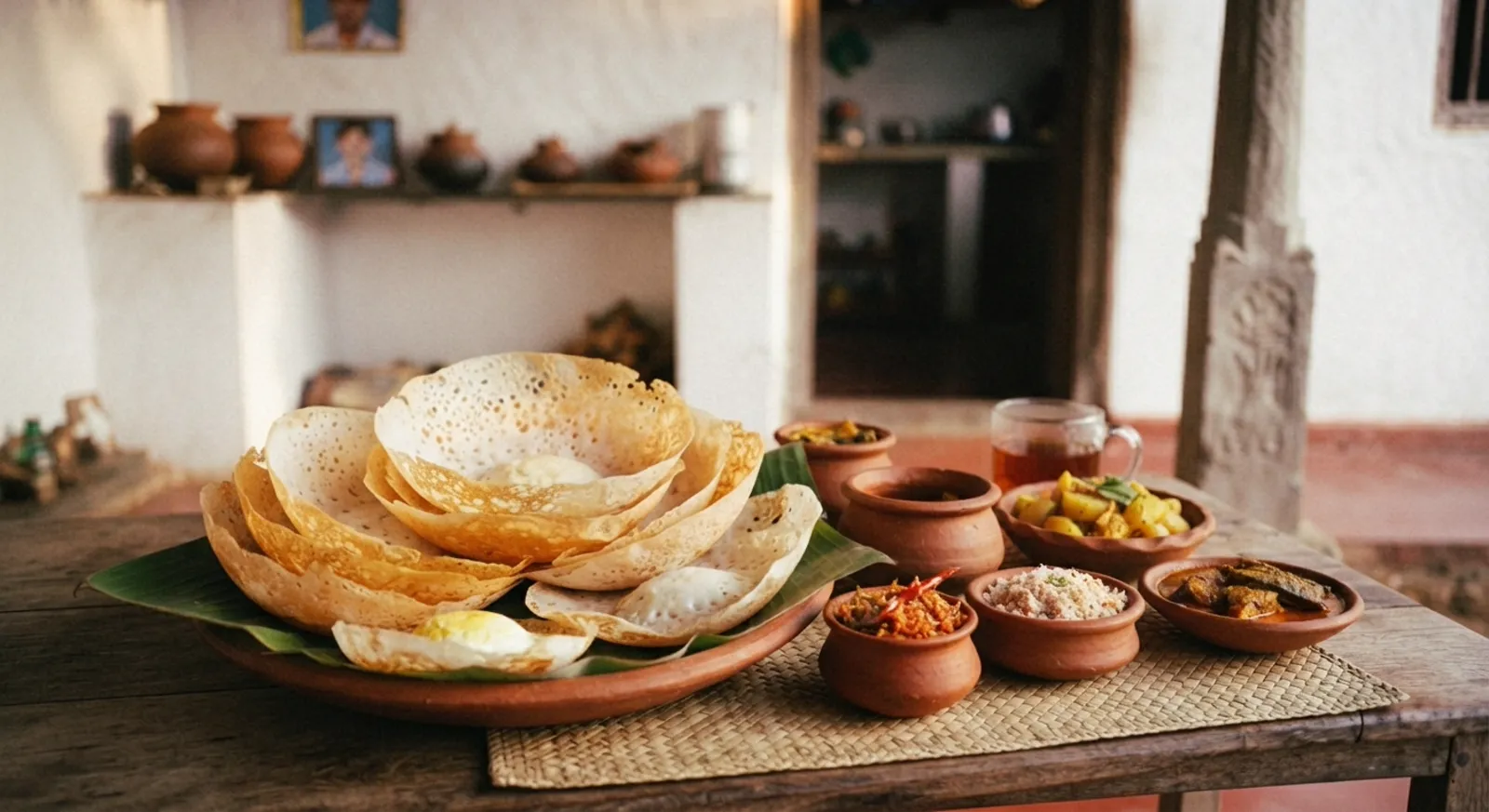
Hoppers (appa) are bowl-shaped pancakes made from a fermented rice-and-coconut-milk batter, cooked in a small curved pan so the edges turn thin and crispy while the center stays soft and slightly spongy. An egg hopper — the same bowl with an egg cracked into the middle — is the single most common order for visitors and locals alike; a milk hopper (sweeter, coconut-milk-centered) and a jaggery hopper (a dessert version) are rarer but worth asking for.
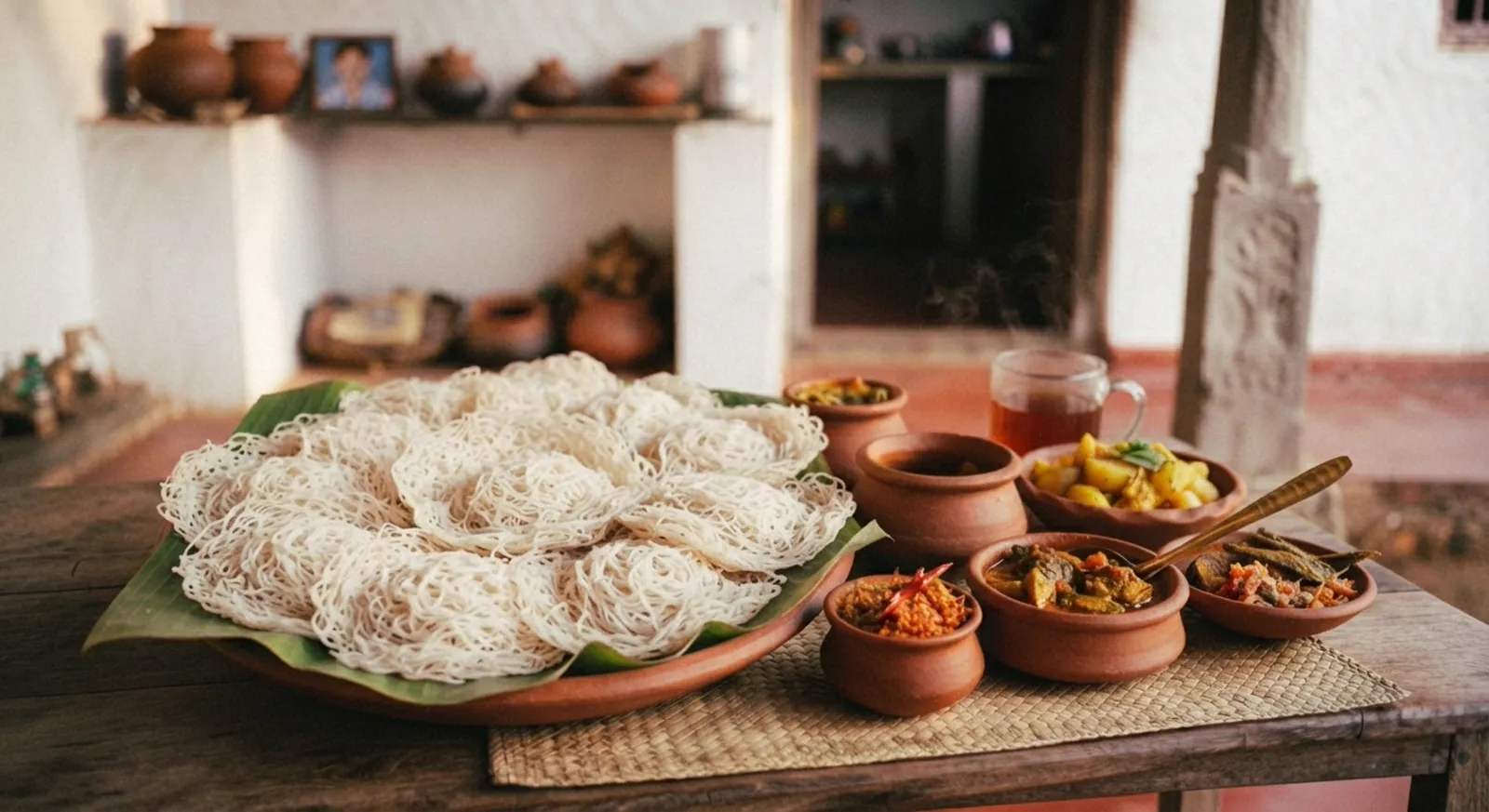
String hoppers (idiyappam) are a completely different thing despite the similar name: small woven nests of steamed rice noodles, soft and mild, used more like bread than a standalone dish — you tear off pieces and use them to scoop up curry. Naturally gluten-free, since they’re rice flour and water.
Godamba roti is a paper-thin, hand-stretched flatbread, the base for kottu roti and also eaten on its own filled with vegetables or meat. Pol roti is a heartier coconut flatbread, mixed straight into the dough rather than served alongside it, usually a breakfast item paired with lunu miris and dhal. Both are different again from the triangular, pan-fried chicken or vegetable roti sold as a grab-and-go snack at bakeries and roadside stalls across the island.
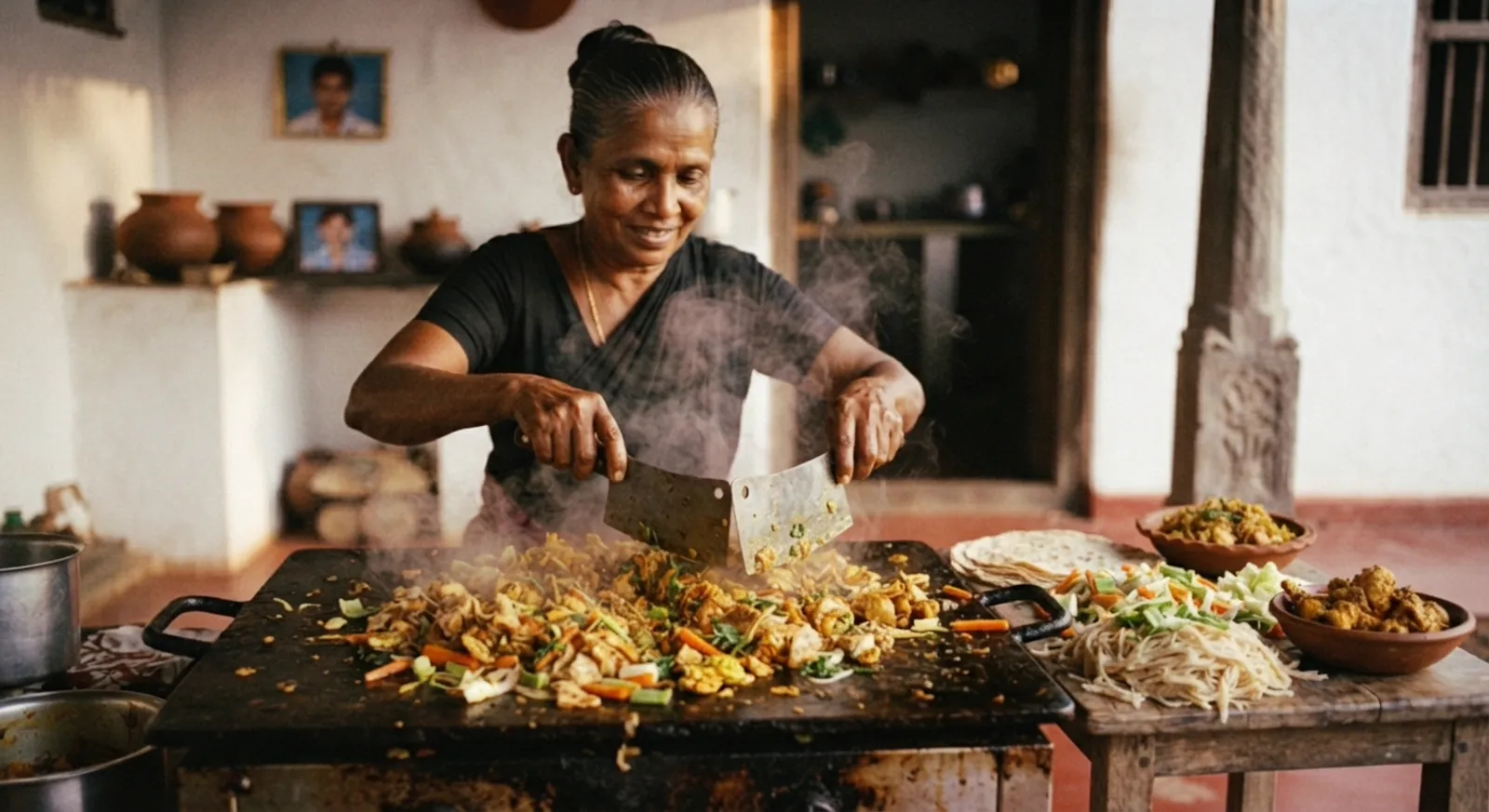
You’ll hear kottu roti before you see it — chopped godamba roti, vegetables, egg and usually meat or cheese, tossed together on a hot griddle with two metal blades, producing a distinctive rhythmic chopping sound that’s become a genuine street-food signature across the island, especially after dark. It’s heavier and more filling than rice and curry, and one of the few Sri Lankan dishes that reads as “fusion” — closer in spirit to a stir-fry than a traditional curry meal. A close relative, string hopper kottu, swaps the roti base for chopped string hoppers.
Kiribath (milk rice) is rice cooked in coconut milk until thick and sticky, then pressed flat and cut into diamond-shaped pieces — one of the few dishes on this list with no outside culinary influence at all. It’s eaten specifically to mark beginnings: New Year, the first day of a new month, a birth, a new job, a wedding. It’s mild on its own, and typically served with lunu miris (spicy) or a drizzle of kithul treacle (sweet) to actually give it flavor. If you’re in Sri Lanka around the Sinhala and Tamil New Year in mid-April, kiribath is close to unavoidable — in a good way.
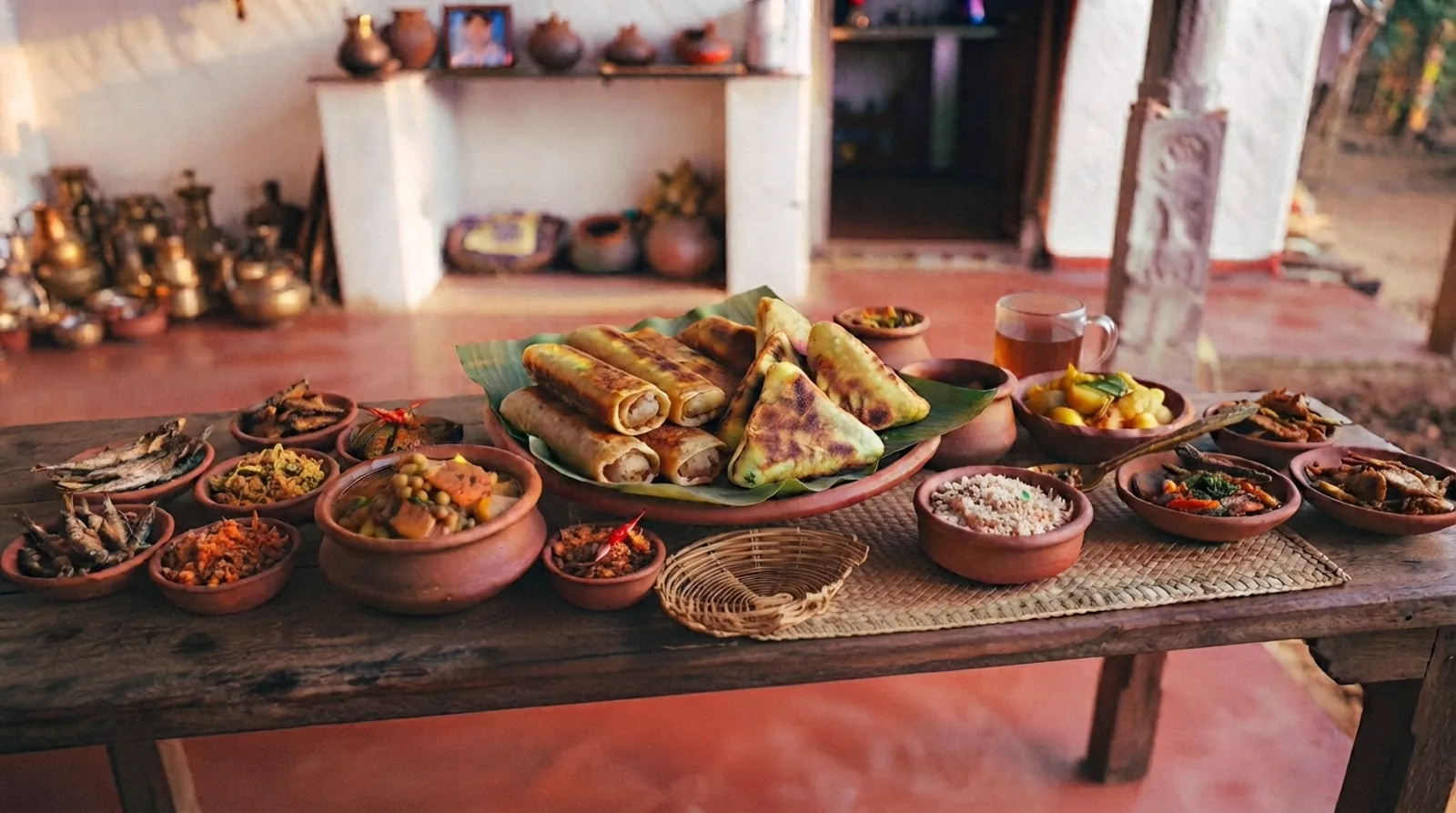
“Short eats” is the umbrella term for the small, mostly deep-fried snacks sold everywhere — bakeries, train platforms, roadside stalls — usually for well under a dollar each. Mutton rolls (a spiced mutton filling inside a crumbed, deep-fried pancake wrapper), fish or vegetable cutlets, patties, and vadai (savory lentil fritters) are the core lineup, and they’re genuinely one of the best ways to eat cheaply and well between proper meals rather than a lesser tourist substitute for a real lunch.
If you’re vegetarian, ask specifically whether a given pol sambol includes Maldive fish — some versions do, some don’t, and it’s rarely obvious just from looking at it.
Lamprais, from the Dutch Burgher community, is one of the island’s most elaborate dishes: rice cooked in a spiced stock, a mixed-meat curry, Dutch-style meatballs, eggplant curry and seeni sambol, all wrapped together in a banana leaf parcel and slow-baked so the flavors merge into the rice itself. It’s genuinely labor-intensive, which is why it’s traditionally a special-occasion dish rather than a daily one — worth seeking out specifically rather than expecting to stumble on it at a random restaurant. Buriyani (biryani), brought by South Indian Muslim traders in the early 20th century, is fragrant basmati rice with fried chicken, mint chutney and often a boiled egg — a reliably good, less adventurous order on a day you want something familiar. Both dishes are a direct result of the same layered history covered above, not a departure from “real” Sri Lankan food.
This is the single biggest gap between what a hotel breakfast buffet offers and what Sri Lankan food actually includes.
Curd and treacle specifically is worth actively seeking out rather than waiting to stumble on it — it rarely appears on hotel menus despite being one of the most widely loved everyday desserts on the island.
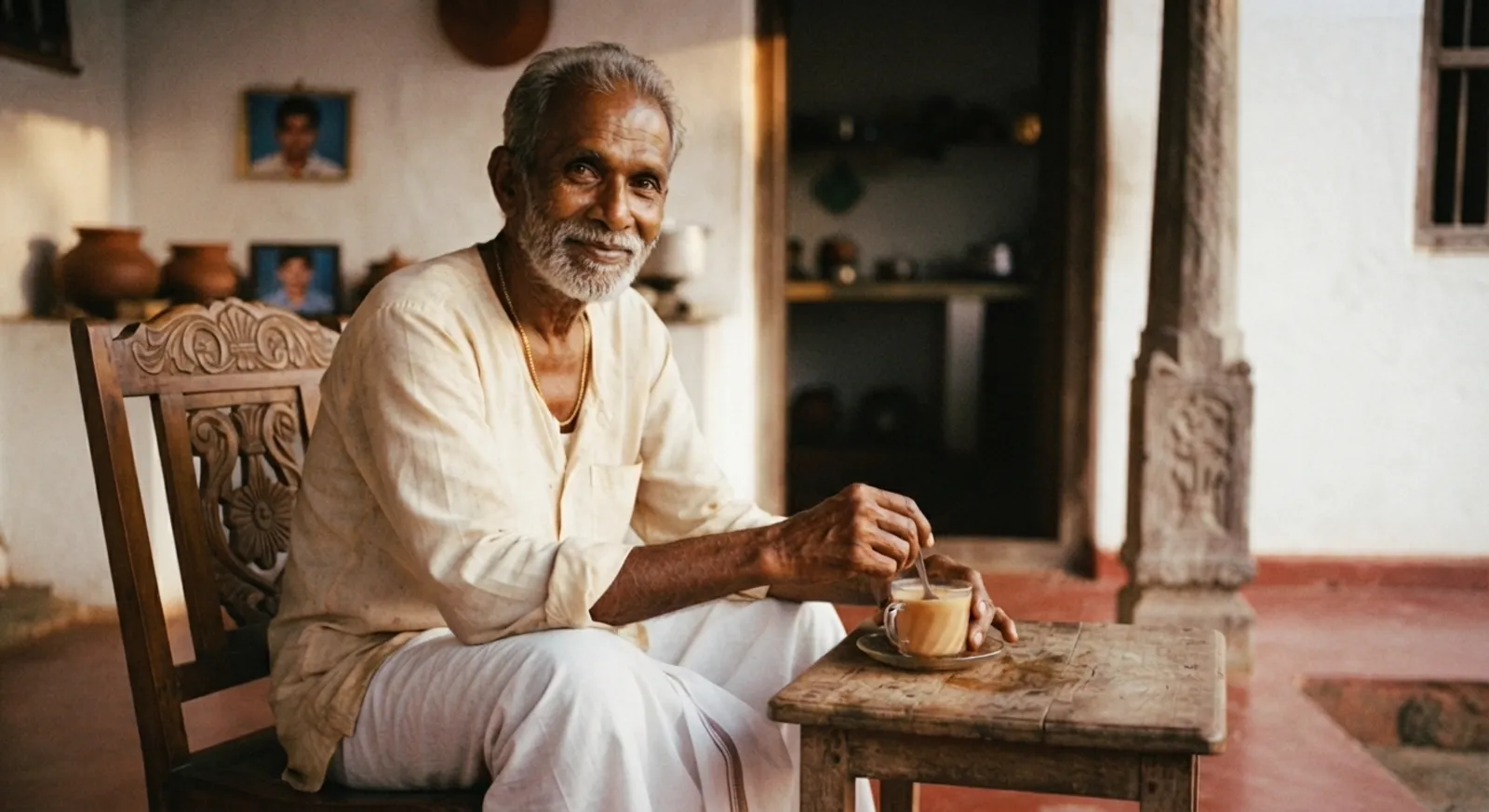
King coconut (thambili) — a distinct, naturally sweeter variety of coconut, orange-shelled and indigenous to Sri Lanka — is the default way to rehydrate, sold by roadside vendors for a small fraction of what bottled coconut water costs elsewhere. Ceylon tea is worth drinking properly at least once: ask for it plain (without milk and sugar, the local default) to actually taste it, and note that hill-country tea shops routinely serve a genuinely better cup than most hotels. Ceylon coffee exists and occasionally surprises — the island was a major coffee exporter before a 19th-century blight wiped out the plantations and tea took over, and a small revival is underway in Colombo specifically. Coconut arrack, distilled from fermented coconut-flower sap, is the national spirit, typically mixed with cola or ginger beer rather than drunk neat. Ginger beer here is non-alcoholic and genuinely popular, sold both as a mass-market bottled version and, in a few spots, a sharper homemade one. Wood apple juice, blended from the pulp of a hard-shelled local fruit, is tart, thick and specifically associated with the south coast.
Eating with the right hand is standard practice at local restaurants and homes, string hoppers and rice-and-curry alike — the left hand is considered unclean for this purpose in the wider South Asian tradition Sri Lanka shares. Cutlery is always available and using it draws no judgment whatsoever, but trying the hand-eating method at least once, the way locals do, genuinely changes how the rice and curry combine in each bite. Wash your hands before and after; most local restaurants have a sink for exactly this near the entrance.
Sri Lanka is genuinely one of the easier countries in Asia to eat well as a vegetarian, for a structural reason rather than a trend: Buddhist and Hindu dietary practice means a full vegetable-and-dhal curry spread is the daily default at most local restaurants, not a special accommodation. Ask specifically for “no fish” if you’re strict, since some curries and sambols that look plant-based are flavored with dried fish — the kitchen will know exactly what you mean, since it’s a common local question too, not a tourist-only concern. This is also part of why a wellness retreat here tends to handle plant-based diets easily; kitchens built around this food culture are already used to it.
Breakfast is usually hoppers or string hoppers with a curry or two and strong tea. Lunch is the day’s main rice-and-curry meal, often the biggest of the day. Evening brings either a lighter version of the same or something like kottu roti or fried rice, and short eats fill the gaps between meals better than any snack bar would.
A local rice-and-curry plate away from tourist areas typically runs 300-600 LKR (roughly €0.90-1.80), and can go as low as half that at a genuinely local hole-in-the-wall. The same meal at a restaurant built for visitors runs several times higher. A cup of tea or coffee is as little as 50 LKR at a roadside stall, well over 1,000 LKR at a café aimed at tourists — the single biggest price swing of anything on this list. Short eats and a king coconut both usually cost under 100-150 LKR each. Eating almost entirely at local spots, a full day of food comfortably fits under €5; mixing in tourist-restaurant meals and café coffee pushes that toward €10-20 a day. See our full travel budget guide for how food costs fit into a whole trip.
Rice and curry at a small local spot rather than a hotel buffet, an egg hopper for breakfast, kottu roti at least once at night, a plate of short eats with Ceylon tea, and watalappan or curd with kithul treacle for dessert — order all five and you’ve had a genuinely representative pass through the food, not just the version built for a tourist menu.
Planning a longer stay where food is part of the reason to come? A wellness retreat in Sri Lanka is one of the more reliable ways to eat well without having to research every meal yourself — most build the day’s meals around exactly the fresh, plant-forward version of this food culture. Ayurvedic meals are central to many programs; see our Ayurveda guide.
The biggest mistake visitors make isn't food safety — it's assuming they've 'tried Sri Lankan food' after one rice and curry plate at a hotel buffet. The actual range, from a Jaffna Tamil crab curry to a Dutch Burgher lamprais to a Malay-community watalappan, comes from four distinct culinary traditions layered onto one small island, and most of it never makes it onto a hotel menu. Eat at a small local spot at least once, order the dessert nobody mentions, and the difference becomes obvious fast.