Where the real, free 10-day Vipassana courses actually run in Sri Lanka, how to apply, the daily schedule, and what the ten days genuinely feel like.
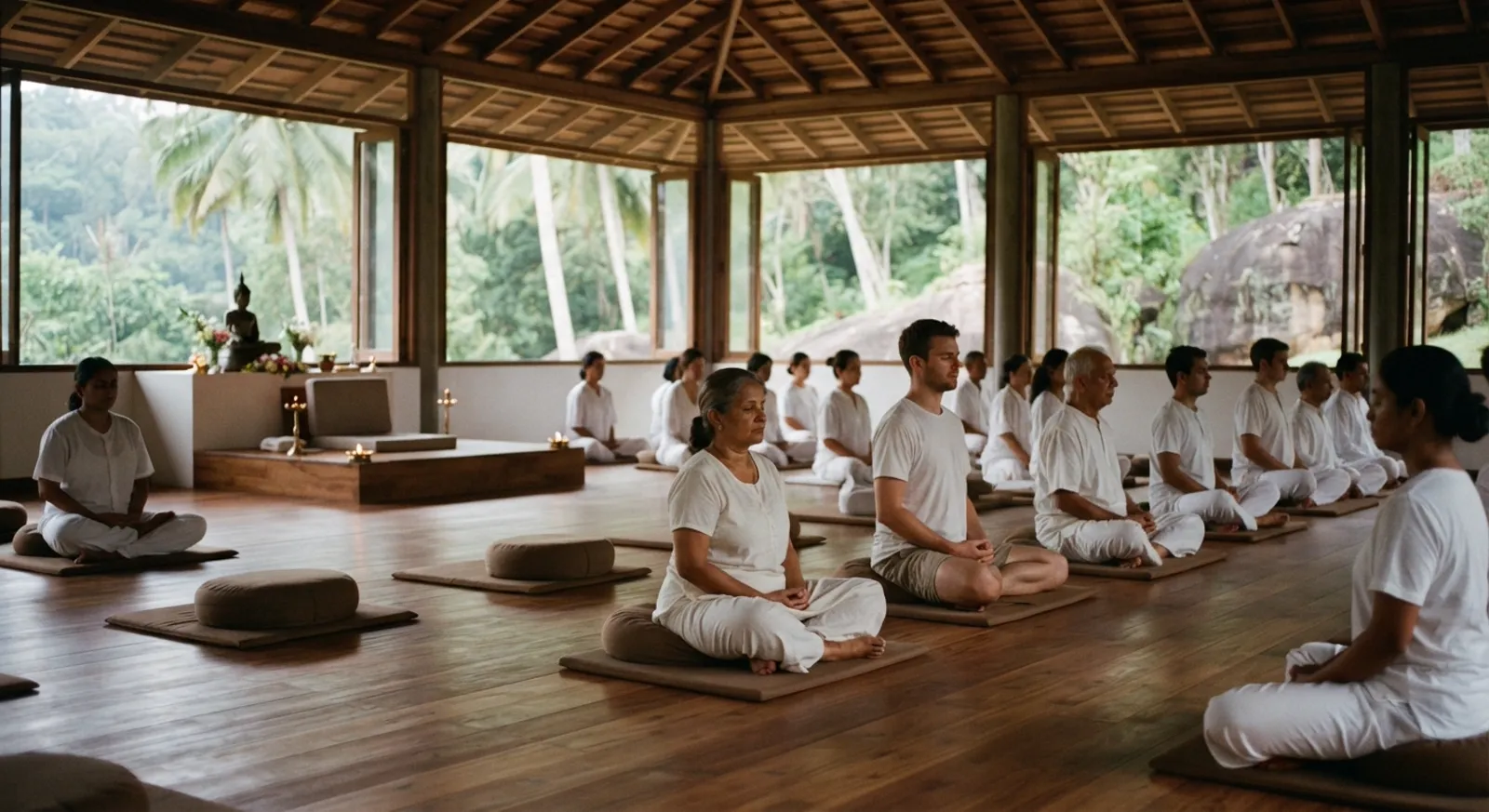
Sri Lanka has two dedicated centers teaching Vipassana exactly as S.N. Goenka taught it, in the tradition of Sayagyi U Ba Khin: Dhamma Kuta, just outside Kandy, and Dhamma Anuradha, in Anuradhapura in the north. Both run residential 10-day courses that are genuinely free — donation-based, funded entirely by past students — under a strict schedule: noble silence, no phone, no reading or writing, roughly 10 hours of seated meditation a day, 4am wake-ups. You apply through dhamma.org, usually weeks to a couple of months ahead of your dates. This is a different, stricter thing than the broader 'meditation retreat' scene in Sri Lanka's hill country.
Thinking about doing a Vipassana course in Sri Lanka? It’s a narrower, more specific thing than most people expect going in — a strict 10-day residential course in one exact technique, not a general meditation retreat with the word borrowed for atmosphere. Knowing precisely what you’re signing up for matters more here than almost anywhere else on this site, because the gap between expectation and reality has real consequences once you’re standing at the gate on day one.
“Vipassana” means insight, or seeing things as they really are, and it’s an old technique with many teachers and lineages across Asia. This guide is about one specific one: the method taught by S.N. Goenka in the tradition of Sayagyi U Ba Khin, standardized worldwide under the Vipassana Research Institute (dhamma.org, vridhamma.org) and taught only at dedicated Dhamma centers — never as a side offering at a yoga studio or wellness resort. It’s not a rest cure, not a guided relaxation, and not built around comfort. It’s a specific mental technique, learned by direct practice over 10 full days, built on sustained self-observation rather than teaching, chanting, or ritual. If a retreat elsewhere in Sri Lanka uses the word “vipassana” more loosely to describe its own meditation program, it’s very likely a different, more general thing — including Sri Lanka’s own Theravada monastic centers like Nilambe and Kanduboda, which teach in a different lineage again (more on those below).
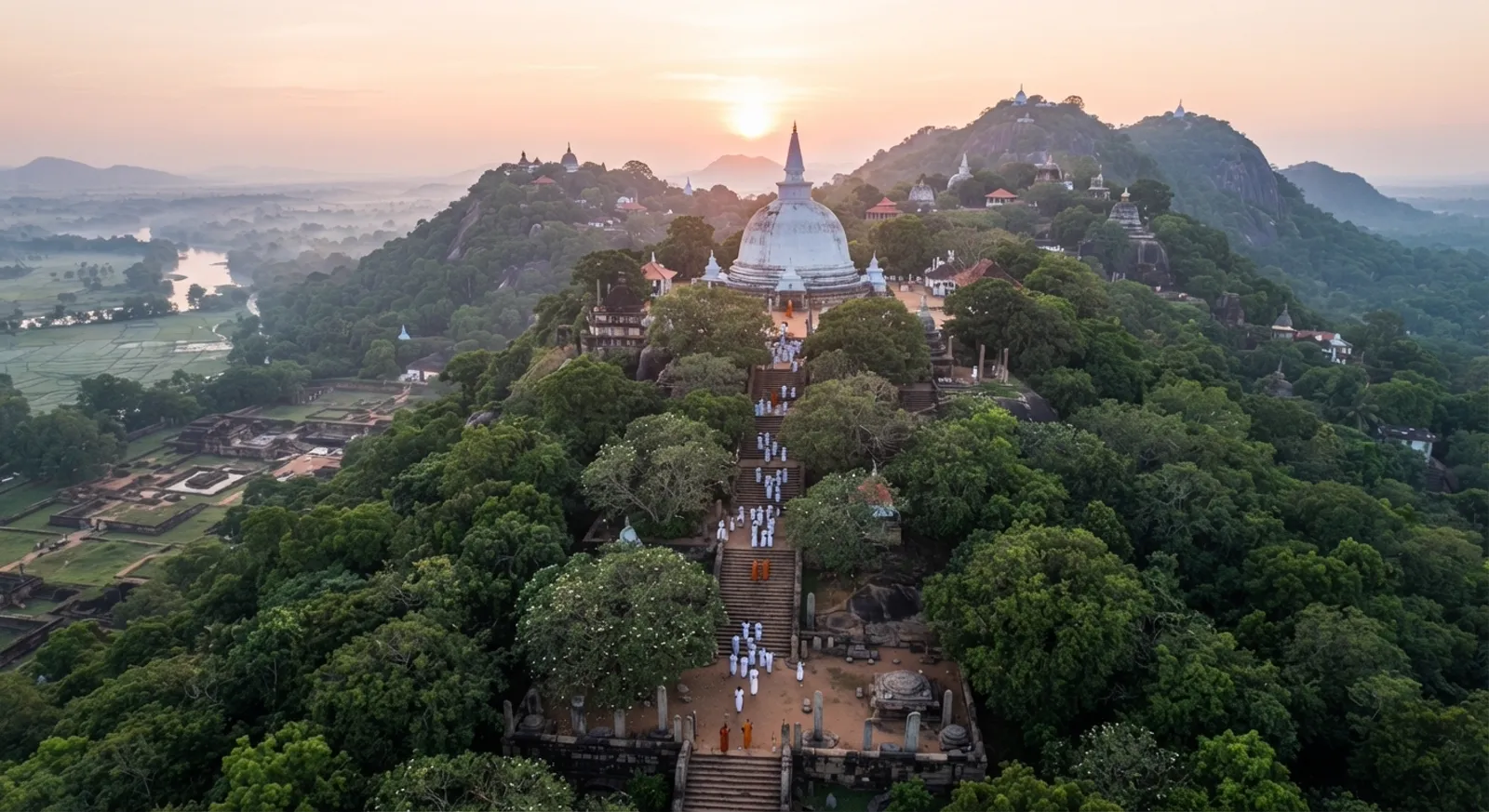
Sri Lanka has two dedicated centers in this specific tradition, both listed and bookable only through dhamma.org — not through any commercial platform, including this one.
Dhamma Kuta, inaugurated in 1991, sits at Mowbray, Hindagala, near Kandy — about 5km from Peradeniya on the Colombo-Kandy road, surrounded by hills with views toward Sri Pada. It holds roughly 80 meditators per course and runs several 10-day courses a year, most taught bilingually in English and Sinhala, alongside occasional Sinhala-only and short courses for returning students.
Dhamma Anuradha sits near Anuradhapura in Sri Lanka’s ancient cultural heartland in the north — a genuinely different setting and climate from Kandy’s hill country, worth knowing if you’re weighing the two by more than just dates. Both run on the exact same method, schedule and code of discipline; the choice between them usually comes down to which dates are open and which region of the island you’d rather be based in before or after.
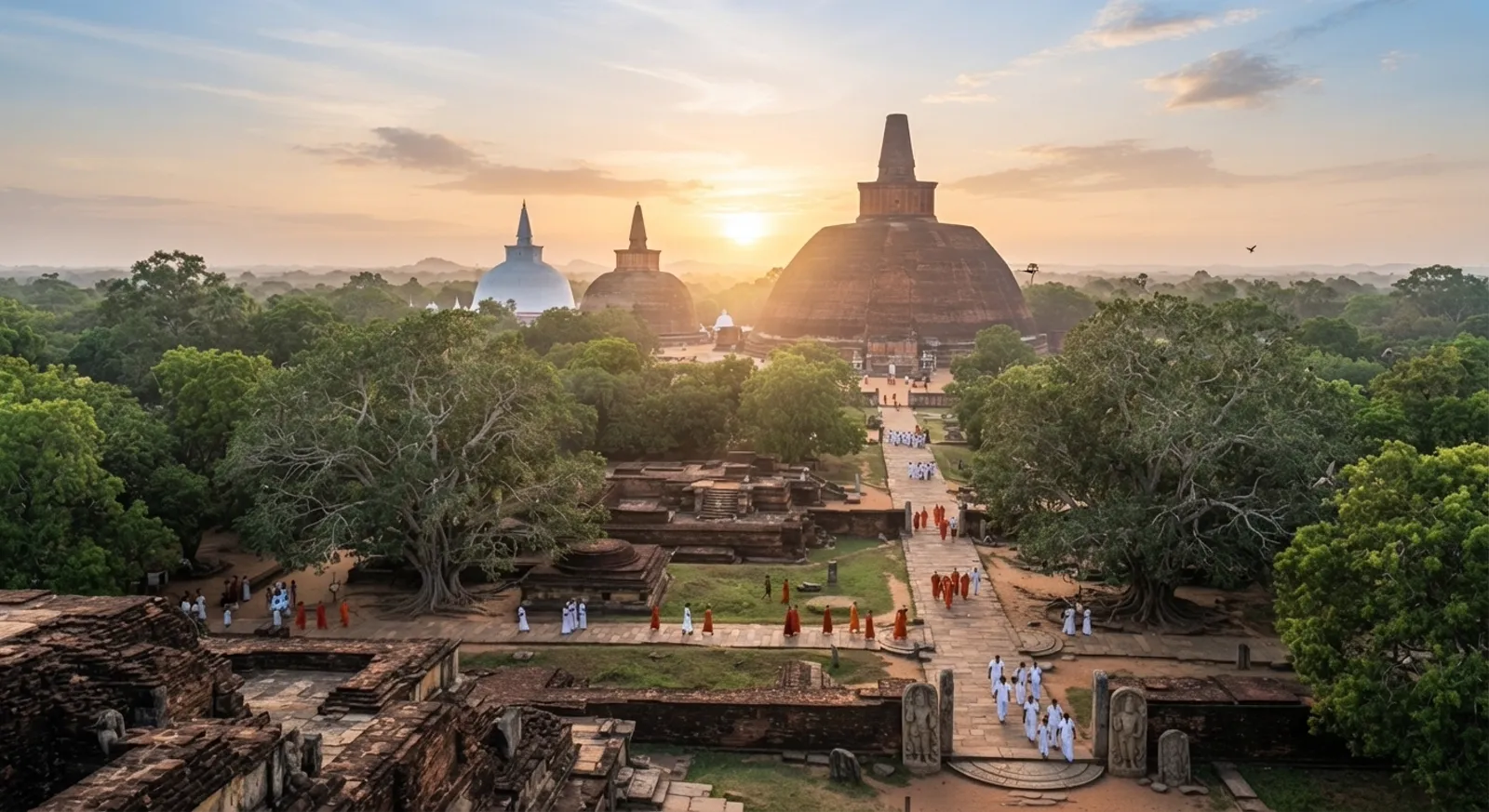
Dhamma.org’s own directory lists Sri Lanka as having six centers and course sites in total in this tradition — Dhamma Kuta and Dhamma Anuradha are the two established, dedicated centers; the rest are smaller or non-center course sites that appear on the schedule less consistently. Check the current schedule and course dates directly on dhamma.org rather than relying on any secondhand listing, including this one — dates shift, and courses do occasionally get cancelled.
Every course requires an application through dhamma.org, whether you’re a complete beginner or a returning “old student.” You’ll be asked to read the introduction to the technique and the code of discipline before applying, and to confirm you understand you’re committing to the full residential period. Processing can take up to two weeks, and during busier months it’s worth applying well before that — one recent applicant to Dhamma Anuradha applied roughly three months ahead of her course and received acceptance about a month before it started. Once accepted, you’ll usually need to actively confirm your place to secure it, and all correspondence runs by email.
Genuinely nothing, up front. Courses in this tradition run entirely on dana — voluntary donation — from students who’ve already completed a course and want to fund the next one for someone else. Neither the teacher nor the organizers are paid. First-time students aren’t asked to pay or donate anything at all; the option to give something back is offered only after you’ve finished, if you choose to. It’s one of the more genuinely unusual things about this specific format compared to literally any other retreat, course or training listed anywhere else on this site.
The structure repeats almost identically every day of the course, which is deliberate — continuity is treated as central to the method working at all.
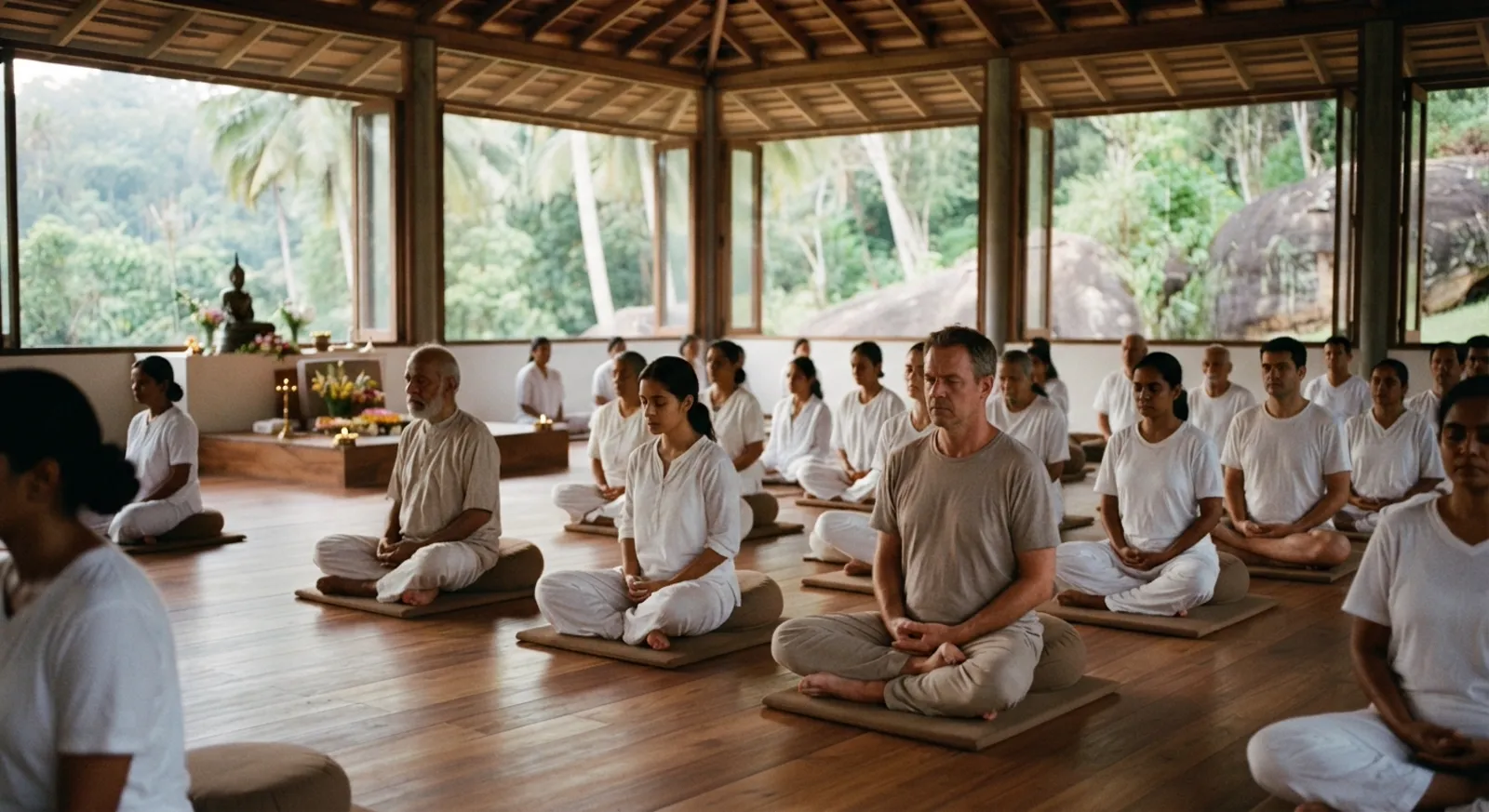
That’s roughly ten hours of seated practice a day, spread across the day rather than in one block — new students are not expected to sit motionless for all of it, though the demand on posture and attention increases as the course progresses.
None of this is arbitrary — the center frames every rule as protecting the conditions the technique needs to actually work over such a short period, and the discipline is treated as inseparable from the practice itself rather than an inconvenience around it.
Talk to anyone who’s genuinely done a 10-day course and a pattern shows up again and again, even though everyone’s experience differs in the details. The first day or two are often surprisingly manageable — some real excitement, an easy early routine. Day two or three is where it usually gets hard: the silence stops being novel and starts surfacing whatever mental noise you’d normally distract yourself away from, physical discomfort from extended sitting builds, and it’s common to seriously question why you signed up. Around day four, the core Vipassana technique itself is introduced — a genuine shift from the earlier breath-focused preparation — and for many people that’s when the course starts to feel like it’s actually going somewhere rather than just enduring. The back half, days five through ten, tends to bring real relief: physical discomfort easing, sharper senses, a noticeably calmer baseline. The final morning, when noble silence ends, is by most accounts an intense, often emotional moment — reintegrating into ordinary conversation after ten days of near-total silence hits people harder than they expect going in.
If a strict, free, silent 10-day course isn’t what you’re actually looking for — or your dates don’t line up with what’s currently on the schedule — it’s worth knowing this isn’t the only serious meditation option on the island. Sri Lanka’s own Theravada monastic centers, guided lay retreats, and combo meditation-and-yoga programs across the hill country are a genuinely different, often gentler way in, and our full meditation retreats guide covers all of it, sorted by what’s actually bookable versus what runs on its own independent terms, the way Dhamma Kuta and Dhamma Anuradha do. If a guided, bookable retreat is closer to what you’re after, you can see current meditation retreats directly.
There are two real centers, they follow one specific tradition, the course is free by design, and the discipline is genuinely strict — not spa-retreat strict, monastery strict. Going in with the accurate picture matters more here than almost anywhere else on this site, because showing up expecting a wellness retreat and getting Dhamma Kuta's 4am bell is a real mismatch.