Yala has the leopards and the crowds. Wilpattu has neither guarantee, but neither the queue. A breakdown of sighting odds, seasons and logistics.
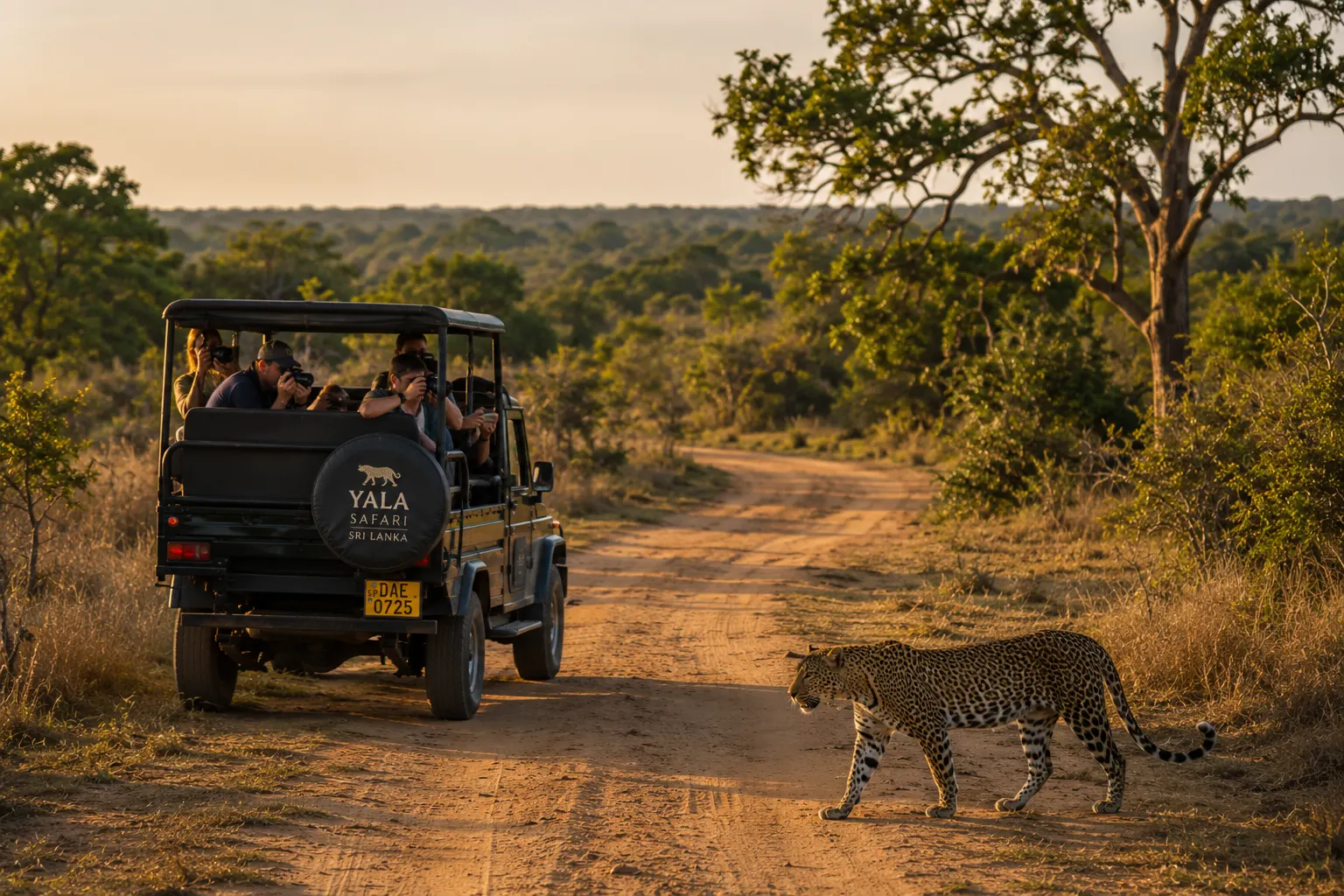
Yala has the higher leopard sighting rate — roughly 65-75% per game drive versus Wilpattu's 35-55% — but also by far the bigger crowds, with dozens of jeeps converging on a single sighting in Block 1 during December-March peak season. Wilpattu, further northwest and 1,317 km² to Yala's 978 km², trades some of that certainty for a genuinely quiet park: single digits of jeeps on most mornings, longer waits, and encounters that unfold without an audience. Choose Yala if this is your only Sri Lanka safari and a leopard sighting matters more than solitude. Choose Wilpattu if you've safaried before, or if the crowd is the part you're trying to avoid.
Yala and Wilpattu are Sri Lanka’s two headline leopard-safari parks, and the real answer to “which one” depends on a trade most comparisons skip past: sighting probability against crowd density. Yala wins the first by a real margin. Wilpattu wins the second by an even bigger one. Neither fact makes the other park the wrong choice — it depends on what kind of morning in a jeep you actually want.
Both parks hold genuinely wild leopard populations at broadly comparable density — this isn’t a case of one park having the animals and the other not. The difference is what surrounds the encounter. Yala’s Block 1, the section almost everyone means when they say “Yala,” runs a well-developed spotting network: guides radio each other the moment a leopard is found, and on a busy December morning that can mean 10-20 jeeps converging on the same sighting within minutes. Wilpattu runs no comparable network and sees a fraction of the jeep traffic — most mornings, five to fifteen vehicles cover the entire 1,317 km² park, and a sighting often means one jeep, one leopard, and nobody else.
That difference compounds. Higher jeep density at Yala means faster relay of sightings, which is part of why its sighting rate is higher in the first place — more eyes covering more ground, radioing back. Wilpattu’s quiet comes with a real cost in probability, not just a different atmosphere.
| Factor | Yala | Wilpattu |
|---|---|---|
| Leopard sighting rate per drive | 65-75% | 35-55% |
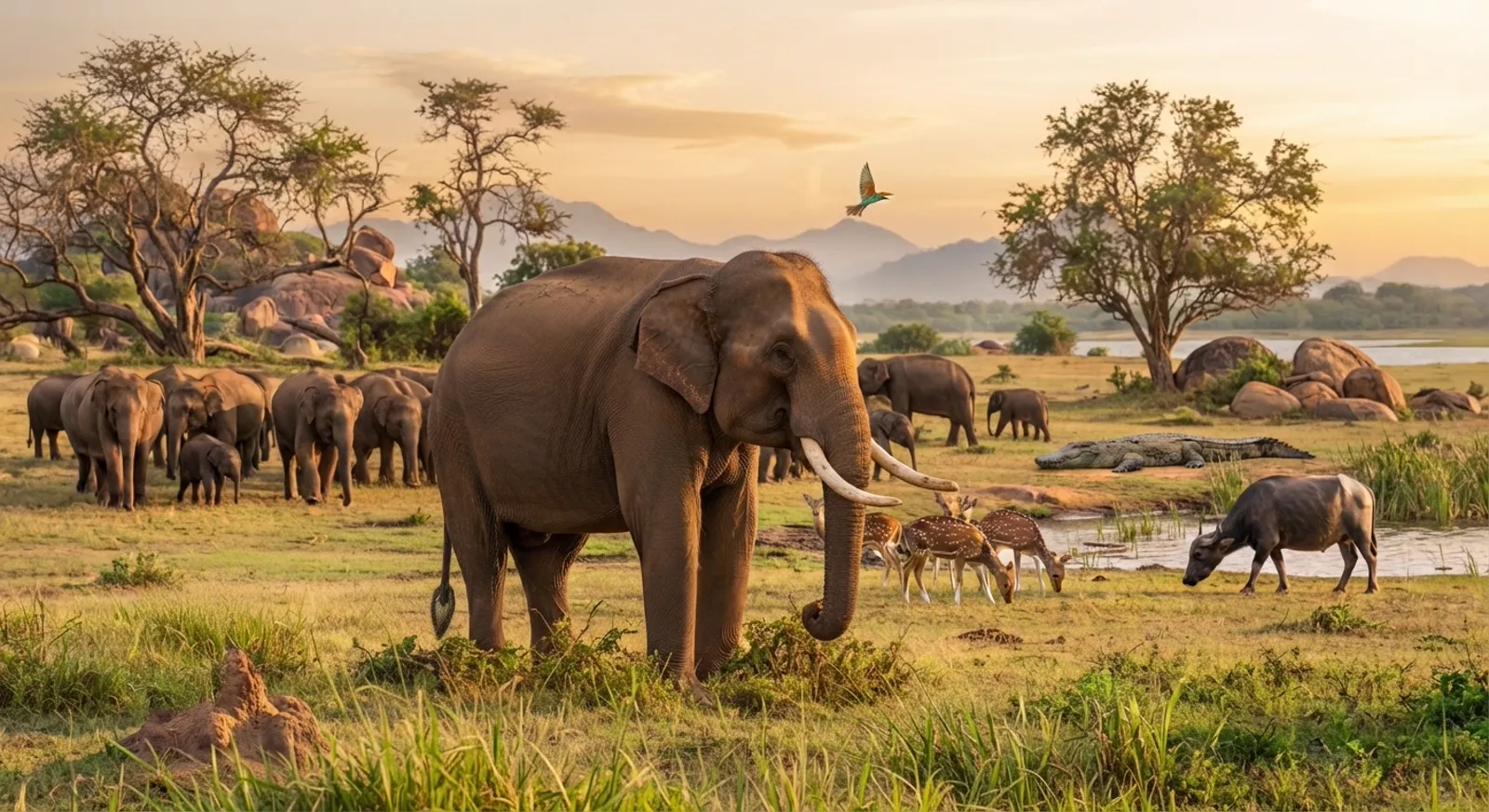
| Elephants | Significant herds, reliable | Small numbers, not a feature |
| Sloth bears | Moderate probability | Moderate probability |
| Crocodiles | Reliable | Reliable, in villu lakes |
| Birdlife | Good | Excellent |
| Typical jeeps per morning | High in peak season | Low year-round |
If the trip has one safari day and a leopard sighting is the goal, Yala’s odds are the stronger bet on paper. If the goal is time in genuine wilderness and the leopard is a bonus rather than the point, Wilpattu delivers a different kind of morning — longer stretches of driving, more waiting, and an encounter that unfolds without an audience when it happens.
Peak season is December through March, and peak hours are the first three after the 06:00 gate opening. A typical sequence once a leopard is spotted: one jeep radios the find, eight to fifteen more arrive within ten minutes, vehicles jostle for a sightline, and most visitors end up three or four jeeps back watching through gaps rather than a clean view. The leopard usually retreats into cover within minutes of the crowd building.
It’s not the only way to experience Yala. Two things cut the crowd meaningfully: visiting outside peak (June-August is markedly quieter with still-solid sighting odds, and the week after the September 1 reopening sees the lowest traffic of the year), or booking Block 5 (Lunugamvehera/Weheragala) instead of Block 1 — a separate section of the same park with a fraction of the jeep density and a lower but still real 30-40% sighting rate.
Wilpattu’s defining feature is its villus — natural lakes formed in the old dune landscape of the northwest coast — which draw wildlife the way Yala’s open grassland does, just without the crowd that follows. A typical Wilpattu sighting starts with pugmarks at a villu edge, a long wait, and then a leopard arriving to drink with no other vehicle in sight; the whole encounter can run several unhurried minutes before the animal moves off on its own terms. You’re less likely to get that moment than at Yala. When you do, there’s usually nobody else there for it.
Wilpattu was closed from 1988 to 2003 during the civil conflict, and the 15-year gap in tourism infrastructure is part of why it still feels less developed than Yala today — fewer lodges, fewer operators, and a wilder feel that hasn’t caught up to its neighbor’s popularity.
Sri Lanka’s two monsoons hit opposite coasts, and Yala (southeast) and Wilpattu (northwest) sit closer to different ones — see our best time to visit Sri Lanka guide for the island-wide picture. Yala’s Block 1 closes annually from September 1 to October 15 for ecological recovery, then runs its dry-season peak from November through April, with June-August as a quieter secondary window. Wilpattu has no mandatory annual closure and stays accessible year-round, with March through September generally its firmest, driest stretch for tracks and villu visibility; the northeast monsoon (October-January) can soften access roads without fully closing the park.
If one trip needs to work reasonably well for either park, February-March is the closest thing to a shared sweet spot — Yala is still in its dry peak, and Wilpattu’s tracks have usually firmed up since the last rains.
Most travelers aren’t choosing between the parks in isolation — they’re deciding which one fits the loop they’re already doing. If your route runs cultural triangle to hill country to south coast, the shape our own 9-day and 10-day itineraries take, Yala slots in naturally between Ella and the coast with no backtracking. If your route swings northwest through Anuradhapura or straight from Colombo, Wilpattu is the one that doesn’t cost you a detour — it sits roughly an hour from Anuradhapura and under four hours from Colombo, genuinely closer to the capital than most travelers expect.
Choose Yala if this is your only Sri Lanka safari, you have limited time for it, and a leopard sighting matters more than the surrounding quiet — the odds justify the crowd. Choose Wilpattu if you’ve safaried in Sri Lanka before, crowd-free wildlife watching matters to you, you’re already routing through the northwest, or you have the schedule flexibility to accept a lower sighting probability in exchange for a genuinely wild morning. Skip both and look at Udawalawe instead if elephants, not leopards, are the actual priority — it’s a more reliable park for that specific sighting. See our full safari guide for the rest of the island’s parks, including Udawalawe, Minneriya and Bundala.
Booking a Yala safari through an operator who only offers Block 1 without asking about Block 5 means paying for the crowd experience by default when a quieter option exists in the same park. Going into Wilpattu expecting a guaranteed leopard sets up disappointment that a look at the actual sighting-rate numbers above would have prevented. And treating the 6-hour drive between the two parks as a quick add-on rather than a real logistics decision is the most common way “let’s just do both” turns an efficient trip into an exhausting one.
The comparison usually gets flattened into 'Yala for leopards, Wilpattu for quiet,' which is true but skips the part that actually decides most people's choice: where each park sits relative to the rest of your route. Yala pairs naturally with a south-coast-and-hill-country loop. Wilpattu pairs naturally with a cultural triangle route that swings northwest. The stronger park for your trip is often just the one that doesn't cost you a backtrack.