There's no single Sri Lanka season — two monsoons hit opposite coasts at opposite times. What's actually in season where, month by month.
It depends entirely on which coast you mean, because Sri Lanka runs two monsoon systems in opposite directions. December through March is peak season for the south and west coasts, the hill country, and the cultural triangle — dry, sunny, and the most crowded window. May through September flips it: the east coast (Trincomalee, Arugam Bay) is in its own dry season while the south and west see more rain. There is no single month that's simultaneously ideal everywhere on the island — the real question is which region your trip is actually built around.
Planning a trip and wondering when to go? Sri Lanka sits between two monsoon systems that hit the island from opposite directions at opposite times of year, which is why there’s no single best month — it depends entirely on which region your trip is actually built around. Get the region right and the timing question mostly answers itself.
The southwest monsoon (locally the Yala monsoon) runs roughly May to September and brings rain to the south and west coasts, the hill country, and the cultural triangle — the regions most first-time visitors spend most of their trip in. The northeast monsoon (the Maha monsoon) runs roughly October to January and does the same to the north and east coasts. The practical result: December through March is the dry, sunny peak season for the south, west, hill country and cultural triangle, while May through September is the dry season for the east coast — Trincomalee, Arugam Bay, and the north. Both halves of the island have a genuine dry season; they just don’t share the same calendar.
Whale watching splits the same way as the coasts it runs from: Mirissa runs December-April, peaking January-March; Trincomalee runs May-October, most reliable May-August — full detail, pricing and what “ethical” actually looks like in our whale watching guide. For safari parks like Yala, the dry season (roughly February through June, before the park’s own periodic closure) tends to concentrate wildlife around remaining water sources, generally improving sighting odds versus the wettest months.
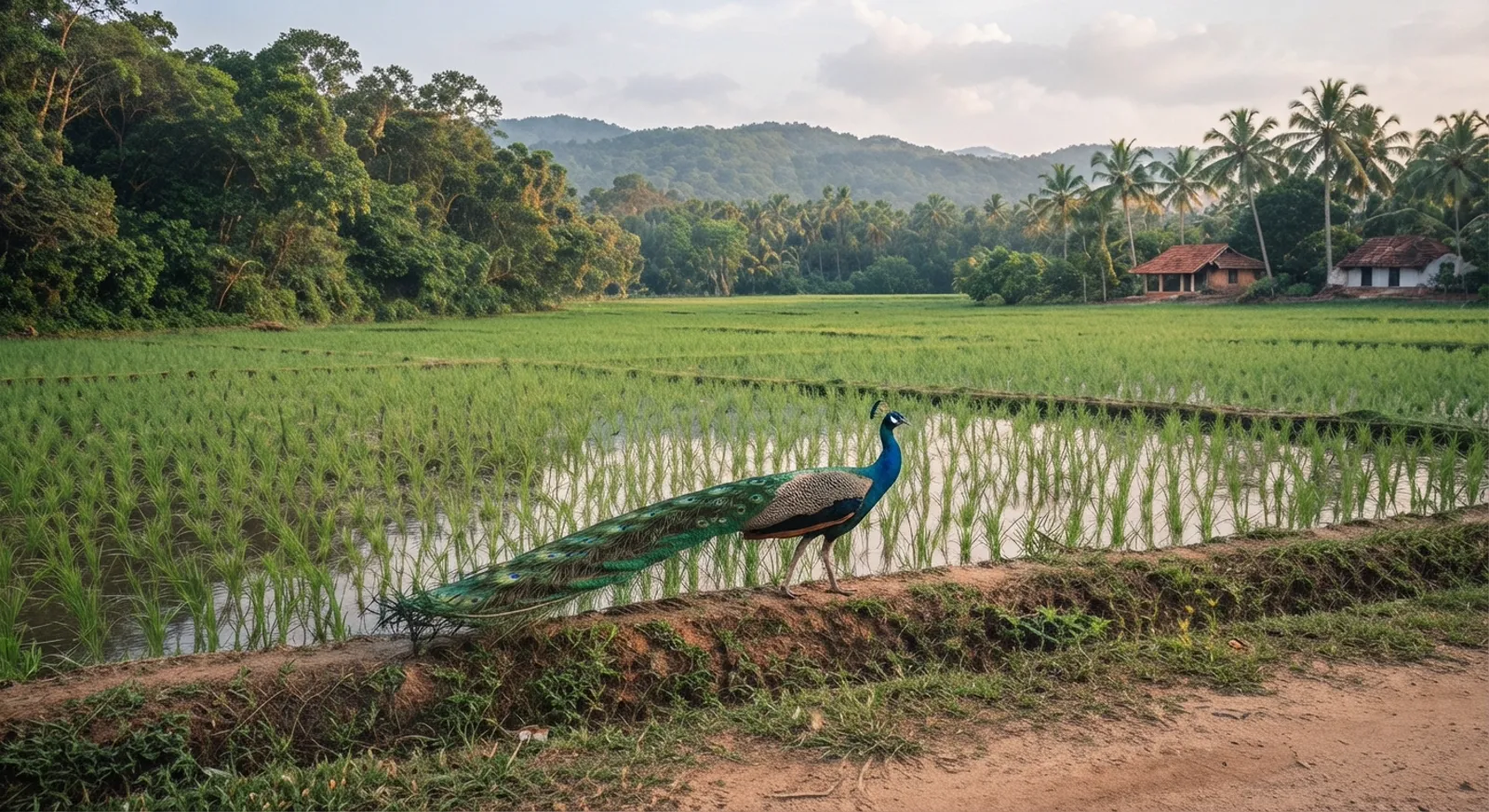
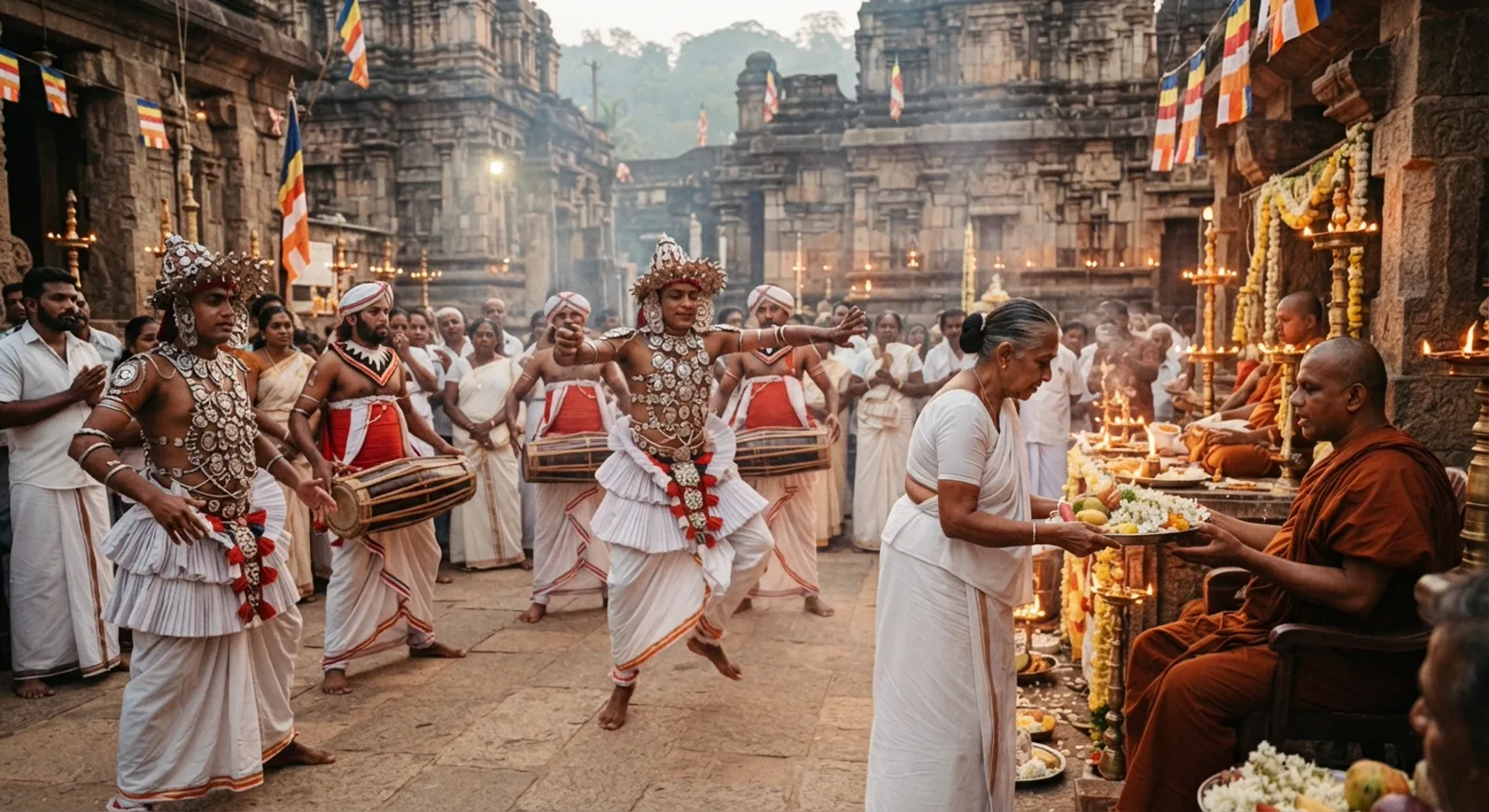
Sinhala and Tamil New Year (13-14 April) is a genuine national holiday, not a tourist event — expect many small businesses, some restaurants and local transport to slow down or close for several days around it, island-wide, regardless of which region you’re in. Kandy’s Esala Perahera, a ten-day procession honoring the Sacred Tooth Relic, is dated by the lunar calendar and usually lands in July or August; it’s genuinely spectacular and worth planning around deliberately if you want it, but it fills hill-country accommodation well ahead of time. Vesak (the full moon in May, marking the Buddha’s birth, enlightenment and death) brings citywide lantern displays and free food stalls (dansal) but also alcohol sales restrictions for the day — worth knowing rather than being caught out by.
April and October–November are the monsoon transition windows, when weather patterns are least predictable island-wide — not a reason to avoid Sri Lanka, but a reason to hold a rigid single-region itinerary a little more loosely if you’re traveling then, since a heavy, unseasonal downpour on any coast is more likely in these shoulder weeks than in a coast’s genuine dry season.
For the four months of the December-March peak season, we’ve broken down what each one specifically looks like — pricing swings, festivals, and what’s genuinely worth planning around: December (peak season opens, but prices roughly double after the 20th), January (the busiest month, and one of the best for whale watching), February (the same weather with thinner crowds and settled pricing), and March (the quiet, green tail end of the dry season before April’s transition).
For the most common first-time route — south coast plus hill country plus cultural triangle — December through March is the real peak, and February specifically sits in a sweet spot: solidly dry, past the December-January crowd and price surge, and before the mid-April New Year travel spike. If Arugam Bay or Trincomalee is part of the plan, treat that leg as its own trip with its own season (May-September) rather than forcing it into the same window as the rest of the route.
Whichever season you land in, the structure of the trip matters as much as the month — a place that already knows the season’s rhythm, rather than a generic itinerary built around calendar dates alone, tends to make better use of whichever weeks you actually have. To book something around your dates, browse experiences across the island by date.
If your trip stays on the south coast, December through March is the easy answer and you can stop reading. It gets more interesting once Arugam Bay, Trincomalee, or the far north enter the picture — that same December-March window is the wrong season for those legs, exactly backwards in fact. Plan each part of a multi-region trip against its own season, not one blanket window for the whole itinerary.