South coast beginner breaks to Arugam Bay's point break — Sri Lanka's real surf camps by coast and season, with surf-and-yoga combos and real prices.
Every listing below is real and bookable.
A one-off surfing lesson, usually a couple of hours, layered onto a venue's regular schedule — the right pick if you're already on the island and want a taste of it without a bigger commitment.
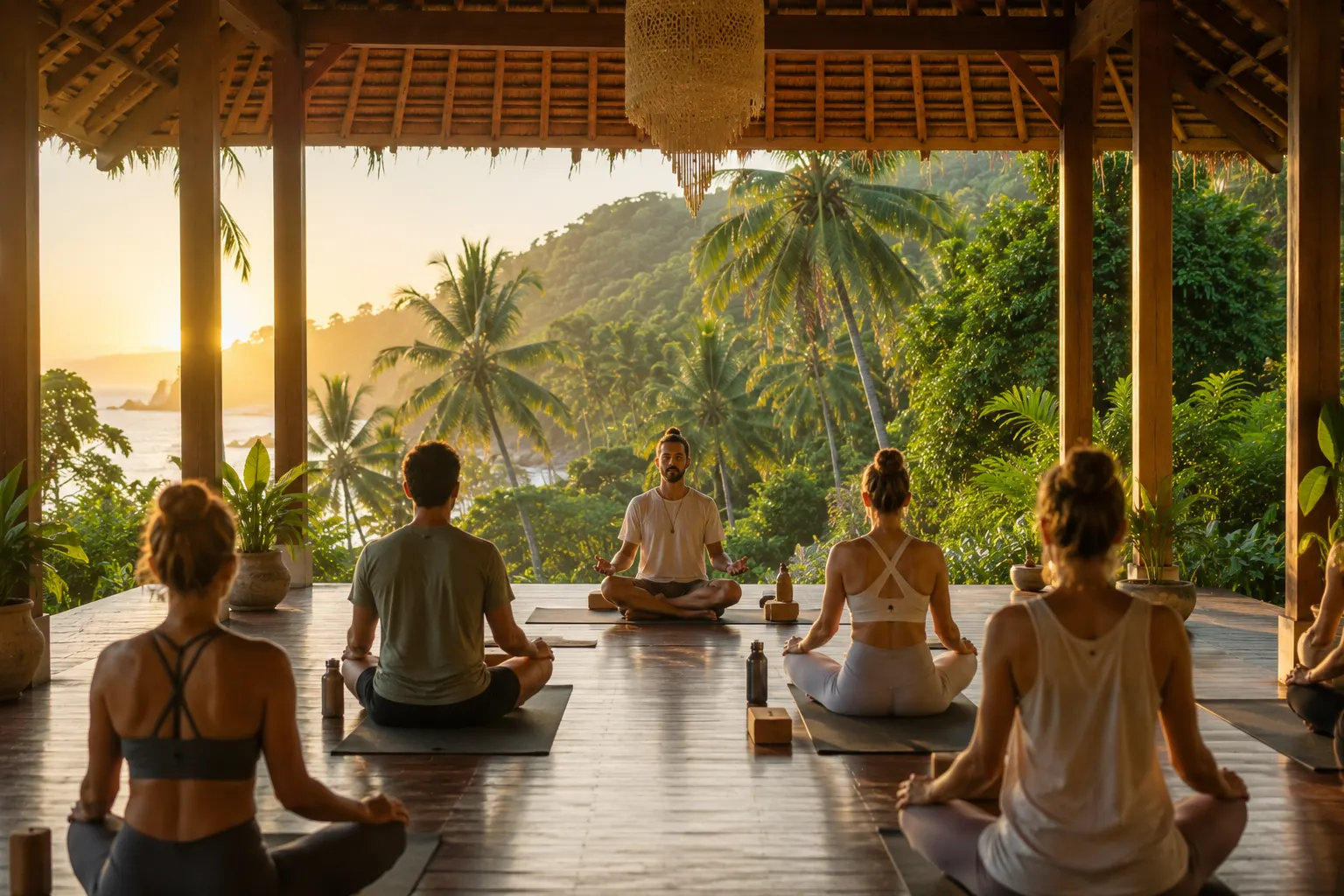
More sessions added as venues confirm dates. Run one? List it here.
Several days of surfing, with accommodation and meals built in — the right pick if the trip itself is built around the practice, not squeezed into other plans.
More retreats added as venues confirm dates. Run one? List it here.
Computed from what's actually listed above — not a fixed estimate, so this updates as real venues confirm dates and prices.
| Single lesson | €15 – 22 |
| Multi-day retreat | €480 – 650 |
The practice only gets you halfway — here's where on the island surfing is actually concentrated, so you can pick a place before you pick a listing.
Every venue below is one we've actually verified — not pulled from someone else's directory.
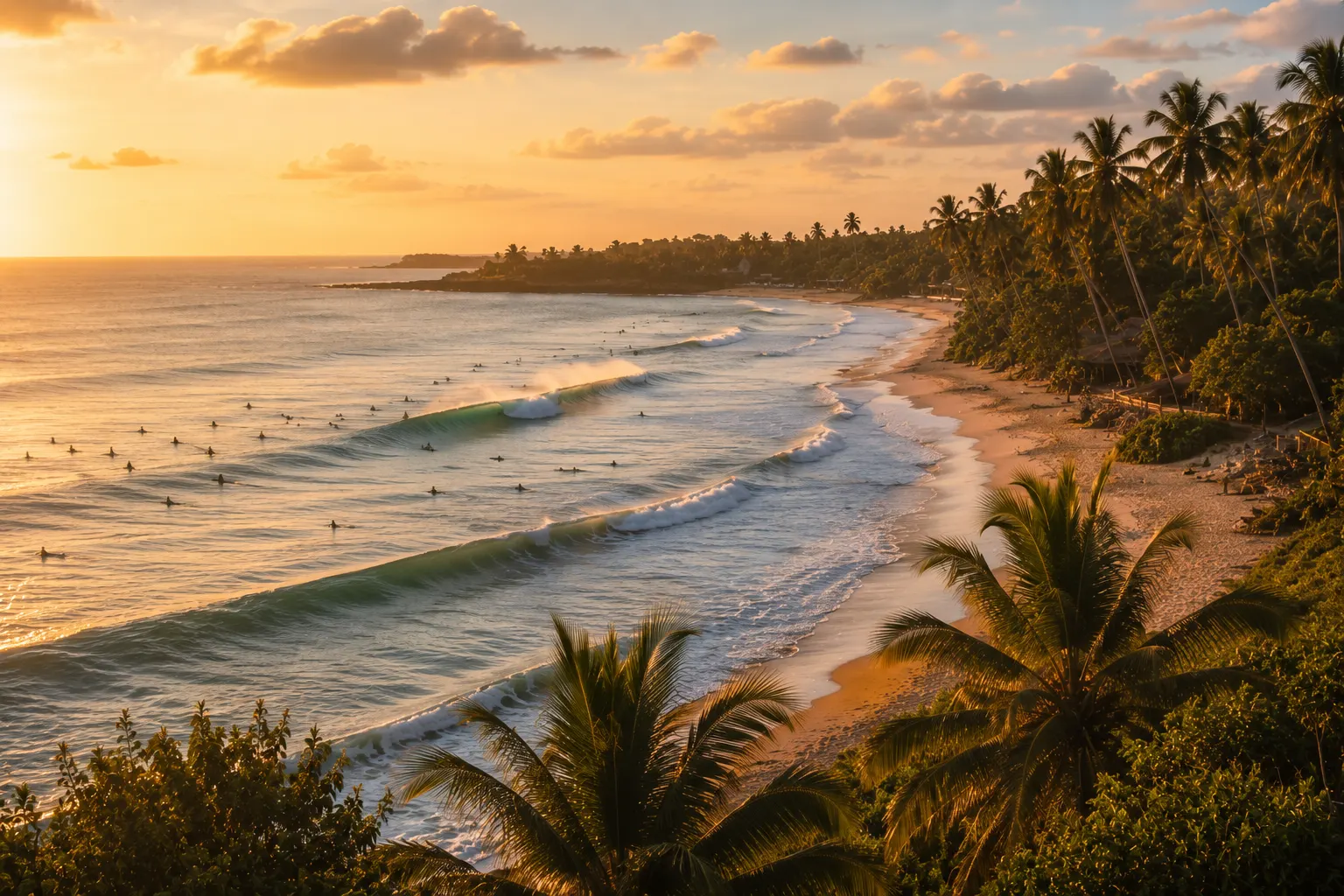
A no-frills surf camp a short walk from Main Point, timed to Arugam Bay's east c...
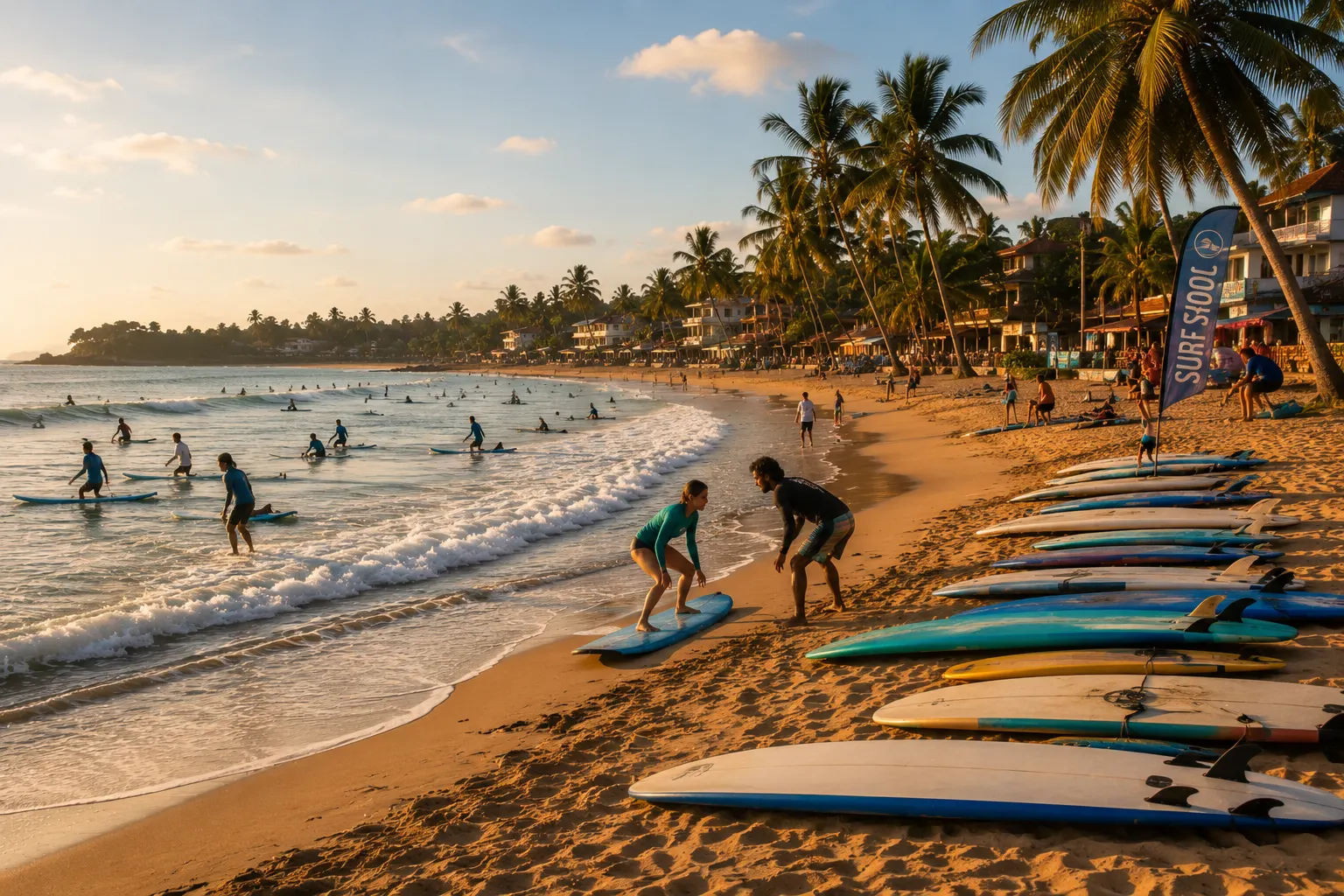
A dedicated surf camp on Weligama Bay, built around daily lessons and a full boa...
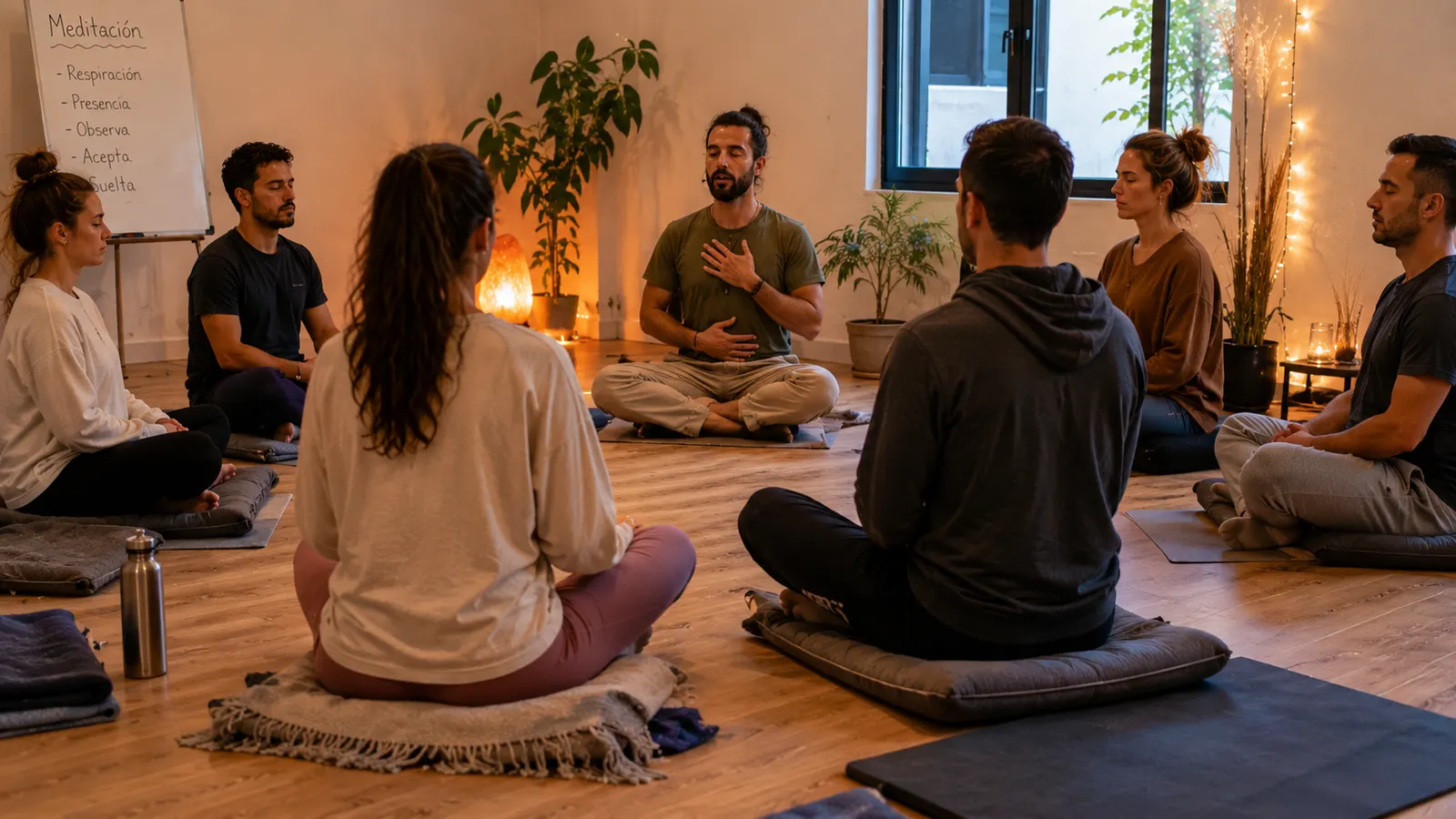
A dedicated yoga and breathwork space in Ahangama built around consistency rathe...
Sri Lanka runs two surf seasons on two coasts, and getting the timing right is the difference between warm, uncrowded, genuinely good waves and paddling out into onshore chop. This page covers what’s actually bookable right now, plus the season mechanics that decide whether a trip works at all.
We’re not one of these surf camps ourselves — lankaspirit is where every real camp across both coasts, from every operator we’ve verified, gets organized into a single place: sorted by coast, season and skill level instead of scattered across a dozen individual camp websites. That’s the reason to start here rather than on any single camp’s page — you’re seeing the whole island’s real season windows, not one operator’s booking calendar.
Sri Lanka sits between two monsoon systems that flip direction twice a year, and that’s the entire mechanism behind the “two coasts” advice you’ll see everywhere. The southwest monsoon (May–September) blows offshore on the east coast and onshore on the south; the reverse happens roughly November through April. Both coasts have swell most of the year — what actually changes is which one has clean, wind-groomed conditions at any given time. The south coast (Weligama to Ahangama) is in season November through April; Arugam Bay on the east coast is in season May through September, with July and August delivering the most consistent swell and May and September offering smaller crowds for a slightly smaller wave.
If you’ve never surfed, Weligama or Hiriketiya are the realistic starting point — sand-bottom, forgiving, and built around teaching complete beginners rather than just renting boards to people who already know how. If you already surf and want to sharpen technique, Ahangama or Midigama’s reef breaks with video-reviewed coaching will do more for your progression than another week of whitewater. If you’re comfortable in the water and want a longer, more consistent wave than the south coast offers, Arugam Bay’s point break is the trip — just remember it runs on the opposite season, so it’s rarely a spontaneous add-on to a south coast trip in the same window.
Ask how many students are in the water per instructor for a beginner lesson — a low ratio matters more to actual progress in the first few sessions than the camp’s marketing photos do. Ask whether coaching is video-reviewed or purely verbal, especially if you’re past complete-beginner level and want to see your own technique to improve it. Confirm board and wetsuit-or-rash-guard rental is genuinely included rather than an add-on fee revealed at checkout, and if you’re combining surf with yoga, check whether the yoga is run by the camp itself or outsourced to a separate nearby studio — both are fine, but it changes how tightly the schedule is actually integrated.
Most south coast camps run a similar rhythm: an early lesson or session while the wind is still calm (often 6–8am), breakfast and rest through the late morning heat, a second surf session or coaching review in the afternoon as conditions allow, and — at combo camps — an evening yoga class to close the day rather than more time in the water. Arugam Bay’s east coast camps lean more surf-focused day to day, with fewer built-in yoga sessions and more time structured purely around the point break’s conditions and tide.
Sri Lanka is a genuinely good, warm-water surf destination — not Indonesia or the Mentawais in wave size or barrel consistency, and it’s worth saying plainly rather than overselling it. What it does uniquely well: warm water year-round (a rash guard is usually enough, no wetsuit needed), an unintimidating learning curve for complete beginners, and an established yoga scene layered directly on top of the surf scene rather than bolted on as an afterthought. If you want the biggest waves on earth, this isn’t that trip — if you want to learn to surf or improve in a warm, relaxed setting with yoga built in, it’s one of Asia’s better options.
Sri Lanka’s surf scene includes a handful of internationally known operators alongside the local schools — worth knowing what they are, even though they’re not part of lankaspirit’s own verified directory. Lapoint runs a single dedicated camp in Ahangama, part of a Scandinavian-run global chain with sister camps in Portugal, Bali and Costa Rica among others — one of the more polished direct-booking commercial camps on the south coast. Kima Surf has a long-running camp in Weligama, one of the earlier established names in the beginner-bay scene there. Dreamsea also runs a south-coast camp aimed at the same international beginner-to-intermediate crowd. None of these are venues we list or book — the point of naming them is orientation if you’re comparing options beyond what’s bookable through us, not a recommendation either way. Use the vetting checklist above regardless of which name you’re looking at.
Ready to find your camp? Take our 5-question quiz and we’ll match you by coast, season and skill level rather than just point you at whatever’s currently open — or browse real surf retreats directly if you already know what you’re looking for.
Take our 5-question quiz and we'll match you honestly, not just push you toward the nearest listing.
Take the quiz