Every real whale-watching season in Sri Lanka — Mirissa's blue whales and Trincomalee's sperm whales — plus which boat operators to actually avoid.
The practice only gets you halfway — here's where on the island wellness is actually concentrated, so you can pick a place before you pick a listing.
This is the one page in this guide where the most important thing we can tell you isn’t where to go, but which operators to avoid. Sri Lanka is one of the most reliable places on earth to see blue whales, split across two coasts on opposite seasons — and a real share of the boats taking tourists out to see them do it in a way that stresses and endangers the animals. This guide leads with that, because it matters more than season dates.
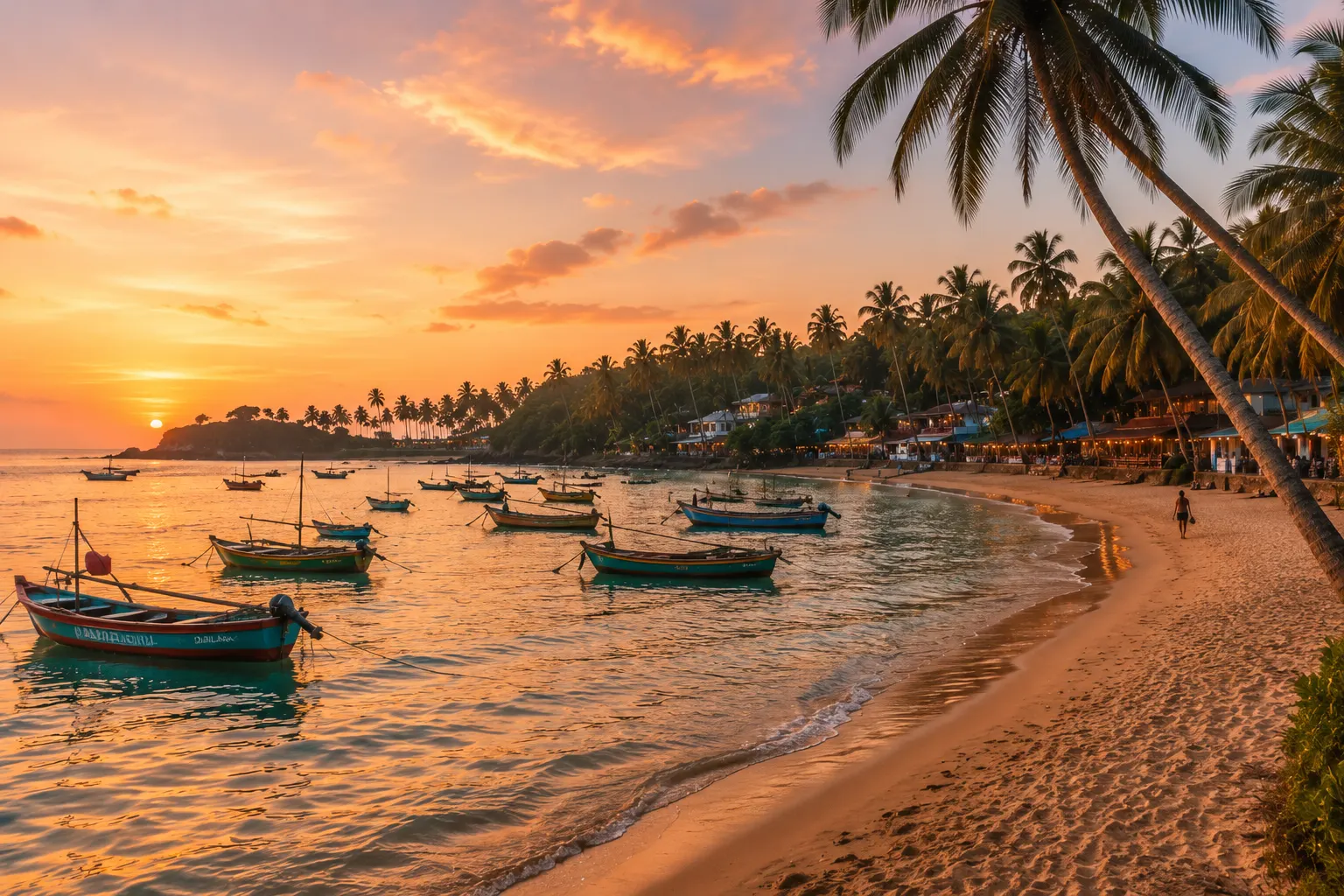
Mirissa, on the south coast, is the name most people mean by “whale watching in Sri Lanka” — a deep-water canyon just offshore brings blue whales within a few kilometers of the coast, alongside spinner dolphins, sperm whales and occasional orcas. The season runs December through April, peaking January through March, when reputable operators report roughly 70–80% sighting odds per trip. Outside that window the fleet doesn’t operate at all — the sea is too rough.
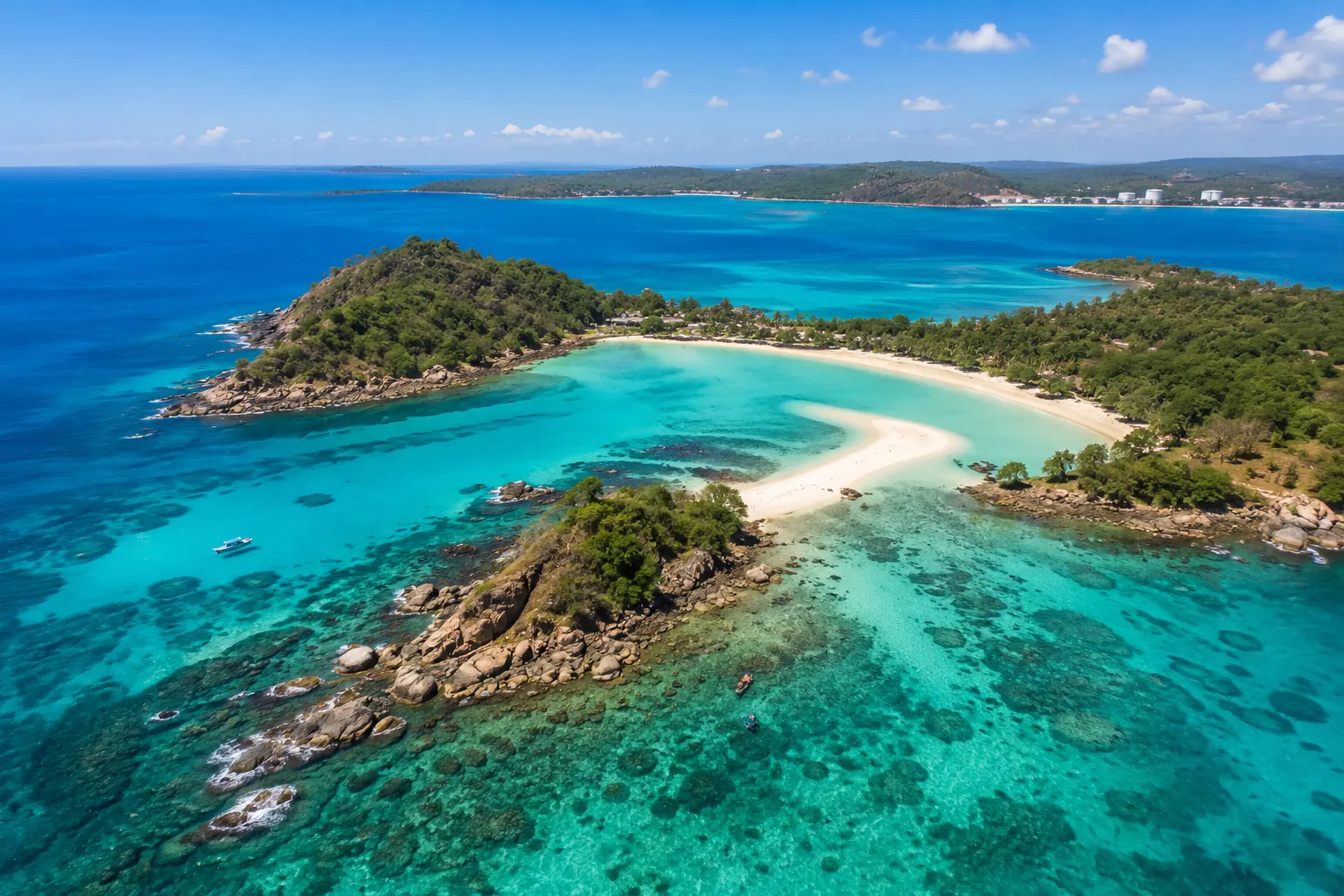
Trincomalee, on the east coast, runs on the opposite season — May through October, peaking June through August — precisely when Mirissa is in monsoon. A deepwater bay reaching 300+ meters, opening onto the Bay of Bengal, gives Trincomalee a different marine geography than Mirissa’s canyon system, and it shows in what you’ll see: sperm whales close to guaranteed in peak season, plus blue whales, pilot whales and sei whales less predictably, typically spotted six to eight nautical miles offshore. It’s a genuine complementary option for anyone traveling outside Mirissa’s window, not a lesser substitute.
International whale watching guidelines require boats to stay at least 100 meters from blue whales, approach slowly, avoid crossing their path, and never use high-RPM engines nearby. In Mirissa during peak season, it’s common to see 10 to 25 boats simultaneously chasing the same whale, far closer than guidelines allow, for hours at a stretch. Most operators aren’t concerned with this — the incentive is to guarantee tourists a close-up photo, not to protect the animal. Trincomalee’s smaller, newer whale-watching fleet sees this problem less acutely simply because there’s less volume competing for the same sighting, though it’s not immune to it either.
A small number of operators do it properly on the south coast: three companies — Whale Watching Club, Raja & the Whales, and Whale Warriors — are consistently cited as maintaining ethical distance and slower, less invasive approaches. We haven’t independently verified these three ourselves, so treat this as a starting point for your own research and direct questions to any operator before booking, not a guarantee — but it’s a far better starting list than picking the first boat tout on the beach.
Before you pay, ask directly: how many boats will typically be near the whale at once, what minimum distance the boat maintains, and whether the boat will follow a whale that’s trying to move away. A good operator answers these without hesitation; a boat tout who brushes off the question is a real signal.
Boats typically depart early, around 6–7am, with trips running 3–5 hours depending on conditions and how quickly whales are spotted. In Mirissa, budget roughly 4,000 LKR per person for the tour itself, plus government fees and taxes that can add a similar amount again — get a clear total price before boarding, not just the advertised tour cost. Trincomalee pricing follows a similar structure, though the smaller operator pool means less price competition than Mirissa’s well-established tourist circuit.
Planning a broader trip around either coast? Take our 5-question quiz to help structure it around what matters most to you. For a deeper look at real cost, timing and what a boat trip is actually like, see our full whale watching guide.
Sources consulted: The Wildlife Diaries — Ethical Whale Watching in Mirissa, Whale Watching Handbook — Sri Lanka Country Profile, Cinnamon U — Whale and Dolphin Watching in Trincomalee.
Take our 5-question quiz and we'll match you honestly, not just push you toward the nearest listing.
Take the quiz