Mirissa runs December–April, Trincomalee May–October — never both at once. Real season dates, real pricing, and what ethical actually looks like.
There's no single Sri Lanka whale watching season — the two coasts run in opposite windows. Mirissa (south) runs December–April, peaking January–March, for blue whales. Trincomalee (east) runs roughly May–October, most reliable May–August, for sperm whales. A basic boat ticket runs about 4,000 LKR (roughly €11) plus government fees, but most tourists book through an agency for €46–74 including hotel pickup and breakfast — that price gap is real, not a scam, and it's worth knowing which one you're paying for.
Sri Lanka doesn’t have one whale watching season — it has two, on opposite coasts, that never overlap. Get the coast and the month wrong and there’s simply no boat running, regardless of how good the operator is.
Mirissa, on the south coast, runs December through April, peaking January through March. Trincomalee, on the east coast, runs roughly May through October, most reliable May through August — precisely the months Mirissa’s fleet is docked for monsoon. If your trip falls in the gap months either side, check current operator schedules directly rather than assuming either coast is running.
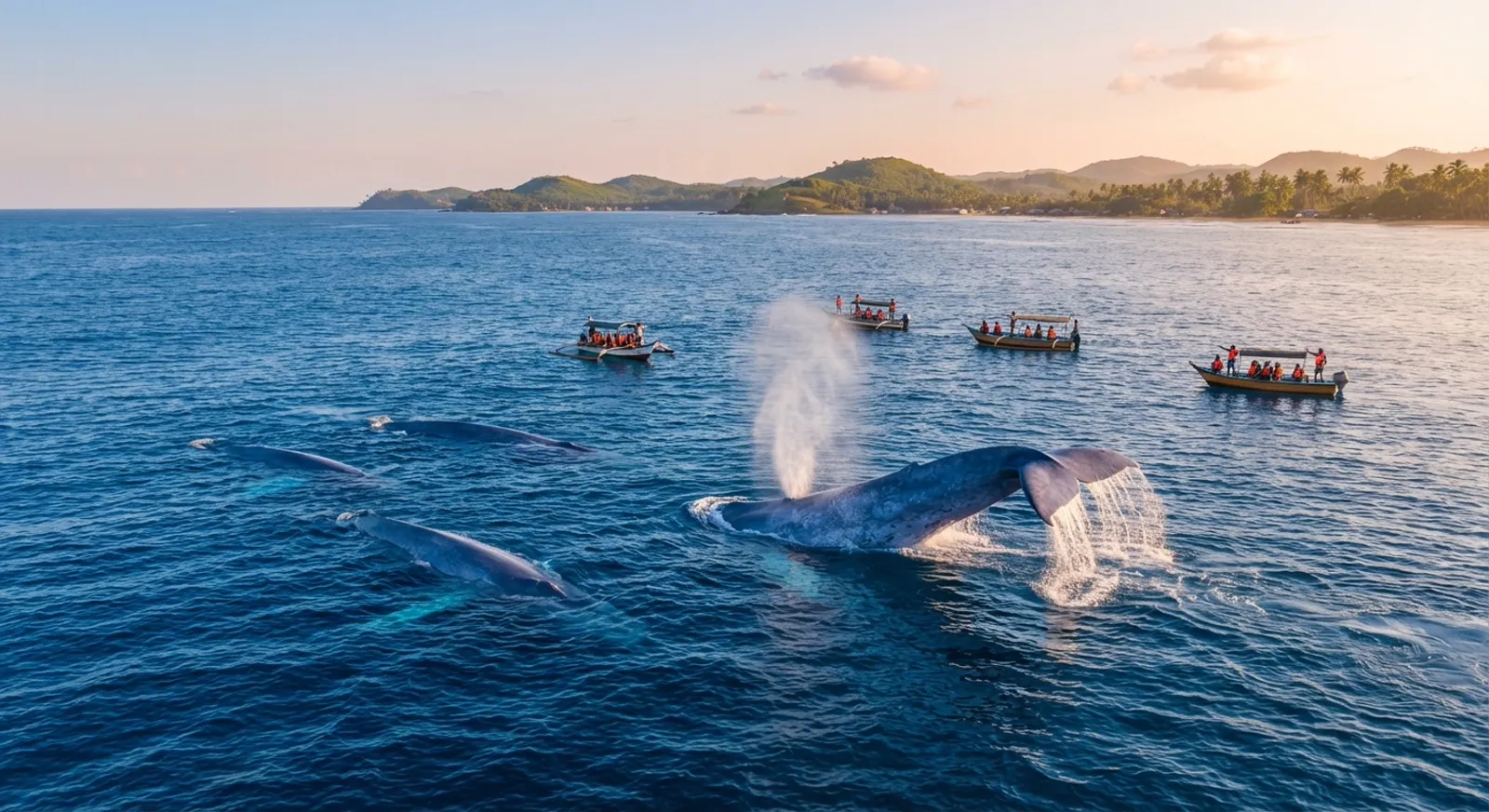
Mirissa’s draw is a deep-water canyon a few kilometers offshore that brings blue whales unusually close to land, alongside spinner dolphins and occasional sperm whales. In peak season (January–March), reputable operators report sighting odds in the 70-80% range per trip. Boats typically depart 6-7am, with trips running 3-5 hours depending on conditions.
This is also the more established, more heavily trafficked option — Sri Lanka’s Coast Guard maintains a dedicated presence in Mirissa harbor specifically to monitor whale-watching activity, under the Sea Mammals Observation, Regulation and Control Regulations. That regulatory attention exists because the crowding problem here is real: more on that below.
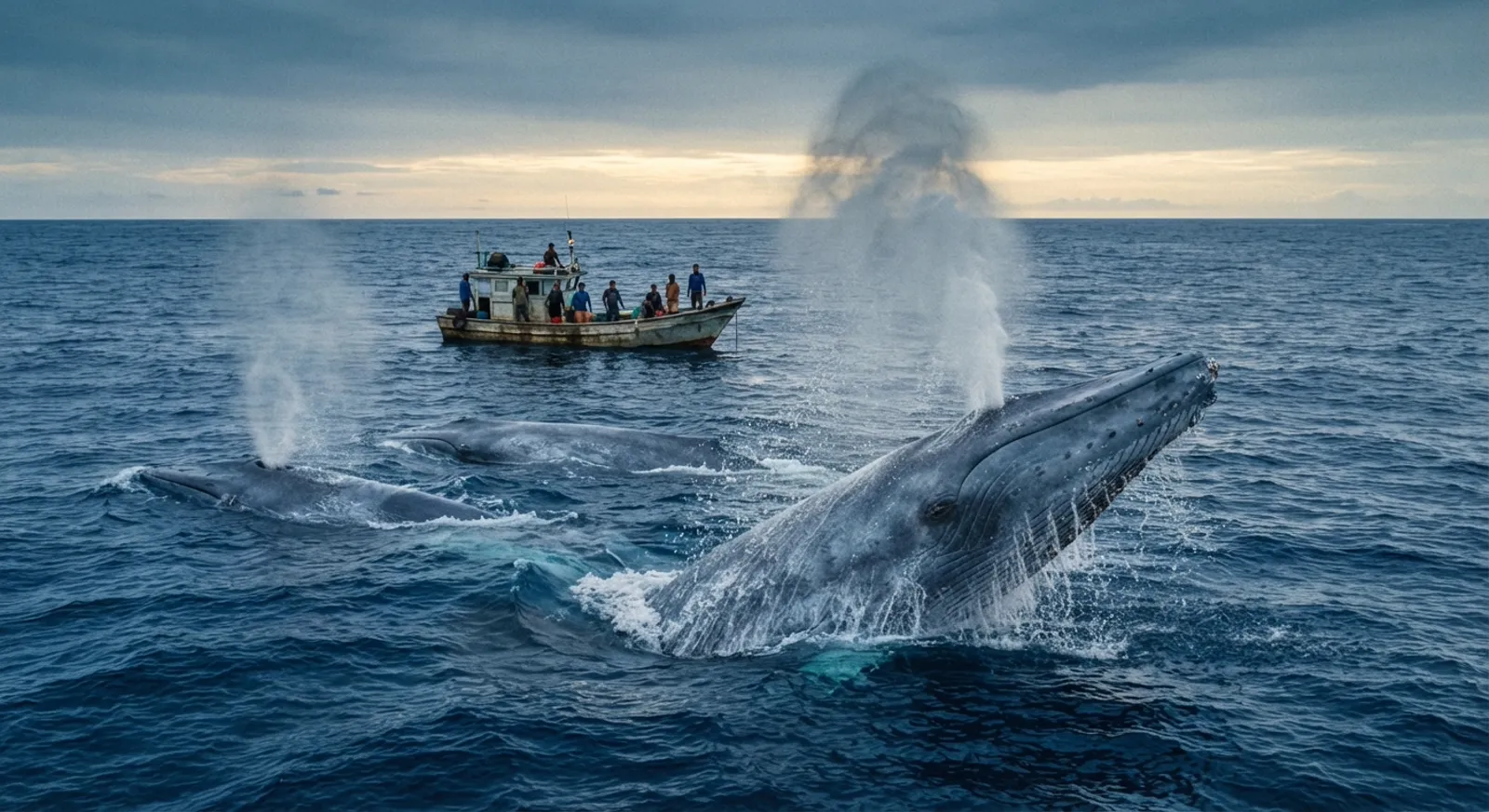
Trincomalee runs on the opposite half of the calendar from Mirissa, which makes it the practical choice if your trip doesn’t line up with the south coast’s window — not a fallback option, a genuinely different season. A deepwater bay reaching 300+ meters gives it different marine geography than Mirissa’s canyon, and it shows in what you’ll typically see: sperm whale pods, often five to twenty animals, spotted around eight nautical miles offshore, alongside blue whales less predictably. May and June tend to have the calmest seas and the most consistent sperm whale reports.
The fleet here is smaller and newer than Mirissa’s, which has one practical upside: less competition for the same sighting, and less of the crowding that defines Mirissa’s peak season.
Quoted prices for the same activity can range from about €11 to €74, which confuses people until they realize it’s two different products, not one price being gouged:
| What you’re booking | Typical price |
|---|---|
| Direct boat ticket at the harbor | around 4,000 LKR (€11) |
| + government fees and taxes | brings the direct total to around 7,000–8,000 LKR (€19–22) |
| Agency package (pickup, breakfast, guide, boat) | €46–74 |
Neither is the “real” price and the other a markup — booking direct saves money but means arranging your own transport and skipping breakfast; the agency price buys convenience. Ask exactly what’s included before comparing two quotes that look wildly different.
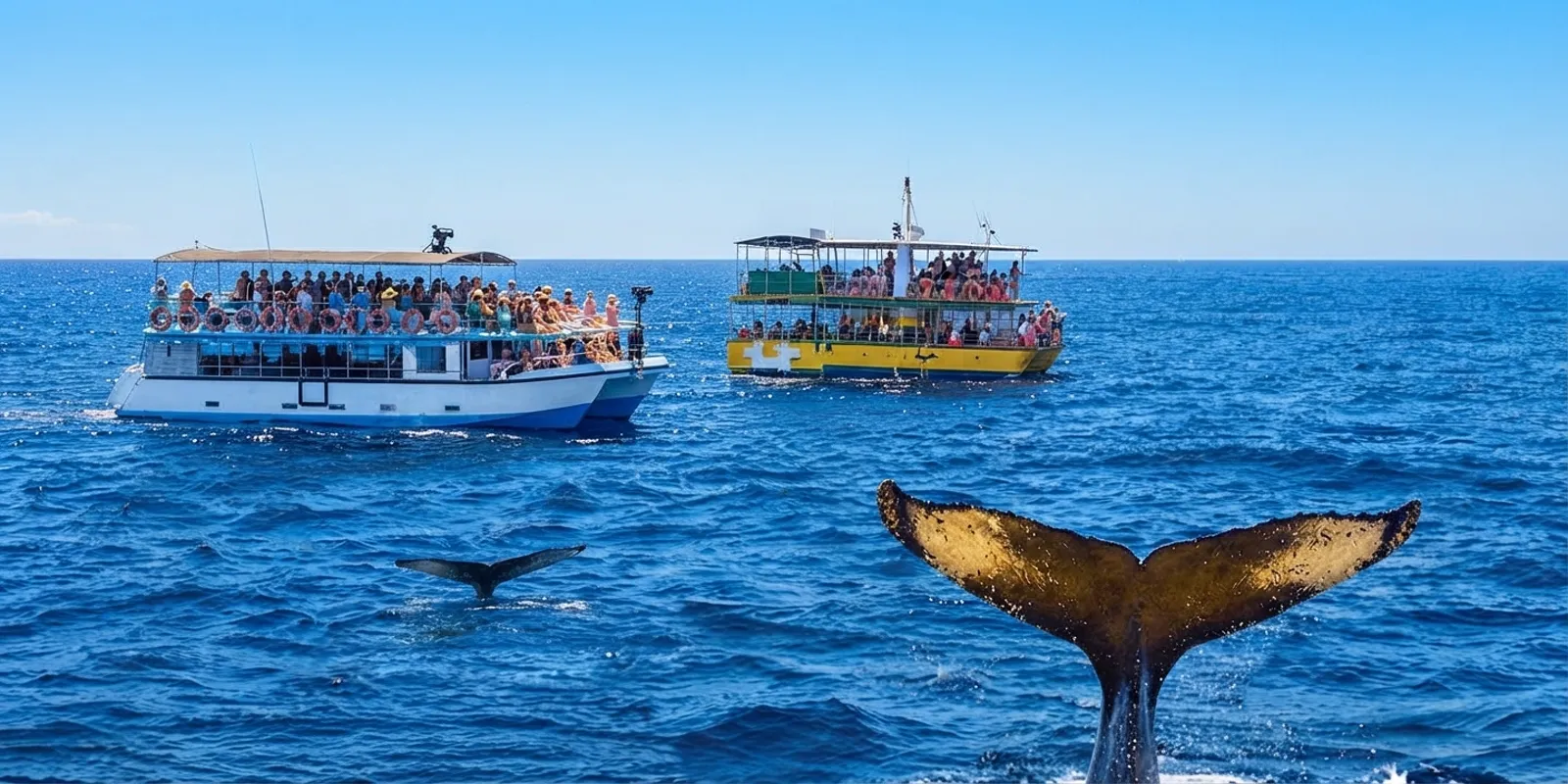
International guidelines call for boats to stay at least 100 meters from a whale, approach slowly, and never cut across its path. In Mirissa during peak season, it’s common to see 10 to 25 boats converging on the same animal, well inside that distance, for extended periods — research on the resulting stress behavior in whales, including mother-calf pairs, is a genuine concern, not a theoretical one. Trincomalee’s smaller fleet runs into this less often simply because fewer boats are chasing the same sighting.
A legal framework already exists for this — Sri Lanka’s Sea Mammals Observation, Regulation and Control Regulations — and the Coast Guard actively monitors Mirissa harbor. Enforcement is inconsistent, though, which means the practical filter is still asking your operator directly: how many boats will typically be near the whale at once, what minimum distance they maintain, and whether they’ll back off from a whale that’s moving away. An operator who answers plainly is a good sign; one who brushes off the question is a real one too. For a closer look at which operators are actually worth booking, see our full ethical whale watching guide.
Mirissa sits on the same stretch of coast as Ahangama and Weligama, which makes an early boat trip easy to fold into a longer south coast stay built around something slower — a week of actual structure rather than a single morning activity. If that’s more what you’re after, it’s worth seeing what a real wellness retreat in Sri Lanka actually looks like before you build the rest of the trip around it. Browse experiences across the island to pair a boat morning with something slower.
If crowding bothers you as much as it bothers us, book with an operator who'll answer specific questions about boat distance and won't chase a whale that's trying to move away — and ask before you pay, not after you're on the water. Trincomalee's smaller fleet makes this easier by default, simply because fewer boats are competing for the same sighting; Mirissa in peak season takes more deliberate choosing.