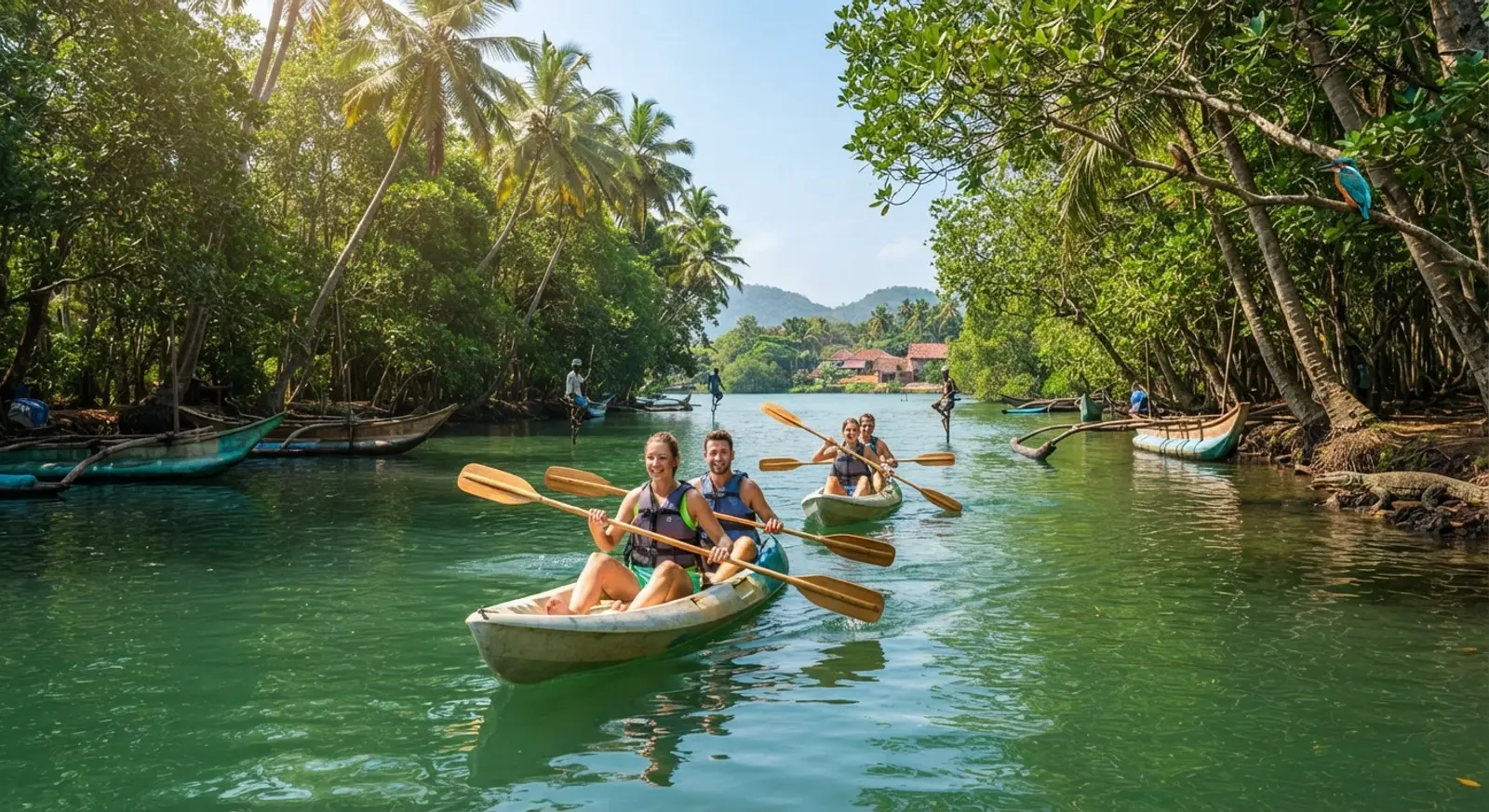
Kerala has the deeper clinical bench; Sri Lanka pairs a genuine, regulated system with an easier trip. Real costs, program lengths and how to choose.
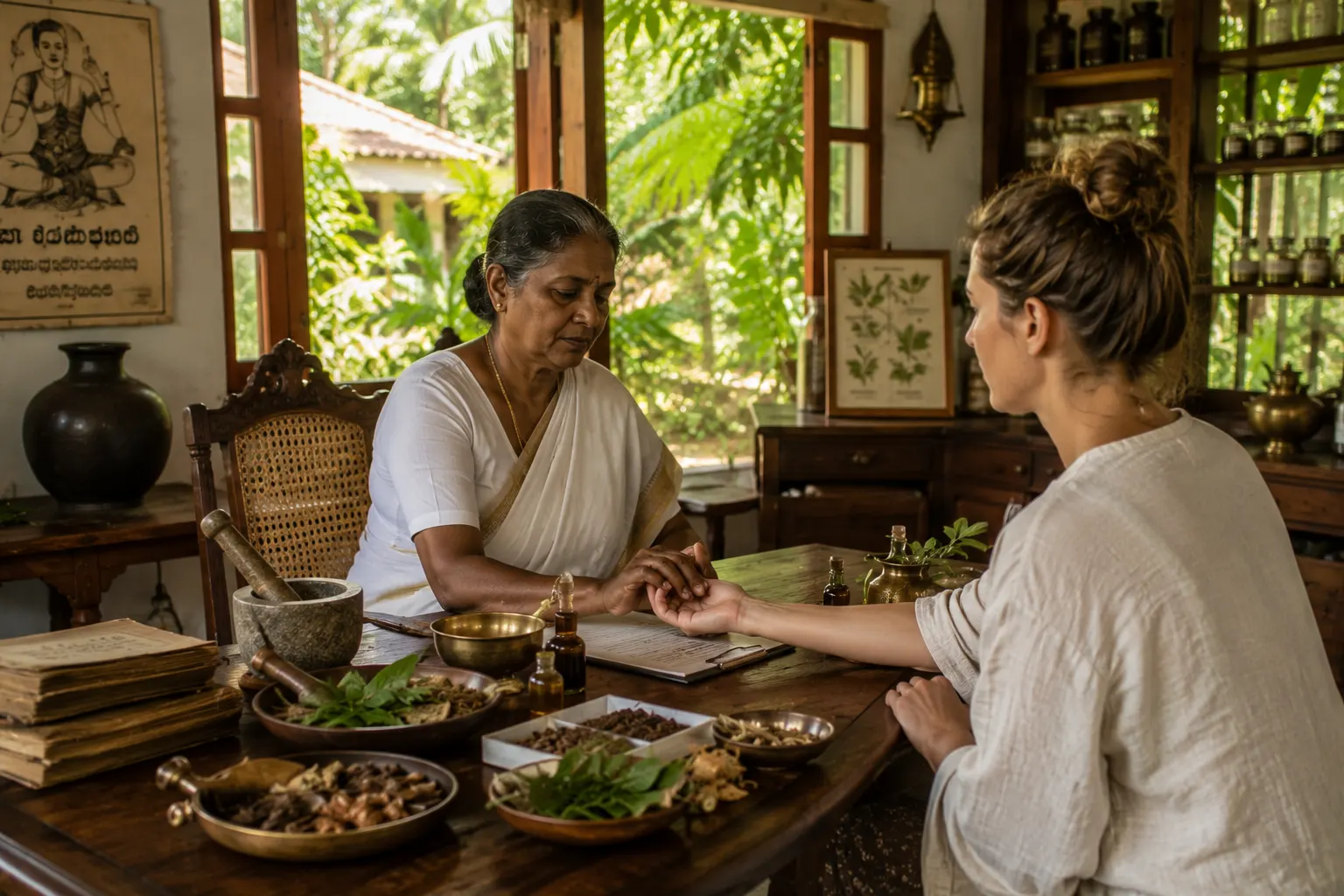
Both are genuine, physician-led Ayurveda traditions — this isn't a real-vs-fake comparison. Kerala has the deeper clinical bench: more hospitals, more specialist physicians, and generally lower prices for an equivalent clinical program. Sri Lanka's system is smaller but still real and government-regulated, and it's the easier trip to build around — shorter flights from Europe, a program you can pair with a beach or hill-country stay in the same trip, and a more resort-comfortable format if you want serious treatment without a hospital setting. Choose Kerala if the clinical depth and price are what matter most; choose Sri Lanka if you want a genuine program without turning the whole trip into a medical stay.
Ayurveda didn’t arrive in Sri Lanka as an import from India — it’s been practiced on the island for over two thousand years, with its own textual tradition and, today, its own government ministry, registered physicians and accredited hospitals under the Ayurveda Act. That’s the first thing worth knowing before comparing it to Kerala: this isn’t a genuine-original-vs-tourist-copy question. It’s two real, physician-led systems that happen to have grown to different sizes, and the right one depends on what you’re actually optimizing for on a specific trip.
Kerala is the larger, more internationally established Ayurveda destination, and it shows in the clinical bench: more hospitals, more specialist physicians, more decades of dedicated Panchakarma infrastructure, and — commonly — lower prices for an equivalent clinical program once you’re past the resort-brand tier. Kerala’s Department of AYUSH runs a formal state certification system (Ayur Diamond), and many serious centers also carry NABH accreditation, the same hospital-quality standard used across Indian healthcare.
Sri Lanka’s system is smaller but structurally similar: Ayurveda sits inside the national healthcare system under the Department of Ayurveda, with registered physicians and government-regulated hospitals and clinics, concentrated mainly around the Kandy hill country and Bentota’s resort-ayurveda cluster. What Sri Lanka trades for Kerala’s depth is ease — the island is small enough to pair a genuine ayurvedic program with a second week of something else without turning your whole trip into internal-transit logistics.
More hospitals and specialist physicians, generally lower prices for an equivalent clinical program, decades of dedicated infrastructure.
Smaller but genuinely regulated system, shorter flights from Europe, easy to combine with a second week of yoga or beach time on the same island.
Prices below are for an actual physician-led program — consultation, prescribed treatment, structured days — not a single spa massage, which is bookable far cheaper in either country and isn’t Panchakarma.
| Program | Kerala | Sri Lanka |
|---|---|---|
| 3–5 day introduction | ~€60-200 | ~€150-400 |
| 7-day clinical course | ~€150-350 | ~€400-800 |
| 14-21 day full Panchakarma | ~€400-1,200 | ~€800-2,500 |
The gap is real but it’s narrower once you factor in the whole trip, not just the program. A resort-format Ayurveda stay in either country — the kind that prices closer to a five-star hotel than a clinic — can run well above these ranges regardless of country; the price difference above is specifically between hospital-adjacent, clinically-run programs. Our own directory’s example of a shorter, relaxation-oriented format is Crescent Bay’s 4-day Relax & Restore in Unawatuna, from €410 — priced as a wellness stay with two ayurvedic massage treatments included, not a clinical detox, which is a useful real-world anchor for what a short introductory-tier program actually looks like versus a full Panchakarma course.
The single most important thing to check before booking anywhere — Kerala or Sri Lanka — is the same: does a registered physician run your consultation and diagnosis before any treatment plan starts, or are you handed a spa menu with Sanskrit names attached to it. A genuine program in either country starts with that consultation, prescribes treatment toward your specific dosha and condition, and can involve a real detox phase with fatigue before improvement — which is a sign it’s the actual protocol, not evidence something’s wrong.
Sri Lanka regulates Ayurveda through the Department of Ayurveda under the Ayurveda Act, registering physicians and private ayurvedic hospitals and clinics nationally — this is the same regulatory backing behind the government-accredited hospitals concentrated in the Kandy hill country. Kerala’s framework is more visibly branded: a dedicated state AYUSH department, the Ayur Diamond quality mark specific to Ayurveda centers, and — for centers that pursue it — NABH accreditation, the broader Indian hospital-standards certification. Neither framework is “unregulated.” Kerala’s is simply older, larger and more heavily marketed around its certification marks, which makes it easier to spot at a glance; Sri Lanka’s is smaller and less branded, but a legitimate center will still confirm its registration status the moment you ask.
Three to five days gets you a real introduction in either country — a genuine physician-led taste, not a full cycle. Seven to fourteen days is the realistic minimum for a complete Panchakarma protocol, and some traditional courses run up to 21 days for chronic conditions under closer supervision. This is where the “which country” question often matters less than the “how many days” question: a 5-day program in Kerala and a 5-day program in Sri Lanka are both introductions, not detox cycles, and neither will out-perform the other on a timeline too short for the treatment itself.
Sri Lanka is the shorter flight from most of Europe — typically 9-11 hours direct or one stop, against Kerala’s longer routing through Kochi or Trivandrum, usually with a connection. Once you’re on the ground, Sri Lanka’s compact geography is the bigger practical advantage for combining Ayurveda with anything else: a week in the Kandy hill country or Bentota, then a second week of yoga or beach time on the south coast, is a realistic two-week trip on one small island. Kerala is larger, and its Ayurveda centers sit at more of a distance from the state’s beach and hill-station areas, so a comparable two-part trip usually means more internal travel — a domestic flight or a long drive between the clinical stay and whatever comes after it.
Choose Kerala if the clinical outcome is the priority and you have the time for it: 14+ days, a serious hospital-format program, and you’re comfortable with the extra flight time and a system that’s larger and more commercialized to navigate. The depth of specialist care and generally lower per-day cost are real advantages once you’re past the resort-brand tier.
Choose Sri Lanka if you want a genuine, physician-led program without building the whole trip around a medical stay — a week of real Ayurveda in Bentota or the hill country, paired with a second week somewhere else on the same island, on a shorter flight from Europe. It’s a smaller system, but “smaller” isn’t “less real” — the same physician-consultation, dosha-matched, program-length-matches-the-treatment checklist applies, and Sri Lanka’s centers pass it.
For a full breakdown of Sri Lanka’s own regional strengths — Kandy versus Bentota, what a Panchakarma day actually looks like, and how to vet a specific center — see our Ayurveda in Sri Lanka guide, or compare ayurveda retreats directly if you’re ready to look at real programs.
The question we'd actually push back on isn't 'which country' — it's 'how many days do you really have.' A 5-day program in either country is a taste, not a Panchakarma cycle; if that's genuinely all the time you have, Sri Lanka's shorter-stay, resort-format options make more sense than flying to Kerala for a program too short to do what Kerala is specifically good at. If you have 14+ days and the clinical outcome is the priority, Kerala's deeper bench is worth the longer trip.