Five surf towns, one 40km stretch, genuinely different waves — Weligama's beginner bay to Midigama's reef points, with a real skill-level progression route.
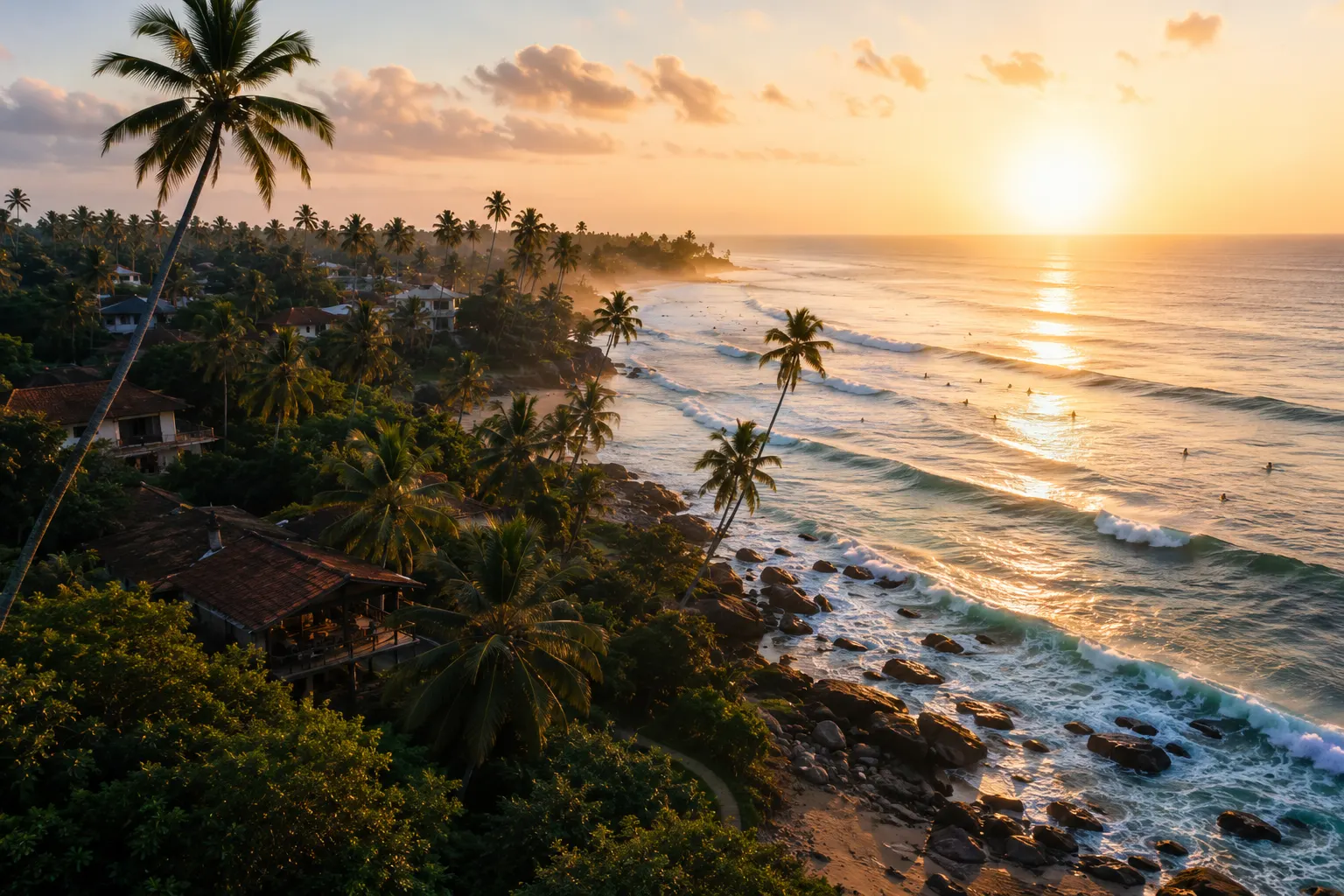
Sri Lanka's south coast isn't one surf destination — it's five towns packed into roughly 40km of coastline, each with a genuinely different wave. Weligama is the country's biggest total-beginner bay. Hikkaduwa is a social, beginner-to-intermediate beach break with a livelier scene. Midigama and Ahangama run faster, more technical reef points (Ram's Right, Sticks, The Rock) for surfers who already know what they're doing. Hiriketiya splits the difference — a beginner-friendly bay with a proper reef step-up on one side. Most visitors don't pick just one; they base in one town and day-trip the rest, since none of them are more than 40 minutes apart.
Weligama, Hikkaduwa, Midigama, Ahangama and Hiriketiya sit within a roughly 40-kilometer stretch of coastline, and no two of them surf the same way. This guide goes town by town, break by break, into the named waves and skill-level detail the busiest stretch of the south coast deserves — see our complete surfing in Sri Lanka guide for the fuller picture of both coasts, including the quieter towns beyond this corridor.
All five towns run the same season — November through April, with December through February as the calmest, most consistent stretch — but that’s about where the similarity ends. Moving roughly west to east along the coast: Hikkaduwa is the liveliest, most social entry point; Weligama is the biggest dedicated beginner bay; Midigama and Ahangama sit next to each other with the coast’s best reef points; Hiriketiya breaks off further south as a smaller, boutique version of Weligama’s setup. None of them are more than about 40 minutes from each other, which is why most trips don’t pick just one.
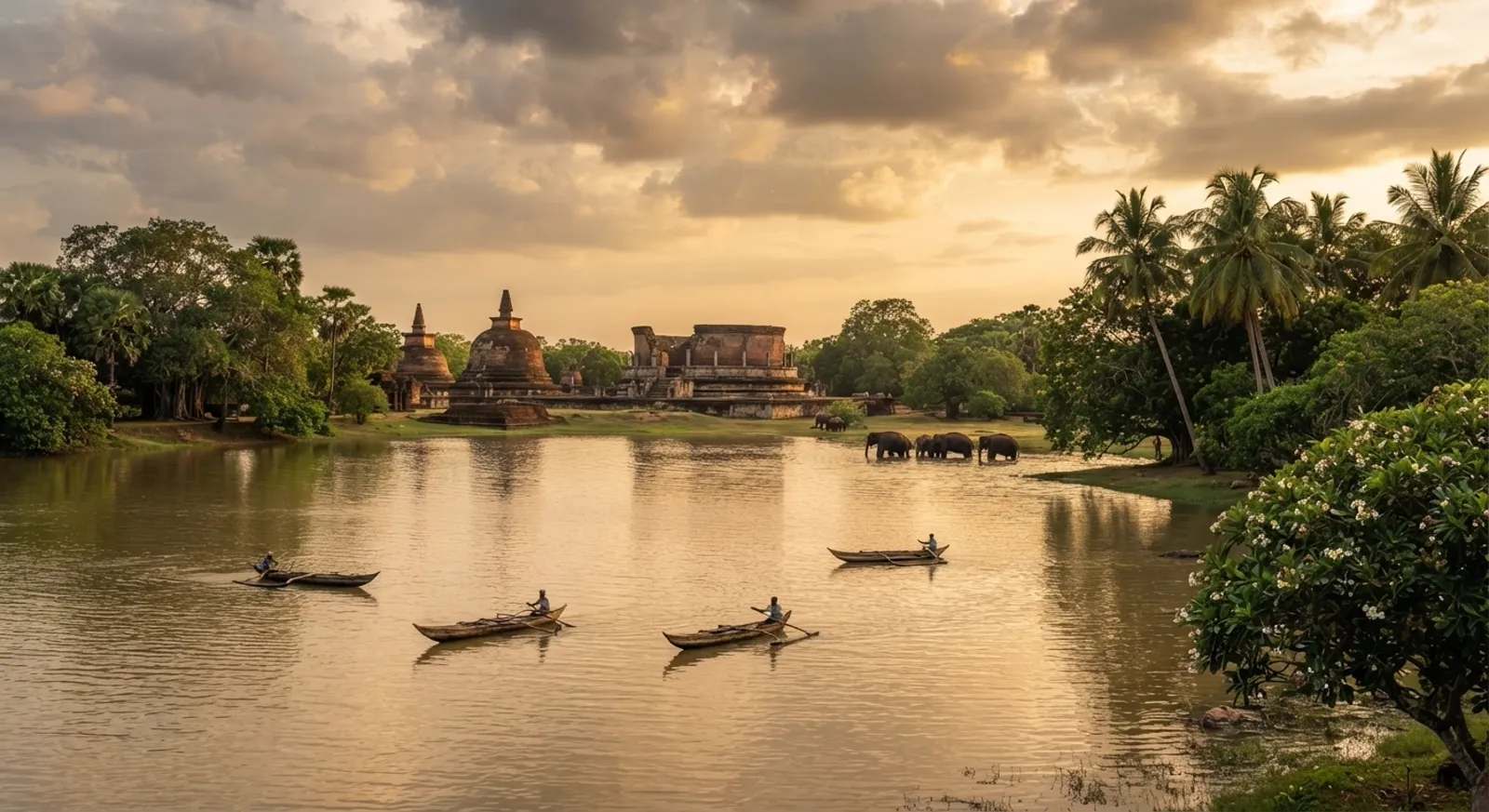
Weligama is built entirely around teaching people who’ve never stood on a board before. The beach break at the east end of the bay is a wide, sand-bottomed, forgiving wave — genuinely the most consistent total-beginner surf in the country, and where the highest concentration of surf schools on the island runs its lessons. Once that stops being a challenge, the reef break at the west end of the same bay gives you somewhere to step up without leaving town. Weligama isn’t a pretty beach next to its neighbors — the main road runs close enough to add some traffic noise — but as a place to actually learn to surf, nothing else on this coast matches its infrastructure.
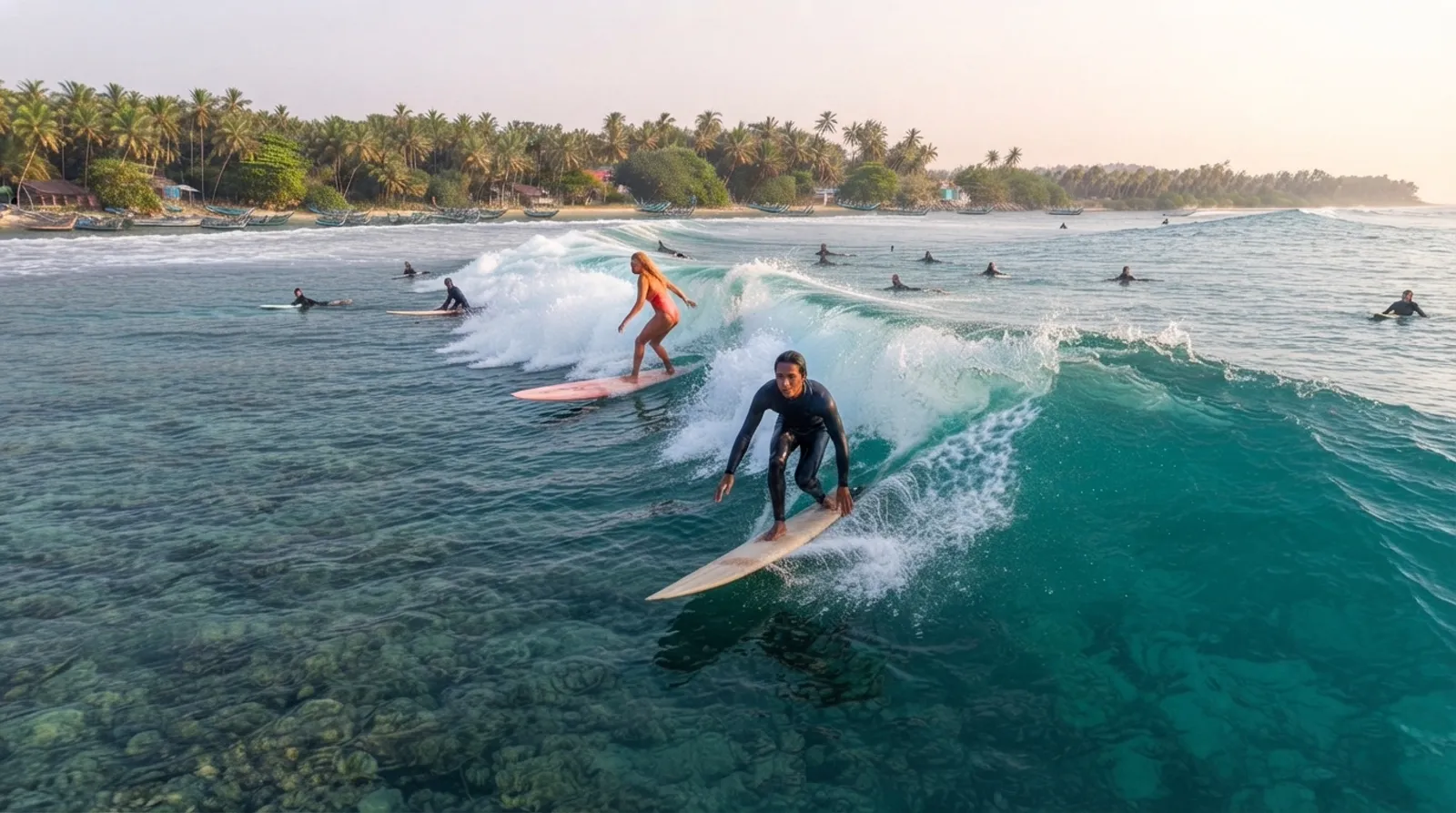
Hikkaduwa sits further up the coast and runs a consistent main beach break working best at 1-3 feet — beginner-to-intermediate, forgiving, with surf schools lined along the strip. It’s not purpose-built for total first-timers the way Weligama is, and it isn’t trying to be a quiet wellness stop either: this is the south coast’s most social, nightlife-heavy town, with a protected coral reef offshore for days you’d rather snorkel than paddle out. Come here if you want to learn or improve alongside a livelier evening scene than the quieter towns further south offer.
Midigama is where the south coast stops being forgiving and starts rewarding real technique. Ram’s Right, the signature wave, is a long, fast, hollow right-hand point break that works best on a mid-to-high tide — not a beginner wave, and it doesn’t pretend to be. Coconuts, a short paddle away, is a more forgiving reef break for confident intermediates building toward Ram’s pace, and Plantations is the mellowest of the three, often the pick for surfers moving up from beach breaks toward their first reef wave. There’s almost no town center here — a scatter of guesthouses and surf camps along the coast road, and not much else — which is exactly why the swell stays better than its busier neighbors.
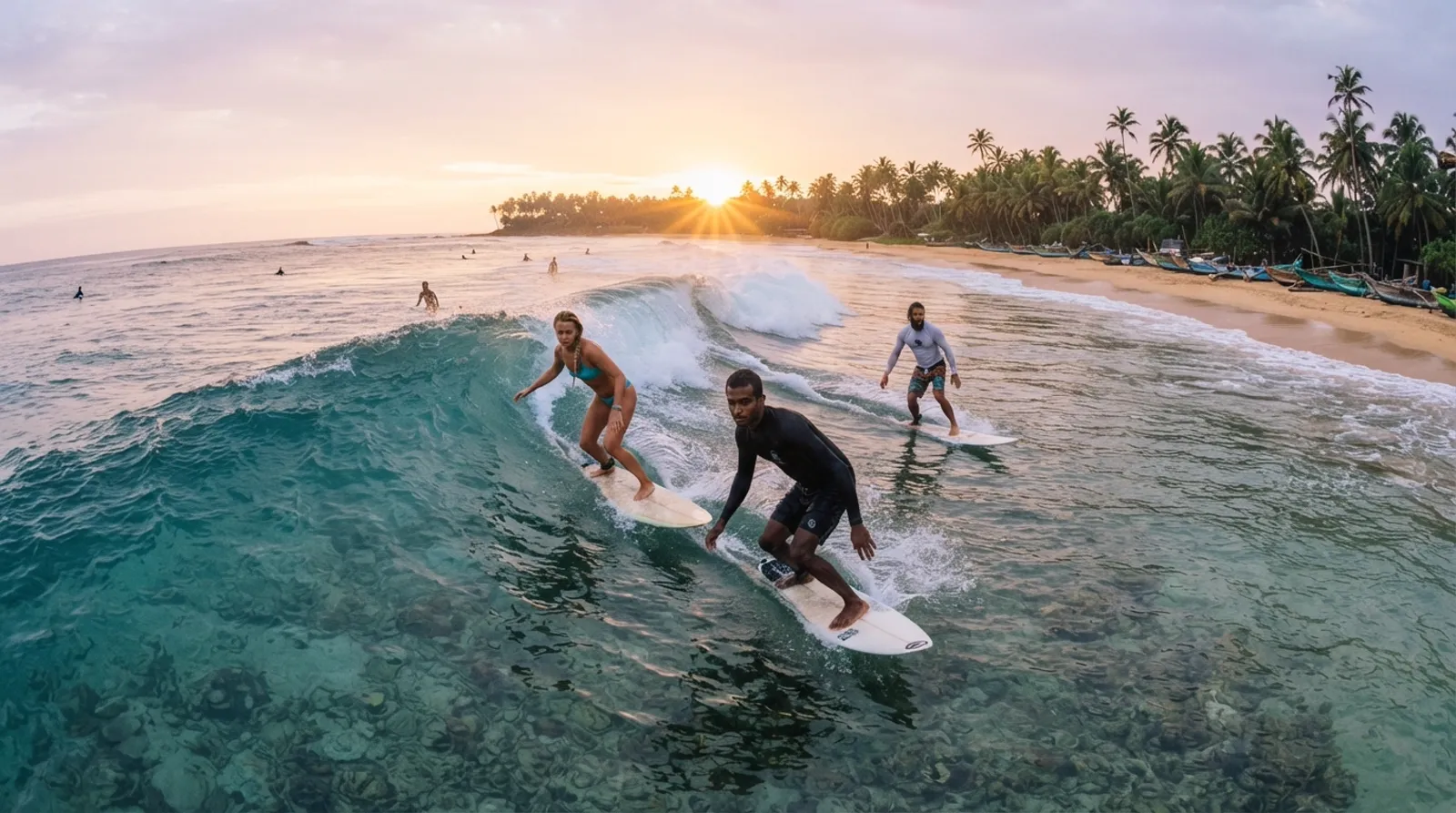
Ahangama, a few minutes from Midigama, runs a similar caliber of wave with more built-up infrastructure around it. Sticks is a 200-meter, chest-deep semi-reef right-hander — the standard step-up wave for surfers moving past beach breaks. Kabalana is the most consistent and popular break in the area, a long sandy-bottomed stretch forgiving enough for first-timers despite sitting in reef-point territory. The Rock, alongside Kabalana, is a punchier A-frame — a shorter hollow right and a heavier left for surfers who already know what they’re doing. Beach breaks nearer town cover total beginners too — Ahangama genuinely spans the widest skill range of any single south coast town, plus the coast’s most concentrated yoga and breathwork scene for the hours you’re not in the water.
Hiriketiya breaks off from the Weligama-Ahangama corridor further south — a horseshoe bay you can walk end to end in under ten minutes. The beach break in the middle of the bay is genuinely beginner-friendly and where most schools run lessons, protected and manageable most of the year. The reef break on the left side of the same bay is faster and more powerful, a real step-up wave without needing to relocate. If the main bay’s lineup feels crowded — it does in peak season — Kudawella Beach a few kilometers east is a calmer alternative for early lessons. Hiriketiya trades Weligama’s scale and school density for a smaller, quieter, more walkable version of the same idea.
The genuine advantage of this stretch of coast over almost anywhere else in the world is that every one of those steps sits within a 15-minute scooter ride of the last — you can progress from your first-ever lesson to a real reef wave without ever changing where you’re staying.
None of the five towns are far apart, but they’re not walkable to each other either — a scooter (roughly €6-10/day) or tuk-tuk is how almost everyone gets around. Weligama, Midigama and Ahangama sit within 10-15 minutes of one another, close enough that basing in one and day-tripping the others for a specific break is completely normal. Hikkaduwa is the outlier, 35-40 minutes north of Ahangama — closer to Galle than to the rest of this corridor. Hiriketiya is 30-40 minutes south of Ahangama and Weligama, its own small detour rather than a stop along the way.
Ahangama specifically has the deepest overlap of any town on this coast — reef breaks made it a surf town first, and a genuine daily yoga, breathwork and sound-healing scene grew up around that surf culture over the following decade, running twice a day across a handful of studios within scooter range of each other. Weligama and Hiriketiya both run lighter versions of the same pairing. If you want the full mechanics of how a surf-and-yoga week actually works, every real camp on this coast is organized by town, season and skill level here.
Weligama and Midigama sit 15 minutes apart and could not be more different waves — one is sand-bottomed whitewater built for someone's first-ever lesson, the other is a fast reef point that will spit a beginner straight onto the reef. Knowing which town actually matches your level is the difference between a trip that builds your surfing and one that just puts you in a lineup you're not ready for.