Every real surf town on both coasts, break by break, with swell and wind detail, real costs, and a season system that decides everything else.
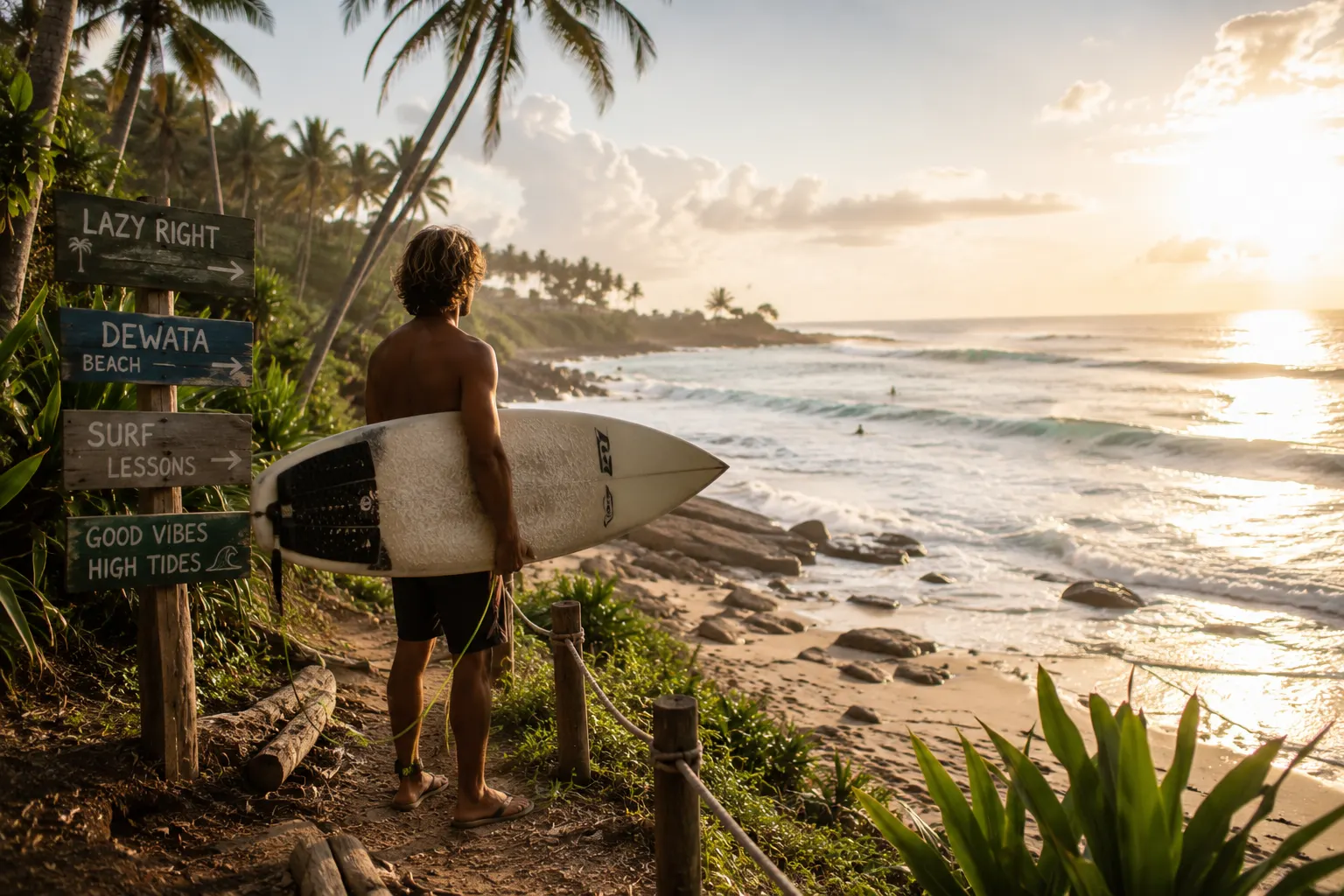
Two coasts, two opposite seasons, one decision that shapes everything else. The south and west coast — a roughly 100km run of towns from Tangalle to Bentota — is in season November through April, with the deepest concentration of breaks and skill levels anywhere on the island. The east coast has one real surf town, Arugam Bay, running the exact opposite window, May through September, built around a long right-hand point break with genuine competitive pedigree. Pick your coast by whichever season lines up with your dates, then pick your town within that coast by your actual skill level — Weligama and Hiriketiya for a first-ever lesson, Midigama and Ahangama for real reef points, Arugam Bay's Main Point for something faster again.
Two coasts, two opposite monsoons, and one decision that determines everything else about the trip: which side of the island your dates actually fall on. Get that right and the rest — which town, which break, which skill level — sorts itself out fast.
This covers both coasts properly: every real town with a wave from Tangalle in the far south up past Colombo, plus Arugam Bay and its satellite breaks on the east — not just the five or six names that show up in every quick list, but the fuller stretch, because a lot of the best learning curves and least crowded sessions happen in the towns nobody mentions first.
Sri Lanka sits between two monsoon systems that hit the island from opposite directions at opposite times of year, and that single fact is the entire mechanism behind the “pick a coast” advice you’ll hear everywhere:
| Coast | Season | What’s there |
|---|---|---|
| South & west (Tangalle to Bentota) | November – April, peak Dec–Feb | 10+ named surf towns, every skill level, the deepest concentration of schools on the island |
| East (Arugam Bay) | May – September, peak Jun–Jul | One surf town built entirely around a long right-hand point break, plus a handful of satellite breaks nearby |
Outside these windows both coasts still have waves — they’re just less consistent, choppier, and more prone to rain. Most trips commit to one coast rather than chasing both swells on a single visit, since the seasons genuinely don’t overlap enough to make that work without hitting one of them off-peak.
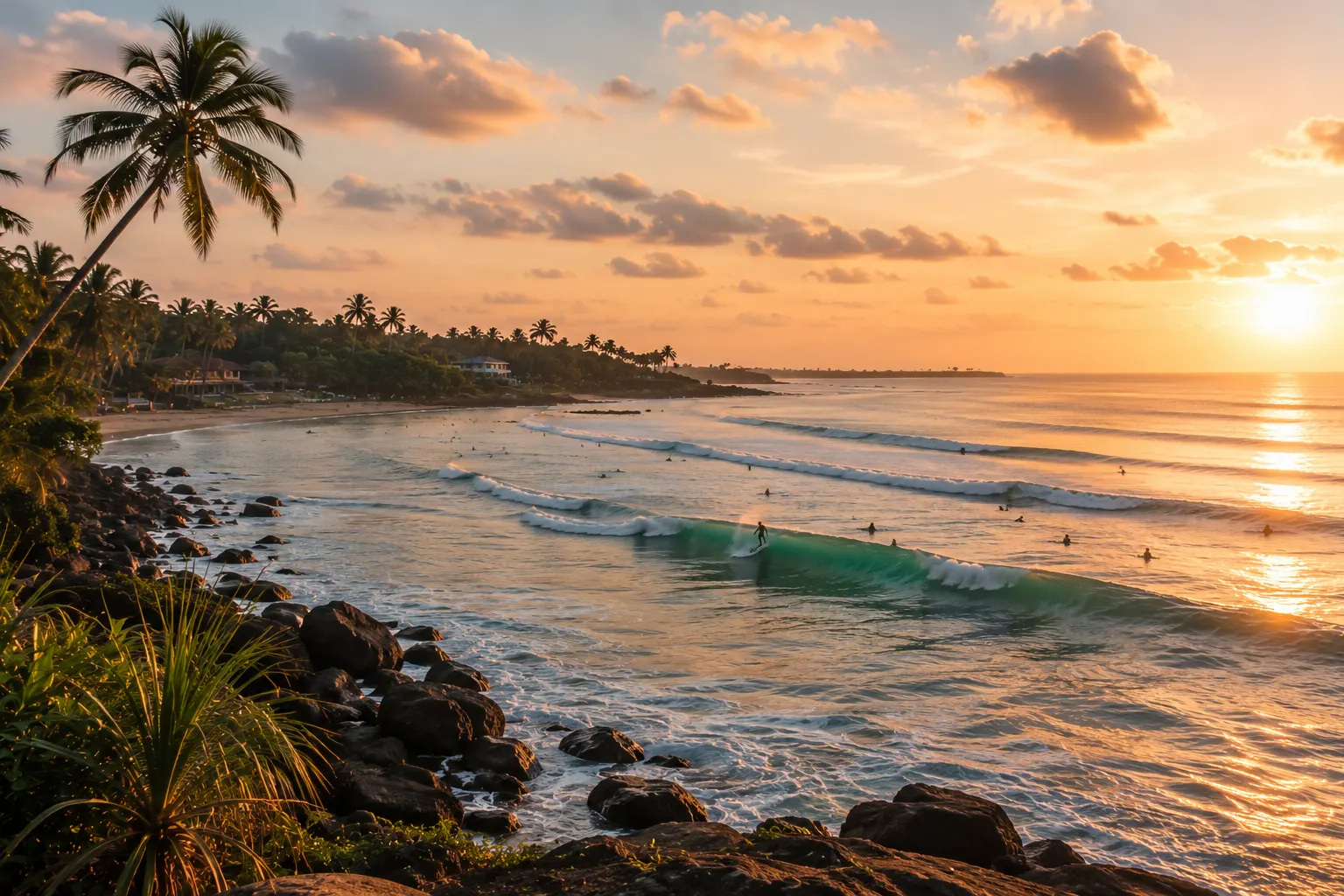
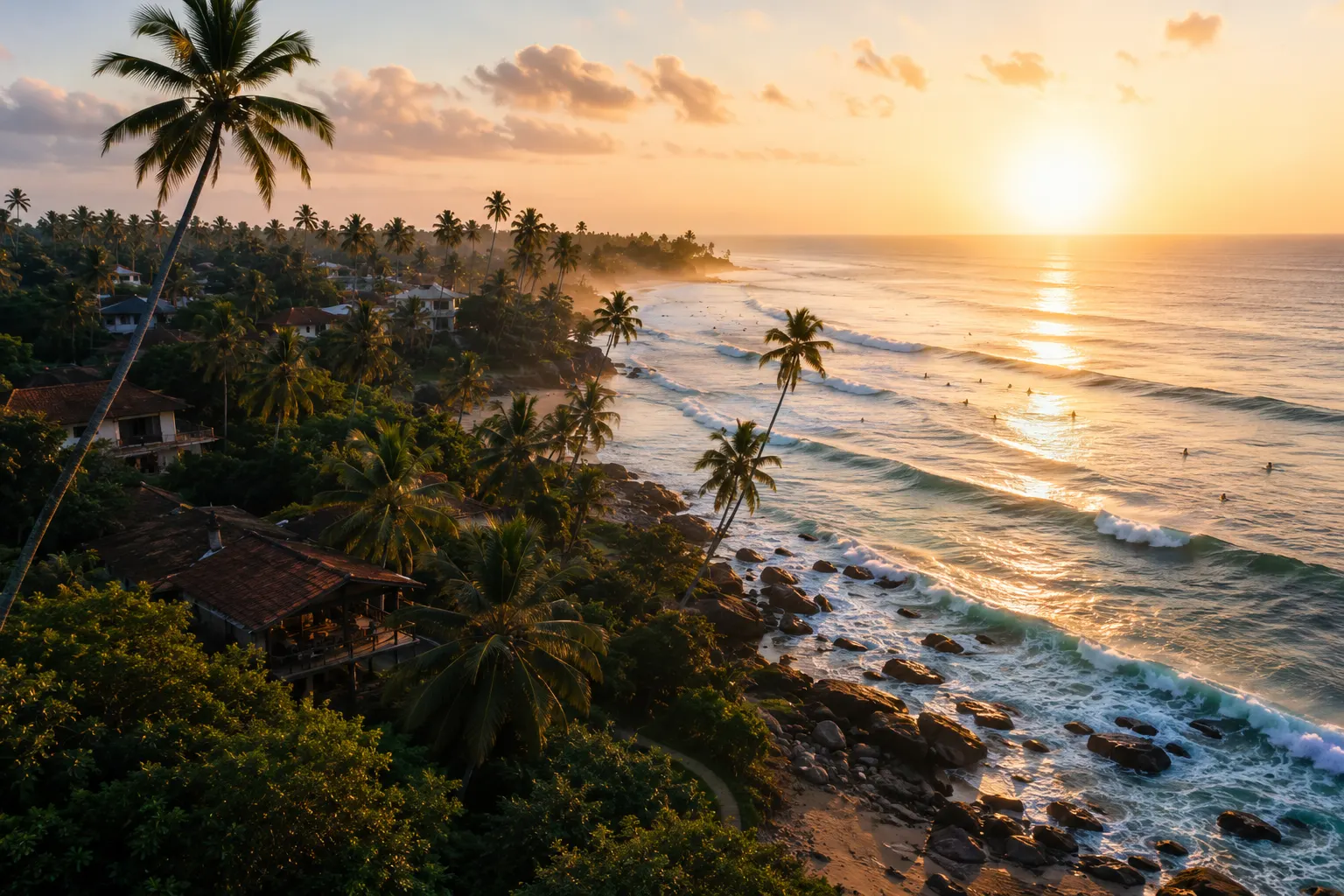
The south coast isn’t one destination — it’s a roughly 100-kilometer run of beach towns, each with a different relationship to the water. Some have real, named breaks. Some have none at all and exist purely as a quiet base to tuk-tuk out from. Going in order from the far southeast toward Colombo:
Tangalle has no wave of its own — it’s a genuinely quiet base with long, wild beaches and real turtle-nesting conservation at nearby Rekawa, useful if you want somewhere to decompress between surf days rather than surf from directly. The nearest real break is a short ride toward Hiriketiya.
Kudawella and Unakuruwa Beach, both a short ride from Hiriketiya, run gentle, slow, mellow right-handers over rock — beginner-only waves on quiet, largely undiscovered beaches, worth knowing about specifically when Hiriketiya’s own lineup gets crowded in peak season.
Hiriketiya is a small horseshoe bay with a genuinely beginner-friendly beach break in the middle and a longer, more powerful left on the point for intermediates ready to step up without changing towns. It’s become considerably busier over the last several years — arrive early if you want the water to yourself.
Talalla Beach has no surf of its own but sits within a short ride of both Hiriketiya and the next spot on this list, making it a workable quiet base for the same reason as Tangalle.
SK Town, roughly midway between Dickwella and Mirissa, is a real beach break most first-time visitors have never heard of — sandy peaks that go both left and right on a good swell, working best early morning or evening when the local wind pattern lays off. It’s become a genuine progression wave for surf campers based in Matara, Mirissa or Weligama who want something a step up from total whitewater without the crowds of the bigger-name towns.
Madiha, just west of SK Town, runs a left and a right reef break better suited to upper-intermediate and advanced surfers, with Weligama’s beginner bay close enough that mixed-level groups can base there and split up by skill each morning.
Mirissa pairs a gentle, forgiving main beach break with a genuine international reputation for something else entirely — a deep-water canyon offshore makes it one of the more reliable places on Earth to see a blue whale, December through April. The wave itself works well for beginners; anyone chasing something more technical is a short ride from Weligama or Midigama.
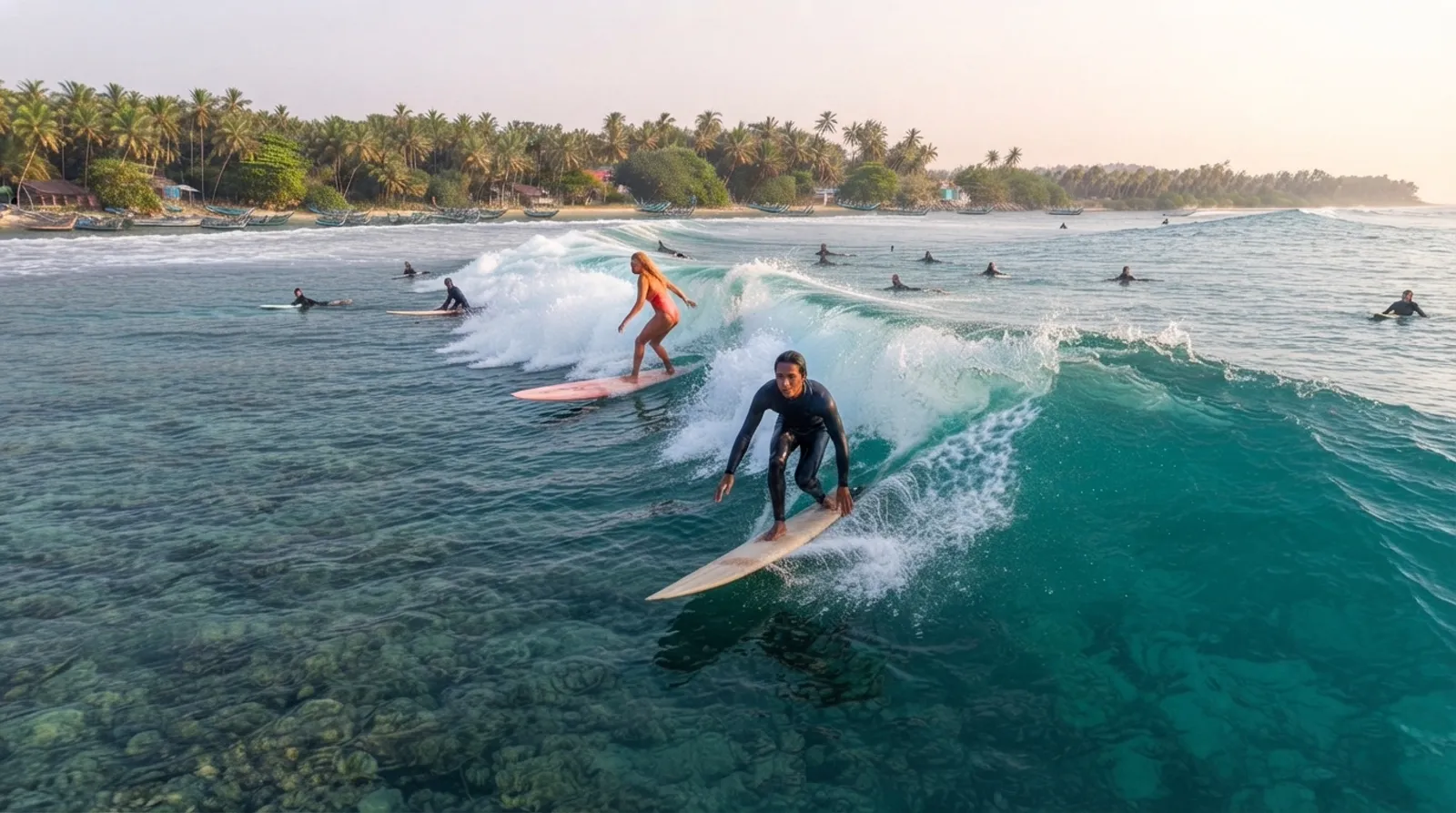
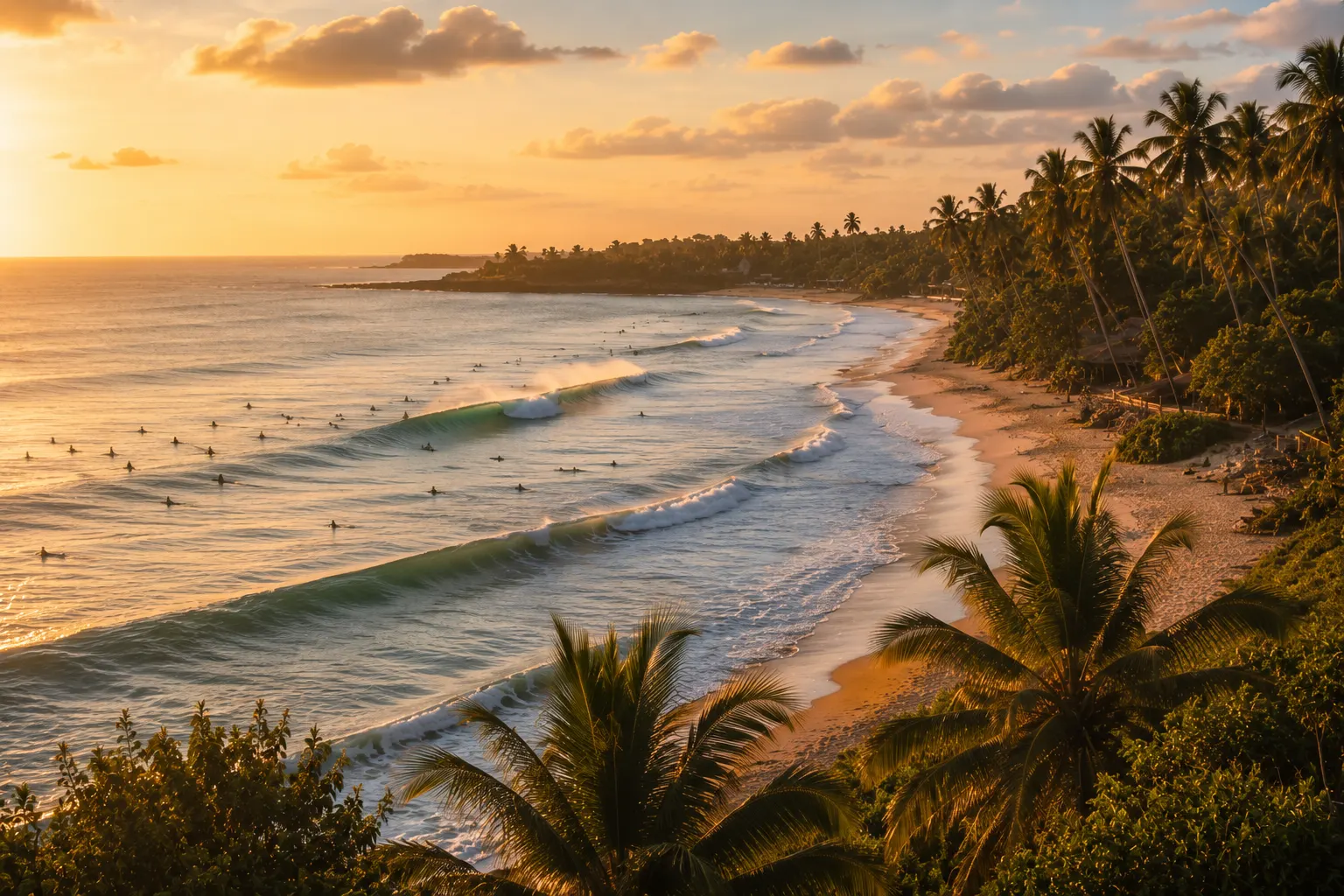
Weligama is the country’s biggest total-beginner zone: a wide, sheltered, horseshoe-shaped bay giving several kilometers of mellow, sand-bottomed whitewater, protected from the bigger swells that hit exposed reefs nearby. Best with south-to-southwest swell and a light northerly wind — conditions that show up often enough through the season that the bay rarely goes flat. It’s also the most crowded lineup on the coast for exactly that reason.
Midigama runs two genuinely different reef breaks a short paddle apart. Ram’s Right is fast, long and technical — a real intermediate-to-advanced wave that rewards good positioning and punishes hesitation. Lazy Left, its calmer counterpart, gives longboarders and intermediates a mellower, more forgiving ride on the same stretch of coast. Both want offshore wind from the north and carry real underwater rock, so timing and respect for the reef matter here more than at the sand-bottomed beach breaks further along.
Ahangama runs a similar caliber of reef point right next door to Midigama, plus its own beach breaks for total beginners near town — genuinely the widest skill range of any single south coast town. It also carries the coast’s deepest yoga and breathwork scene for the hours you’re not in the water.
Kabalana Beach, technically part of Ahangama now, is home to The Rock — a punchy A-frame reef break that peels both directions around a distinctive offshore rock, with a gentler sandy beach break running alongside it for anyone not ready for the reef yet. Consistency here is genuinely high in peak months: on a good January, clean surfable waves show up on close to three days out of four, and the spot works across the full tide cycle rather than only at a specific window.
Koggala Beach, a short ride past Kabalana, has a quieter, less-photographed left off its southern reef and its own gentle beach break — a legitimate overflow option when the bigger-name spots nearby are too busy to enjoy.
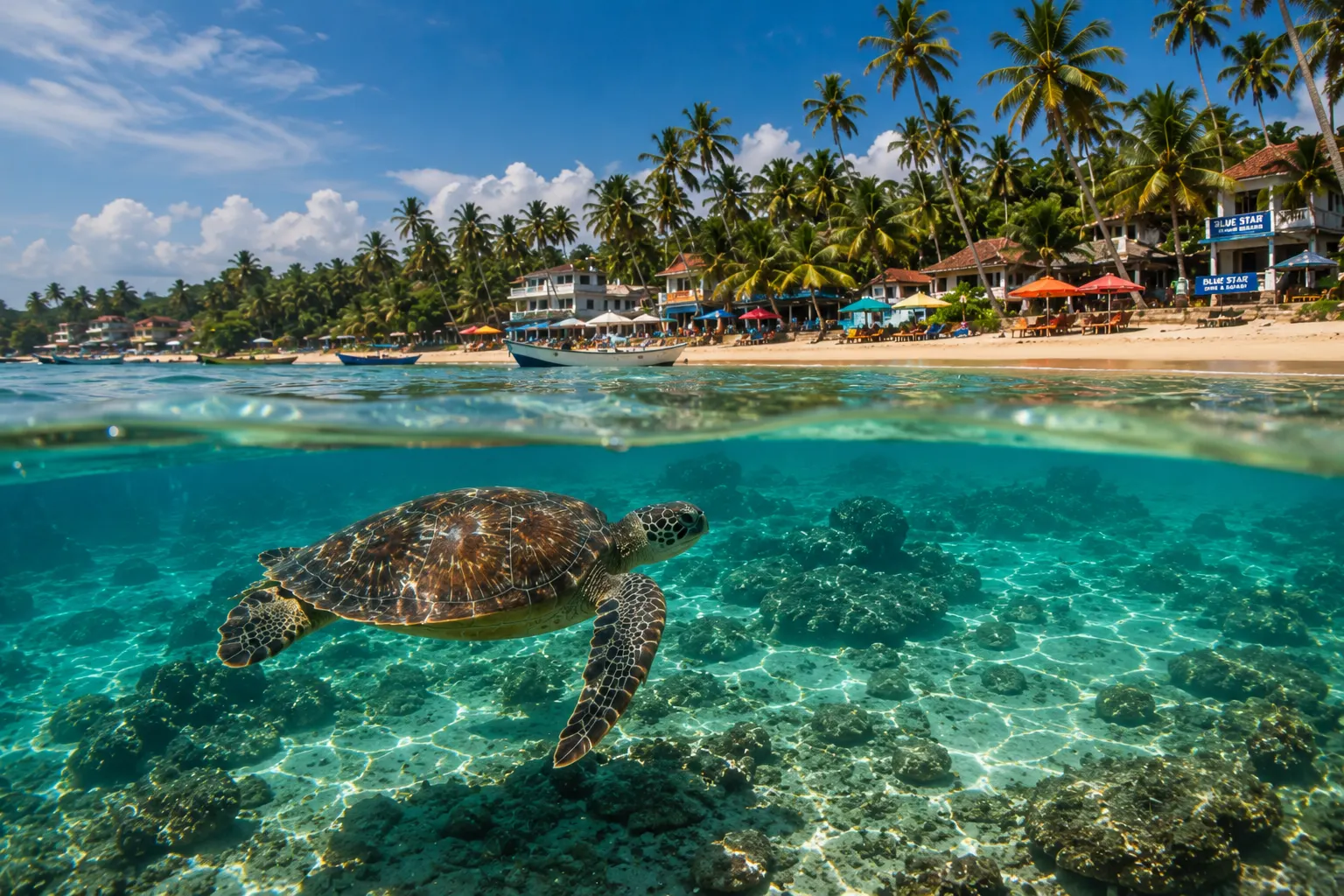
Dalawella, better known for its rope swing and turtle-filled snorkeling lagoons than for surf, has one workable reef break suited to intermediates, and works well as a base for exploring Galle without giving up on getting in the water.
Unawatuna is genuinely not a surf town — its calm, sheltered horseshoe bay is the most reliably swimmable stretch on this coast, with only a small, forgiving beach break at the western end for a first-ever lesson. Anyone serious about surfing bases in Weligama instead and treats Unawatuna as a beach day.
Dewata Beach, tucked between Unawatuna and Galle, is an ultra-gentle beginner beach break that rarely exceeds a couple of feet — a fine, unglamorous spot to take a first lesson if you’re basing around Galle rather than the more established surf towns further south.
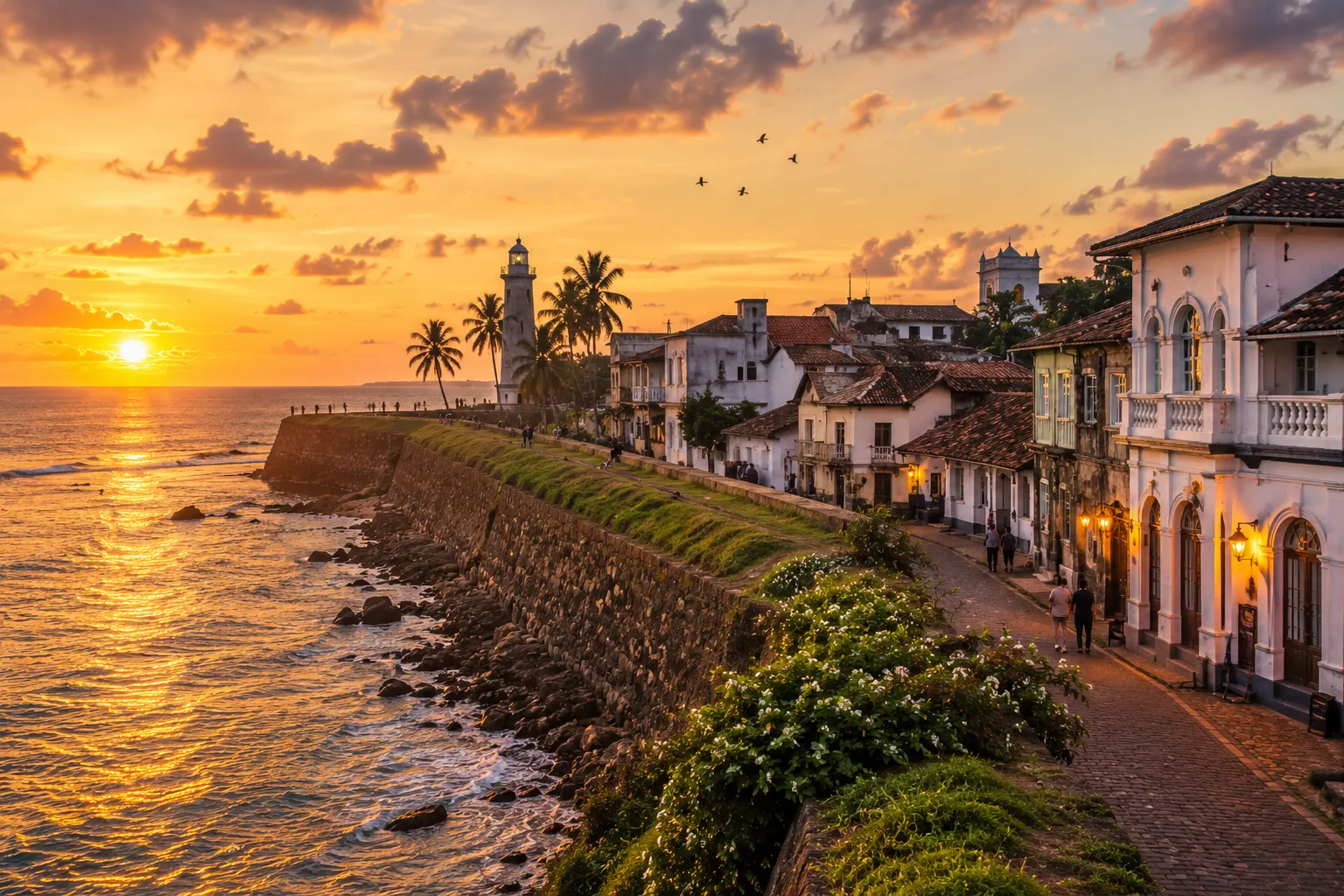
Galle has a real reef break at Lighthouse Point, just outside the fort walls — a left-hander running over rock, best with southwest swell and a northeast offshore wind, with February historically the most consistent month. It rewards confident surfers rather than beginners, and its real draw is everything else: the fort itself, its restaurants, and its position as the natural midpoint of the whole coast.
Rathgama, a short ride north of Galle, has a mellow longboarder-friendly wave breaking over a deeper reef at Owakanda Point — an easy, underrated stop for anyone who prefers a slower, cruisier style of wave over punchy reef breaks.
Hikkaduwa is one of the coast’s oldest surf towns, and still one of its liveliest — a consistent sand-bottomed beach break at Narigama for beginners and intermediates, running best with southwest swell and offshore wind from the north, plus a considerably faster, steeper reef break for advanced surfers further along the same stretch. It’s paired with a genuinely good protected coral reef for snorkeling on the same trip.
Akurala Beach, just north of Hikkaduwa, works as a quieter place to sleep while still surfing Hikkaduwa’s main breaks — a fair trade for anyone who wants the waves without staying inside the busier resort strip itself.
Bentota closes out the corridor with essentially nothing of its own — a single beginner left breaking over rock at the southern end of the beach park, in a town built for Ayurveda programs and family-friendly resort time rather than surf. It’s the closest wellness stop to Colombo airport, useful mainly as a first or last night rather than a surf base.
For a deeper, break-by-break walk through the busiest stretch of this corridor — Weligama to Hikkaduwa — see our dedicated south coast surf guide.
Arugam Bay is the one town on Sri Lanka’s east coast genuinely built around surfing, and its Main Point — a long right-hand point break running up to 500 meters on a good day — is one of the more recognized waves in Asian surfing, with real competitive event history behind it. It’s fast, powerful, and best suited to intermediate-to-advanced surfers, working most reliably with south-to-southeast swell and offshore wind from the northwest to north; the bottom is partly coral and rock, so timing your entry and exit matters.
It’s not the only wave in town. Baby Point, right beside Main Point, and Whisky Point, a short ride north, are both genuinely mellow, beginner-friendly rights — so Arugam Bay isn’t purely an advanced-surfers destination, even though its main break’s reputation suggests otherwise. A little further out, Pottuvil Point offers a long right nearly as good as Main Point with a fraction of the crowd, while Peanut Farm and Elephant Rock, both a short tuk-tuk south of town, give quieter, more scenic breaks over sand and rock — Elephant Rock in particular rewards the short walk through dunes with a noticeably less crowded lineup, best on east-southeast swell with offshore wind from the northwest.
Because almost every break here sits within a 20-minute radius of town, there’s less day-to-day variety than the south coast offers — but the tradeoff is that the whole trip logistics simplify to one base, one road, one town.
Knowing the right tide, wind and swell direction for a given break is the difference between a session that works and one that doesn’t, and it’s the detail most trip planning skips entirely.
Where a break sits over reef or rock rather than sand, reef shoes and a realistic sense of your own level matter more than they do at the beach breaks — Weligama’s sandy bay forgives mistakes in a way Midigama’s rock-strewn reef doesn’t.
The dry/wet split above gets the coast right, but “the dry season is better” undersells how much your own level changes the calculus:
Sri Lanka’s surf towns run a genuinely relaxed, welcoming lineup by international standards — real camaraderie rather than localism, with Hikkaduwa’s more established scene being the rare exception where a bit more territorial energy shows up. That said, the well-known spots — Weligama’s bay, Ahangama and Midigama’s points, Arugam Bay’s Main Point — do get crowded in peak months, and a mix of total beginners and experienced surfers sharing the same lineup is completely normal here in a way it isn’t everywhere. Early mornings are consistently less crowded than mid-morning through afternoon, on every coast, every town.
Board rental is standard at every camp and school across both coasts, so there’s rarely a need to fly your own board out unless you have a strong preference for a specific reef-break shape you already know well.
The water stays warm enough on both coasts, in every season, that a wetsuit is genuinely unnecessary — the pack space you’d otherwise give to neoprene is better spent on sun protection instead.
A full week-long surf camp package — board, coaching, accommodation and most meals — typically lands somewhere in the €600-750 range, varying with how many lessons are included and how far the accommodation is from the actual break. Board and wetsuit rental (not that you’ll need the wetsuit) is standard and included at nearly every camp on both coasts, so there’s rarely a hidden add-on there. A single rice-and-curry meal runs a few euros virtually everywhere outside the most tourist-facing restaurant strips, and a genuinely good sea-view hotel room can still be found under €80 a night on either coast.
If you’d rather piece together lessons and a hotel independently instead of a full camp package, ask any camp or school directly how many students they put in the water per instructor — a low ratio matters more to actual progress in the first few sessions than any camp’s marketing photos do — and whether coaching is video-reviewed or purely verbal, which matters more once you’re past complete-beginner level and want to see your own technique to improve it.
This is where Sri Lanka’s south coast genuinely stands apart from most other surf destinations: morning surf lessons and evening yoga at the same venue is the default format at camps between Weligama and Ahangama, not a special package you have to hunt for. If a structured week with both built into the daily rhythm sounds better than coordinating surf lessons and yoga separately, see how that pairing typically works.
A handful of internationally known operators run alongside the local schools on this coast, worth knowing the names of as orientation rather than a recommendation to book through them specifically: Lapoint runs a well-known Scandinavian-operated camp in Ahangama, part of a small global chain. Kima Surf, Dreamsea, Soul & Surf and Elsewhere all run camps concentrated around the Weligama-to-Ahangama stretch, each with a different size and style of program. At Arugam Bay, most schools cluster directly around Main Point and Baby Point rather than being spread across town. Every real surf camp and lesson currently listed on lankaspirit is organized by coast, season and skill level in one place, rather than scattered across a dozen individual operator sites.
Surf trips here run on the same rhythm as everywhere else on the island — rice and curry, hoppers, and kottu roti between sessions (see our full food guide for what to actually order). Beyond the water: the Sinharaja rainforest and its waterfalls sit within reach of the south coast towns, Ella is a realistic day trip from Midigama or Ahangama by tuk-tuk and train, and Udawalawe’s safari park is close enough to the south coast to add as a single day without restructuring the whole trip.
For a first trip, the south coast is the easier, more forgiving answer — more towns, more schools, easier to pair with the rest of a first-timer’s route through the island, and a genuine range from Weligama’s total-beginner bay to Midigama and Ahangama’s faster points. Arugam Bay is the trip for someone who already surfs and wants its specific point break, or whose dates only line up with its May-September window. Either way, picking the coast and town that match your actual level and dates is most of what separates a great surf trip here from a frustrating one. If you’d rather skip straight to what’s actually bookable, browse current surf retreat listings.
The single biggest planning mistake is treating this as one wave with one name attached to it. It isn't. A first-timer's first stand-up in Weligama's whitewater and an intermediate grinding out turns on Midigama's Ram's Right are two different sports wearing the same wetsuit-free swimwear. Matching the town to your actual level — not the one with the prettiest photos — is most of what separates a trip that builds your surfing from one that just puts you in a lineup you weren't ready for.