Sri Lanka in January: peak season, peak whale watching
January is Sri Lanka's busiest month and one of the best for whale watching — region-by-region weather, national parks, festivals and real prices.
January is the single busiest month of Sri Lanka's December-March peak season, and also one of the two or three best months of the year for whale watching out of Mirissa — the two peaks overlap deliberately, not by coincidence. Expect the year's highest prices, the thickest crowds at Sigiriya and Yala's Block 1, and a real need to book two to three months out for anything on the south coast under €100/night.
January is peak season at its peak — the busiest, priciest month of Sri Lanka’s December-March high season, and not by accident: it’s also one of the strongest months of the year for whale watching out of Mirissa.
A clarification worth making before anything else: January is not peak season island-wide. It’s peak season on exactly one side of Sri Lanka. The northeast monsoon is still running through Trincomalee and Arugam Bay this month, so those coasts are in their off-season while the south, west, hills and cultural triangle are in theirs at its best. Get the region-by-region picture right and the trip plans itself.
The month, in five points:
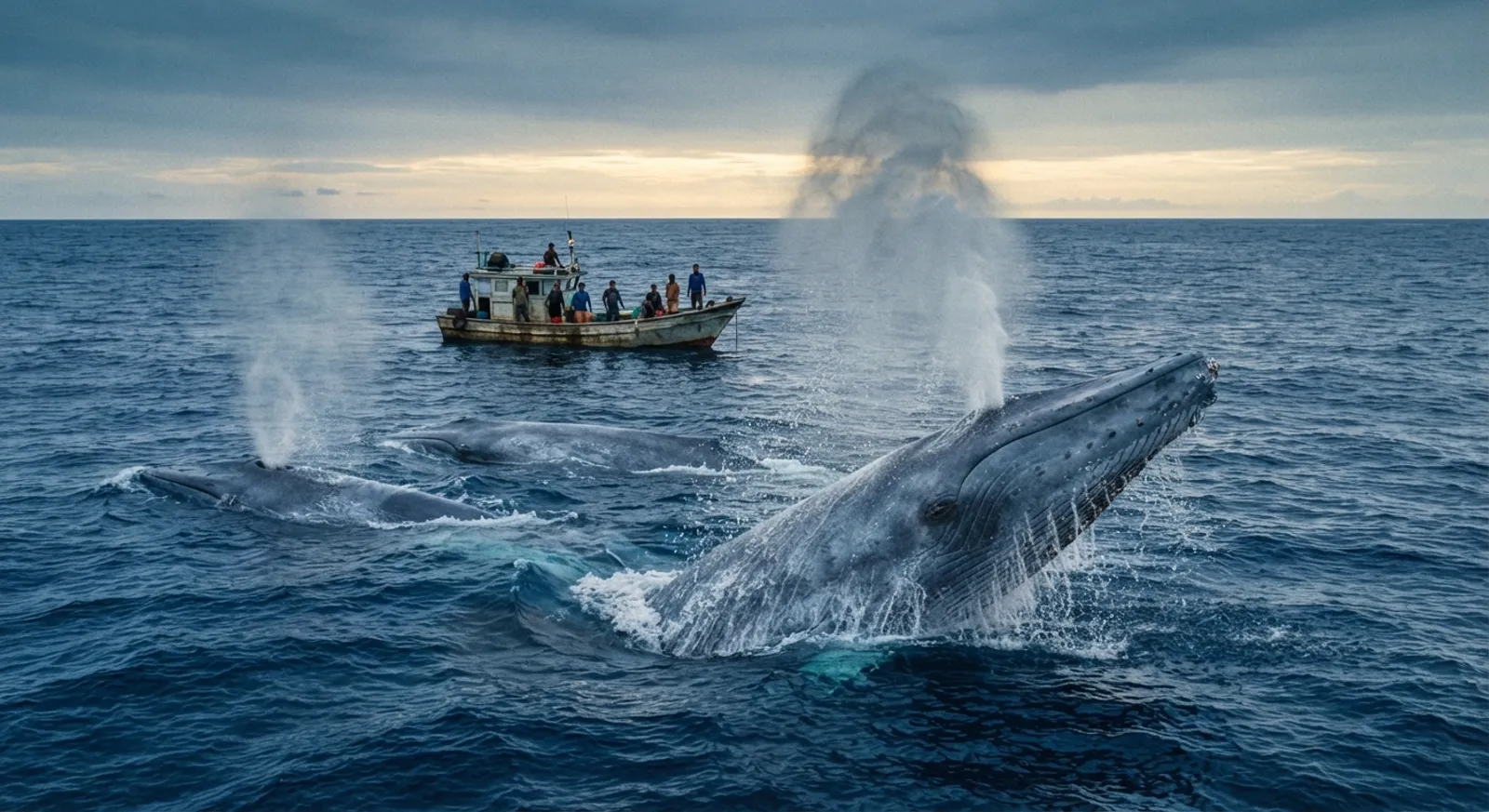
Whale watching peaks. Blue whales are reliably sighted off Mirissa — January sits inside the genuine December-April season’s best stretch.
Beginner-friendly surf. Weligama and Hiriketiya run their gentlest, most reliable waves of the year.
Clear hill-country mornings. Ella, Haputale and the higher tea country get their crispest views and best hiking conditions.
Calm, swimmable seas. Unawatuna, Mirissa and Tangalle are at their safest and most inviting.
Two real festivals. Duruthu Perahera and Thai Pongal both land in the second week of the month.
South & hills
Peak dry season
East coast
Monsoon — skip
Whale watching
Peak, Mirissa
Book by
6-8 weeks
What January actually feels like, region by region
The southwest monsoon retreated months before January arrives, so the south coast, hill country and cultural triangle are all deep into their dry-season best. The northeast monsoon is a different story — it’s still actively running through January, which is exactly why the east coast doesn’t share the rest of the island’s good fortune this month.
South and west coasts (Mirissa, Weligama, Unawatuna, Hiriketiya, Galle, Bentota) — 29-31°C, long sunny days, calm swimmable seas: the year’s most reliable beach weather, plus whale-watching’s peak window and beginner-friendly surf at Weligama and Hiriketiya. Book any room under €100/night two to three months out.
Hill country (Kandy, Ella, Nuwara Eliya, Haputale) — clear mornings, genuinely cold nights: 10-12°C in Nuwara Eliya after dark against 25°C by day. Waterfalls run full and tea-field colour is at its best. Pack a real layer, not just a light jacket for evenings.
Cultural triangle (Sigiriya, Dambulla, Polonnaruwa, Anuradhapura) — hot and dry, 33-35°C at midday, with the best ruins light of the year. Dry bush concentrates wildlife around water sources, helping safari sightings. Start Sigiriya by 7am to beat the heat and the coach-tour crowd.
East coast and Arugam Bay (Trincomalee, Nilaveli, Pigeon Island, Arugam Bay) — still inside the northeast monsoon: rough seas, regular rain, most surf schools and snorkelling operators closed or running skeleton hours. The one part of the island where January is genuinely the wrong month.
The far north (Jaffna) — same northeast-monsoon pattern: intermittent rain, patchy roads toward the Mannar coast. Temples and the fort are visitable, but it’s not the month to build a first trip around.
Region snapshot
Region
January conditions
Verdict
South & west coasts
29-31°C, dry, calm seas
Go — peak whale watching
Hill country
25°C days, 10-12°C nights, clear mornings
Go — pack a real layer
Cultural triangle
33-35°C, hot and dry, best light of the year
Go — start early to beat heat and crowds
East coast & Arugam Bay
Northeast monsoon, rough seas, regular rain
Skip — wait for May-September
North (Jaffna)
Intermittent rain, patchy roads
Skip unless flexible on dates
See our best-time-to-visit guide for how January fits into the full-year, coast-by-coast picture, including an interactive month-by-month climate chart.
Where to go in January
Mirissa, for whale watching. The clearest reason to build a trip around January specifically. Blue whales are reliably sighted 10-20km offshore December-April, with January inside the genuine peak. Morning departures by 6:30am with a licensed operator beat afternoon slots by a wide margin. See our whale watching guide before picking a boat.
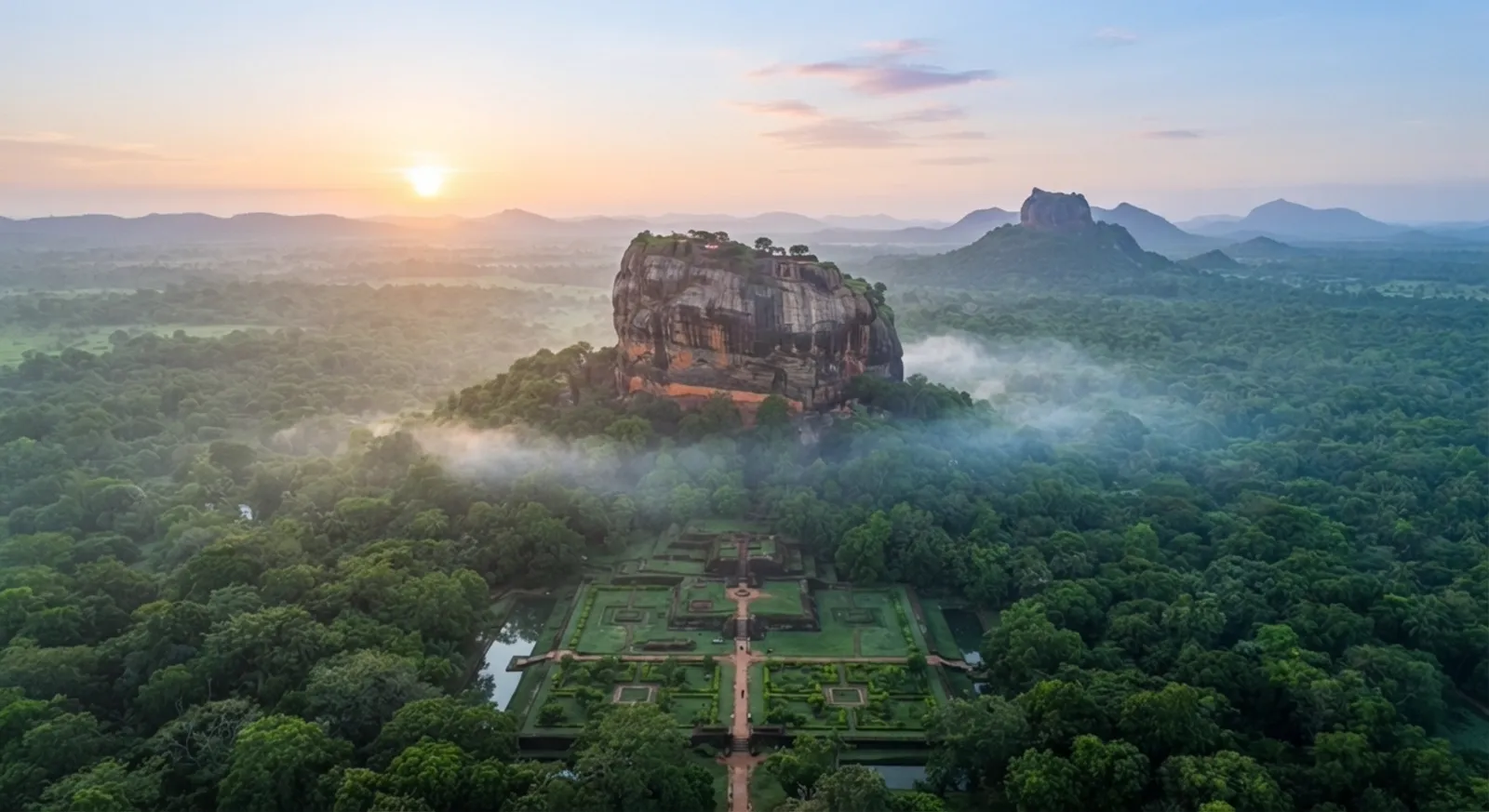
Sigiriya, for the light and the dry-season access. Cool mornings and golden-hour light make January one of the strongest months to climb the Lion Rock. Pair it with Pidurangala Rock the next morning — cheaper, quieter, and the view most people actually want. Start by 7am or pre-book; the walk-up queue regularly passes an hour by mid-morning.
Yala, with a Block 1 vs. Block 5 decision to make. Dry bush concentrates wildlife, good for sightings and bad for solitude in Block 1 — ten to twenty jeeps on one leopard isn’t rare in peak season. A private Block 5 safari gets comparable density with a fraction of the traffic; see our Yala vs. Wilpattu breakdown.
Ella and Adam’s Peak. The Nine Arch Bridge, Little Adam’s Peak and the Kandy-to-Ella train are all at their best under clear skies — but the town is fully booked, so reserve ahead. Adam’s Peak sees some of its highest pilgrim volumes of the year on the night climb.
Kandy. Warm, dry and central — a solid base for the hill country loop and the midpoint of the scenically dramatic Kandy-to-Ella rail journey. Book first-class observation seats weeks ahead.
Where NOT to go in January
Trincomalee and Arugam Bay. Full northeast monsoon — rough grey seas, regular rain, Pigeon Island snorkelling out entirely, a real share of tourist-facing operators closed. Both are excellent May-September instead.
Kalpitiya. Dolphin-watching season doesn’t peak until February or March, and January’s wind pattern isn’t kind to the northwest coast. Not impossible, just not the smart pick when the south coast is at its best a few hours away.
One clarification worth having before ruling the east and north out entirely: “closed” doesn’t mean physically inaccessible. Roads work, people live there, temples are open. What actually closes is tourist infrastructure — surf schools, snorkelling boats, guesthouses that only run in season. For a first visit built around January’s strengths, stick to the south, the hills and the cultural triangle.
National parks in January
January is a strong wildlife month across the island’s dry-zone parks, since none of them sit inside the northeast monsoon’s reach — but conditions vary enough by park to be worth a table rather than a blanket “go.”
Park
January conditions
Udawalawe
Excellent — reliable elephant herds year-round, no downside this month
Yala
Good leopard odds, but Block 1 is peak-season crowded; consider Block 5
Minneriya / Kaudulla / Hurulu
Good general wildlife, though outside the elephant "Gathering" season
Wilpattu
Drying out from December's wettest month — improving through January
Kumana
Skip — still inside the northeast monsoon
Two festivals worth knowing about
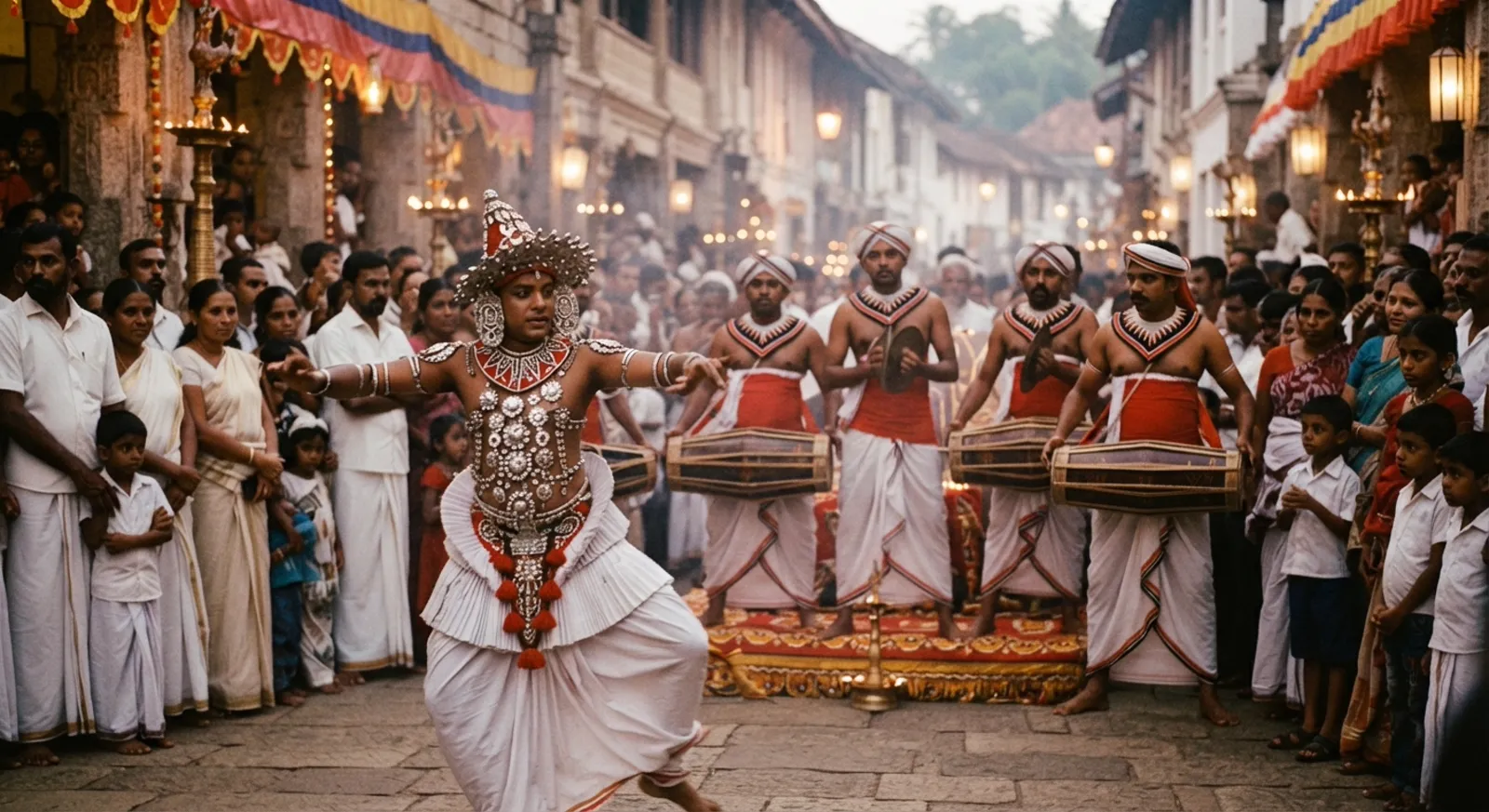
Duruthu Perahera — at Kelaniya Raja Maha Viharaya just outside Colombo, several days in the second week of January, commemorating the Buddha’s first visit to Sri Lanka: elephants, Kandyan dancers and drummers, on a smaller, more accessible scale than Kandy’s July-August Esala Perahera.
Thai Pongal — a Tamil harvest festival giving thanks to the sun and rain for the season’s crop, landing the same week, celebrated most visibly in Tamil communities in Colombo and the north: kolam floor art, clay pots of rice boiled until they overflow (a symbol of abundance), and temple processions.
Neither requires building a trip around specifically, but if a Colombo stop already falls in your itinerary’s first two weeks of January, it’s worth checking the exact dates before you land.
Duruthu Perahera, held at Kelaniya near Colombo in January, features the same Kandyan dance and drumming traditions as the island's larger peraheras.
What to book ahead
January is the one month where turning up without reservations genuinely costs you options, not just money.
Whale watching at Mirissa — morning departures sell out days to weeks ahead. Look for an operator with a published rebooking or refund policy for rough-sea cancellations; our whale watching guide covers what to check before choosing one.
Sigiriya entry — walk-up queues regularly exceed an hour by mid-morning. Pre-book or start the climb by 7am.
Yala Block 5 — not the default option most operators offer; ask for it specifically if a quieter safari matters more than joining the Block 1 convoy.
Kandy-Ella train, first class — the observation carriage sells out weeks ahead in peak season; standard classes are more forgiving but still fill on weekends.
South-coast accommodation under €100/night — anything well-reviewed and reasonably priced in Mirissa, Unawatuna or Weligama is booked out two to three months ahead of a January stay.
If the trip includes any wellness time on the south coast, our retreats page shows what’s actually available with open January dates rather than a generic “book now” — worth checking before assuming a specific week is open.
The price and crowd reality
South coast accommodation, whale-watching boats, Galle Fort and the Kandy-Ella train all run at their busiest and most expensive in January — the single most in-demand month of the year on this route. The hill country and cultural triangle absorb the crowding better simply by having more ground to spread across.
Budget
€25-45 / day
Dorm beds in Ella and Mirissa run higher than low season; private guesthouse rooms in Kandy or inland towns hold up better. Local rice-and-curry meals stay cheap regardless of season.
Mid-range
€90-160 / day
Well-reviewed boutique south-coast hotels jump to their peak nightly rate; Ella guesthouses with valley views hold up better than beachfront properties.
Luxury
€280-520+ / day
Top south-coast and safari-lodge properties run at full occupancy from late December through mid-February. Last-minute luxury in January is not a realistic strategy.
The honest trade-off: January is the most expensive month, but also the most rewarding for weather and wildlife together. If budget matters more than having every condition align, late October or February deliver similar weather at meaningfully lower prices — see our best-time-to-visit guide for how those months compare.
Getting around in January
Peak season strains transport as much as accommodation.
Train. Book Kandy-Ella seats — especially first-class observation carriage — the moment your dates are fixed, not the week before travel.
Private driver. The more forgiving option for stringing together the cultural triangle, hills and south coast without depending on train availability; January’s dry roads make driving times more predictable than in monsoon months.
What to pack for January
Light, breathable clothing and reef-safe sunscreen for hot, humid coastal days.
A proper fleece or light jacket for hill-country evenings — 10-12°C after dark in Nuwara Eliya and Ella isn’t optional to plan for.
A headlamp if the Adam’s Peak night climb is part of the plan — trail lighting thins out well before the summit, and the crowds mean an early, well-lit start matters more than usual.
Mistakes to avoid
Building one itinerary for the whole island. January is peak season on one side of Sri Lanka and off-season on the other — the region-by-region breakdown above exists for exactly this reason.
Arriving in the hills without a jacket. Coastal January bakes at 30°C while Nuwara Eliya drops to 10-12°C the same night.
Assuming an afternoon whale-watching slot performs like a morning one. Sighting rates drop as the sea chops up after midday; book the earliest departure available.
Climbing Sigiriya at midday to “save the queue for later.” Heat and crowds peak together from mid-morning — start by 7am instead.
Booking a mid-range south-coast room the week before travel. January fills two to three months out; last-minute options are either gone or overpriced.
Defaulting to Yala Block 1 without asking about Block 5. Same dry-season wildlife concentration, a fraction of the jeep traffic — but only if you ask for it specifically.
January rewards a plan more than any other month on this list, precisely because everyone else is booking the same window. The travelers who have the calm version of a January trip aren't avoiding the crowds — they've built a route where the crowded stretch (south coast beach towns, Sigiriya's midday queue, whale boats) is a deliberate few days, not the whole itinerary, and they've booked the Yala safari as a Block 5 private drive instead of joining the Block 1 traffic jam.
Frequently asked
Is January the best month to visit Sri Lanka?+
For weather alone, yes — it's solidly inside the dry season for the south coast, hill country and cultural triangle, and whale watching is at its strongest. It's also the most crowded and expensive month of the year for exactly that reason, so "best" depends on whether you're optimizing for conditions or for value. If value matters more, late October or February offer similar weather at meaningfully lower prices.
When is the best time to see whales in Mirissa?+
December through April, with January through March as the strongest stretch — January sits right in the peak, not the shoulder. Morning departures (ideally by 6:30am) have noticeably higher sighting rates than afternoon slots, since the sea chops up later in the day. See our full whale watching guide for what a responsible operator looks like before booking a boat.
Is the east coast open in January?+
Physically accessible, but not a sensible destination this month. Trincomalee and Arugam Bay are still inside the northeast monsoon in January — rough seas, regular rain, and most surf schools, snorkelling boats and tourist-facing guesthouses either closed or running at reduced capacity. Plan the east coast for May through September instead.
What festivals happen in Sri Lanka in January?+
Duruthu Perahera at Kelaniya Raja Maha Viharaya near Colombo, a procession commemorating the Buddha's first visit to Sri Lanka, and Thai Pongal, a Tamil harvest festival, both land in the second week of January. Neither requires advance planning to witness if you happen to be in Colombo, but Duruthu Perahera specifically is worth timing a Colombo stop around if you want to see it. January also sees some of the year's highest volumes on the Adam's Peak night-climb pilgrimage.
Is Sri Lanka crowded in January?+
Yes, on the south coast and at the big single-file sights specifically — Galle Fort, Mirissa, Unawatuna, the whale-watching boats, Sigiriya's ticket queue and Yala's Block 1 all run at their busiest. The hill country and cultural triangle feel the crowding less by having more ground to spread across. The east coast is nearly empty, since it's still in its wet season.
Should I book ahead for a January trip?+
Yes, further ahead than any other month. Whale-watching morning departures, any south-coast room under €100/night, and first-class seats on the Kandy-Ella train all get booked out weeks in advance. Six to eight weeks out is a safer margin than the four to six weeks that works for other peak-season months, and December-at-the-latest for anything mid-range or better.
What's the best national park to visit in Sri Lanka in January?+
Udawalawe, for reliability — its elephant herds are a near-certain sighting year-round and January adds nothing negative. Yala has the best leopard odds of any park this month, but Block 1 gets genuinely crowded; a Block 5 private safari gets comparable dry-season wildlife concentration with a fraction of the jeep traffic. Skip Kumana, which is still inside the northeast monsoon in January.
Do I need a jacket in Sri Lanka in January?+
Yes, if the hill country is anywhere on the itinerary. Coastal January runs a humid 29-31°C, but Nuwara Eliya and the higher tea country drop to 10-12°C at night and stay misty from late afternoon — a proper fleece or light jacket is not optional if Ella, Haputale or an Adam's Peak night climb is part of the plan.