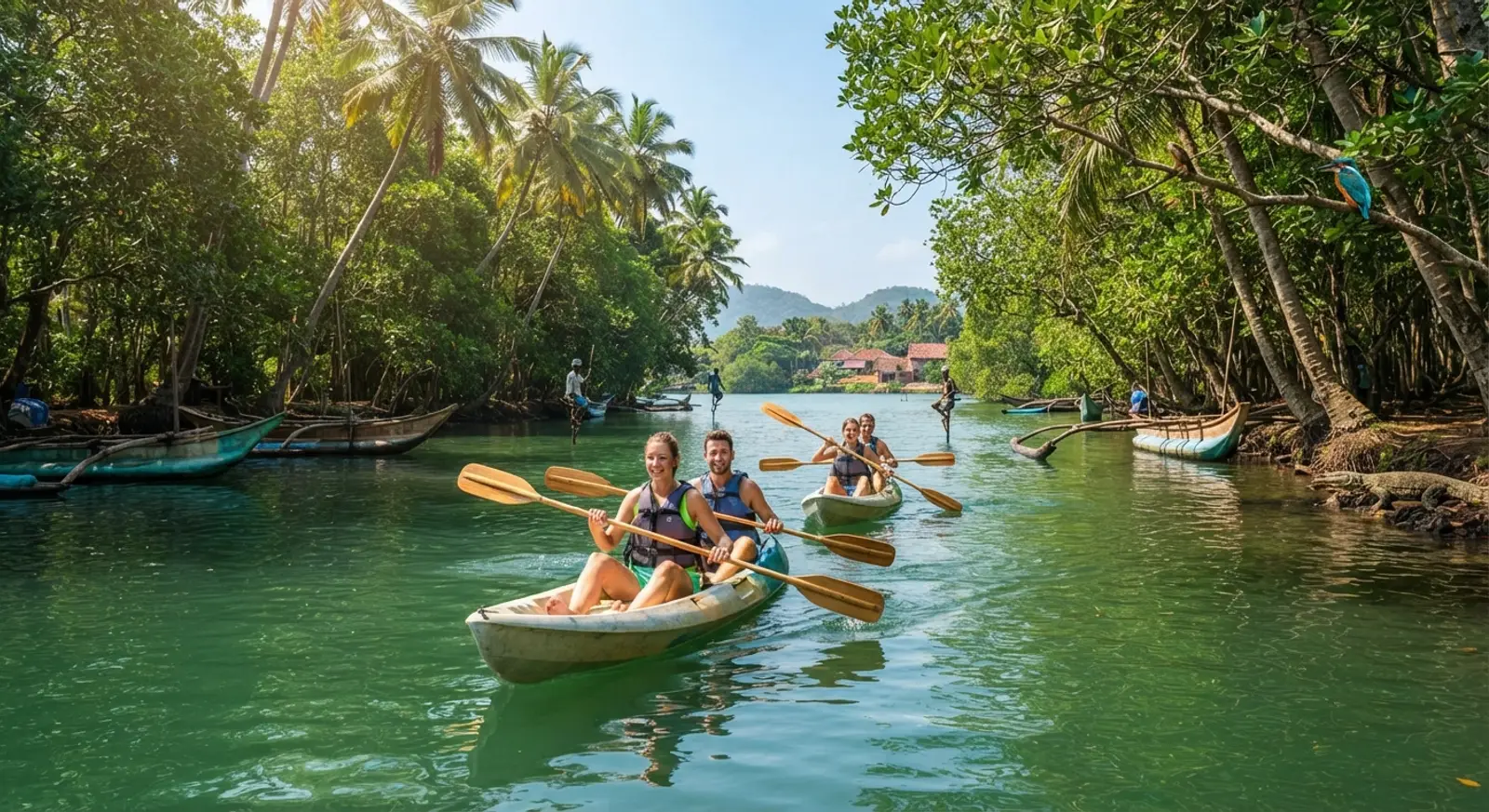
The Maldives is built for pure relaxation on the water. Sri Lanka is built for a circuit of wildlife, culture and beaches. A breakdown to help you decide.
Sri Lanka and the Maldives get paired constantly, but they're not competing for the same trip. The Maldives is an archipelago of overwater villas, coral atolls and diving-and-snorkelling-first relaxation — there's very little to do beyond the resort and the reef, which for many travelers is exactly the point. Sri Lanka is a full circuit destination: ancient cities, wild leopards and elephants, hill country, and its own beaches, all reachable by road in under two weeks. Choose the Maldives for pure, do-nothing relaxation on the water. Choose Sri Lanka for a trip with more to actually do. Many travelers do both back to back — see the combined-trip section below.
Sri Lanka and the Maldives sit a short flight apart in the Indian Ocean and get compared constantly, but the comparison mostly falls apart on inspection — they’re not really alternatives to the same trip. The Maldives is a resort archipelago built around doing very little, on purpose. Sri Lanka is a circuit destination built around doing quite a lot. The real question usually isn’t which one is better, it’s which shape of trip you actually want, and for a lot of travelers the answer is both, in sequence.
| Sri Lanka | Maldives | |
|---|---|---|
| Geography | Single island, 65,610 km² | Archipelago of 1,000+ coral islands |
| Trip shape | Multi-stop circuit | Single resort or island-hop |
| Luxury accommodation/night | USD 120-350 | USD 400-1,500+ |
| Land wildlife | Wild leopards, elephants, sloth bears | None of note |
| Cultural/historical sites | 8 UNESCO World Heritage Sites | Minimal, concentrated in Malé |
| Typical activity list | Safari, ancient cities, hiking, surf, beach | Snorkelling, diving, sandbanks, spa |
This isn’t close. A standard Maldives overwater villa runs roughly USD 400-1,500+ a night before food, drinks and the seaplane or speedboat transfer most resorts require just to reach them — many Maldives properties sit on their own private island, which is part of the appeal and part of why the cost structure is what it is. Sri Lanka’s luxury tier, including its exceptional boutique and design-led properties, runs USD 120-350 a night, and it also has genuine budget and mid-range options that the Maldives essentially doesn’t offer at scale. See our travel budget guide for real Sri Lanka numbers by tier.
This is the category that decides most people’s choice, more than cost or beaches. The Maldives is built for a resort-and-reef holiday: snorkelling and diving off the house reef, maybe a sandbank picnic or a dolphin cruise, and not much land-based activity beyond that — most islands are a few hundred metres across. For travelers who want a trip that asks nothing of them beyond choosing which pool to sit by, that’s the entire point, not a shortcoming.
Sri Lanka is built the opposite way. A single trip can realistically include a wildlife safari, a UNESCO-listed ancient city, a hike through tea-country hill stations, a scenic train ride, surf lessons, and its own beach time — see our 9-day itinerary for how that circuit actually strings together. If “what will we do all day” matters to you, Sri Lanka answers it in a way the Maldives isn’t designed to.
For the specific image of a Maldives holiday — powder-white sand, glass-clear turquoise water, an overwater villa with direct reef access — nothing else in the region matches it, Sri Lanka included. It’s genuinely one of the best water experiences on earth for snorkelling straight off your own deck.
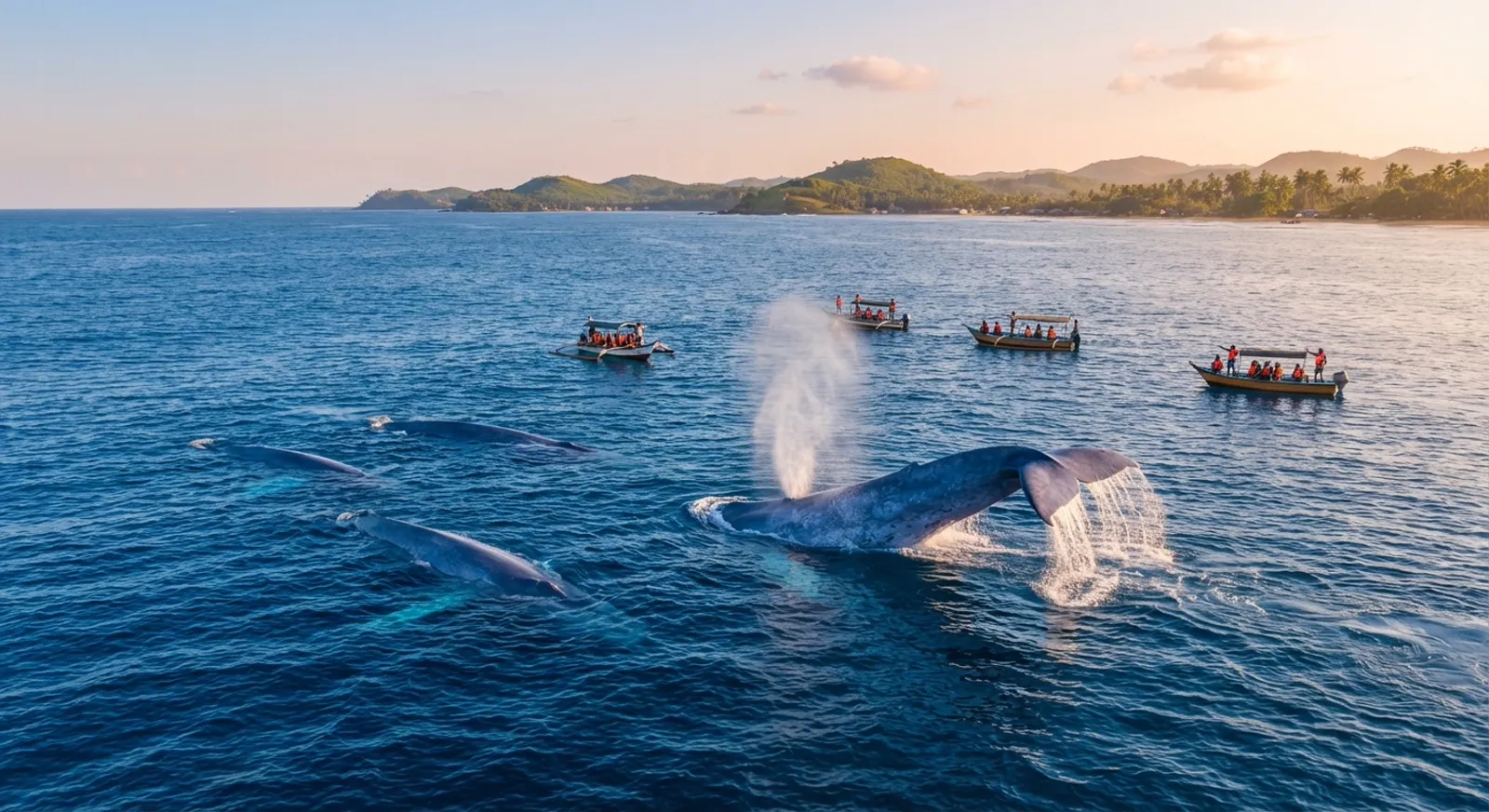
Sri Lanka’s beaches serve a different function. The south coast (Mirissa, Weligama, Ahangama, Tangalle) and east coast (Arugam Bay, Trincomalee, Pasikudah) are beautiful in their own right, with real surf culture and, from November to April, blue whale sightings within a few kilometres of shore — but they’re one stop on a larger trip rather than the whole trip. If beach-and-water quality is the only variable that matters, the Maldives wins outright. If beach time needs to sit alongside everything else Sri Lanka offers, that comparison doesn’t really apply.
Sri Lanka isn’t close here. Yala National Park holds one of the highest wild leopard densities of any protected area on earth, Udawalawe and Minneriya produce near-guaranteed wild elephant sightings, and the waters off Mirissa are a genuine blue whale feeding zone — see our Yala vs Wilpattu safari comparison for how to choose between the two main parks. The Maldives, by contrast, has essentially no land wildlife — its islands are simply too small and too uniformly coral-built to support it — though its underwater life is exceptional: manta rays, reef sharks, and some of the best coral diving anywhere, a genuinely different but equally real wildlife draw.
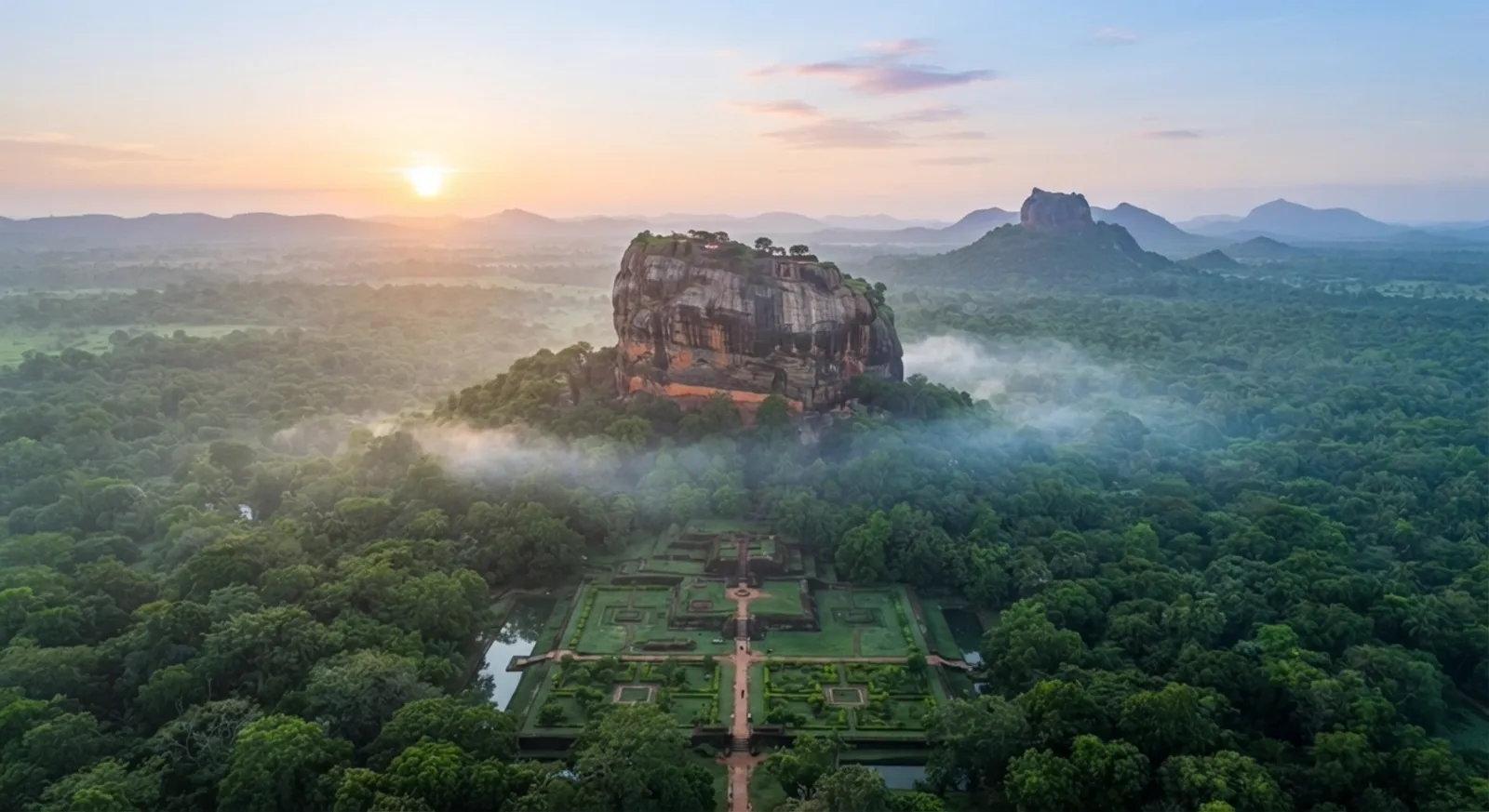
Sri Lanka again offers what the Maldives structurally can’t: eight UNESCO World Heritage Sites, including three ancient capitals within a 90-minute drive of each other in the Cultural Triangle, plus over a century of continuously documented history. The Maldives’ cultural sites are minimal and concentrated almost entirely in Malé, the capital — most resort stays involve no cultural activity at all, which for a pure-relaxation trip is beside the point rather than a flaw.
Choose the Maldives if the trip’s purpose is rest — no itinerary, no daily activity list, just water, sand and a resort designed around not thinking about logistics. It particularly suits honeymoons, anniversaries, and anyone recovering from a stretch of genuinely needing to do nothing. Choose Sri Lanka if you want a trip with substance to it: wildlife, ancient sites, hill country and beach time in one circuit, at a fraction of the Maldives’ cost, with the trade-off that it asks more of you day to day — packing, transfers, an itinerary to follow rather than a villa to stay in.
This is a genuinely practical combination, not just a marketing pairing — Colombo and Malé are under two hours apart by air, and plenty of travelers build a single trip around both: roughly 9-10 days in Sri Lanka covering the cultural triangle, hill country and a safari (see our 9-day itinerary), followed by 4-5 days in the Maldives purely to decompress. It’s become a standard honeymoon and anniversary structure for exactly that reason: culture and wildlife first, pure rest at the end, rather than trying to make one destination do both jobs. If Bali is also on your shortlist instead of the Maldives specifically, see our Sri Lanka vs Bali comparison for how that pairing compares. If a reset is part of the plan, our yoga in Sri Lanka guide shows what the south coast offers.
The comparisons we've read tend to frame this as luxury versus budget, which undersells both places. The real difference is what the trip asks of you: the Maldives asks you to pick a resort and stop moving; Sri Lanka asks you to keep moving between genuinely different places. Neither is a compromise version of the other — they're different shapes of holiday that happen to sit in the same ocean.