Sri Lanka in February: the sweet spot of peak season
Same dry-season weather as January, fewer crowds, past the Christmas price surge. Why February is the quiet sweet spot of Sri Lanka's peak season.
February is arguably the single best month to visit Sri Lanka for a first trip built around the south coast, hill country and cultural triangle: the same reliable dry-season weather as December and January, noticeably thinner crowds and lower prices than the Christmas-through-January run, and still well ahead of the mid-April Sinhala and Tamil New Year travel surge. Independence Day (February 4) and Colombo's Navam Perahera, a large Buddhist procession with over 50 elephants, both fall this month.
February sits in a genuine sweet spot: the same dry, reliable weather that makes December and January popular, minus the Christmas price surge behind it and well ahead of the mid-April New Year travel spike. What it doesn’t do is open up the east coast — that’s still firmly in its own wet season, same regional split as January.
The month, in four points:
Same dry season, thinner crowds. South coast, hill country and cultural triangle keep January’s reliable weather with a noticeably lighter crowd.
Past the Christmas price surge. South-coast rates have settled back from late December’s double-to-triple spike toward normal peak-season pricing.
Whale watching still strong. Mirissa’s season runs through April — February sits just past the January peak but sighting odds stay high.
One easy-to-catch festival. Navam Perahera, Colombo’s 50-elephant procession, doesn’t need the months of advance planning Kandy’s Esala Perahera does.
South & hills
Dry season, quieter
East coast
Monsoon — skip
Whale watching
Strong, past peak
Book by
4-6 weeks
Weather, region by region
South and west coasts, hill country and cultural triangle all continue January’s dry-season pattern through February — Colombo averages around 27°C, with long, mostly rain-free days. The east coast and far north are the exception, still running their own northeast monsoon.
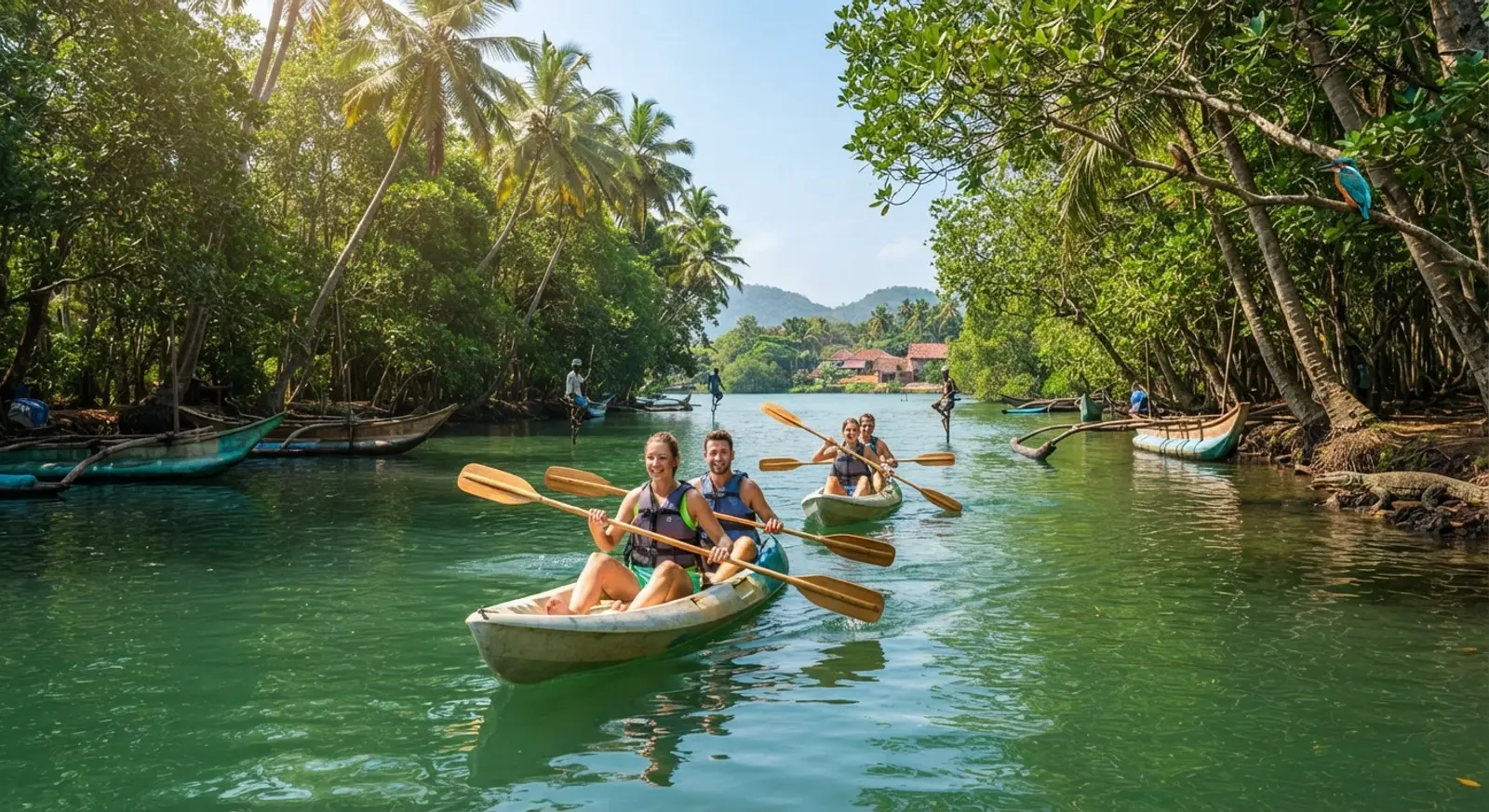
South and west coasts (Mirissa, Weligama, Unawatuna, Galle, Bentota) — warm, dry, calm seas, with whale watching still in its strong window out of Mirissa. Noticeably fewer people on the sand than January.
Hill country (Kandy, Ella, Nuwara Eliya) — clear mornings, cool nights, the same crisp conditions January delivers. Pack a layer for Nuwara Eliya after dark.
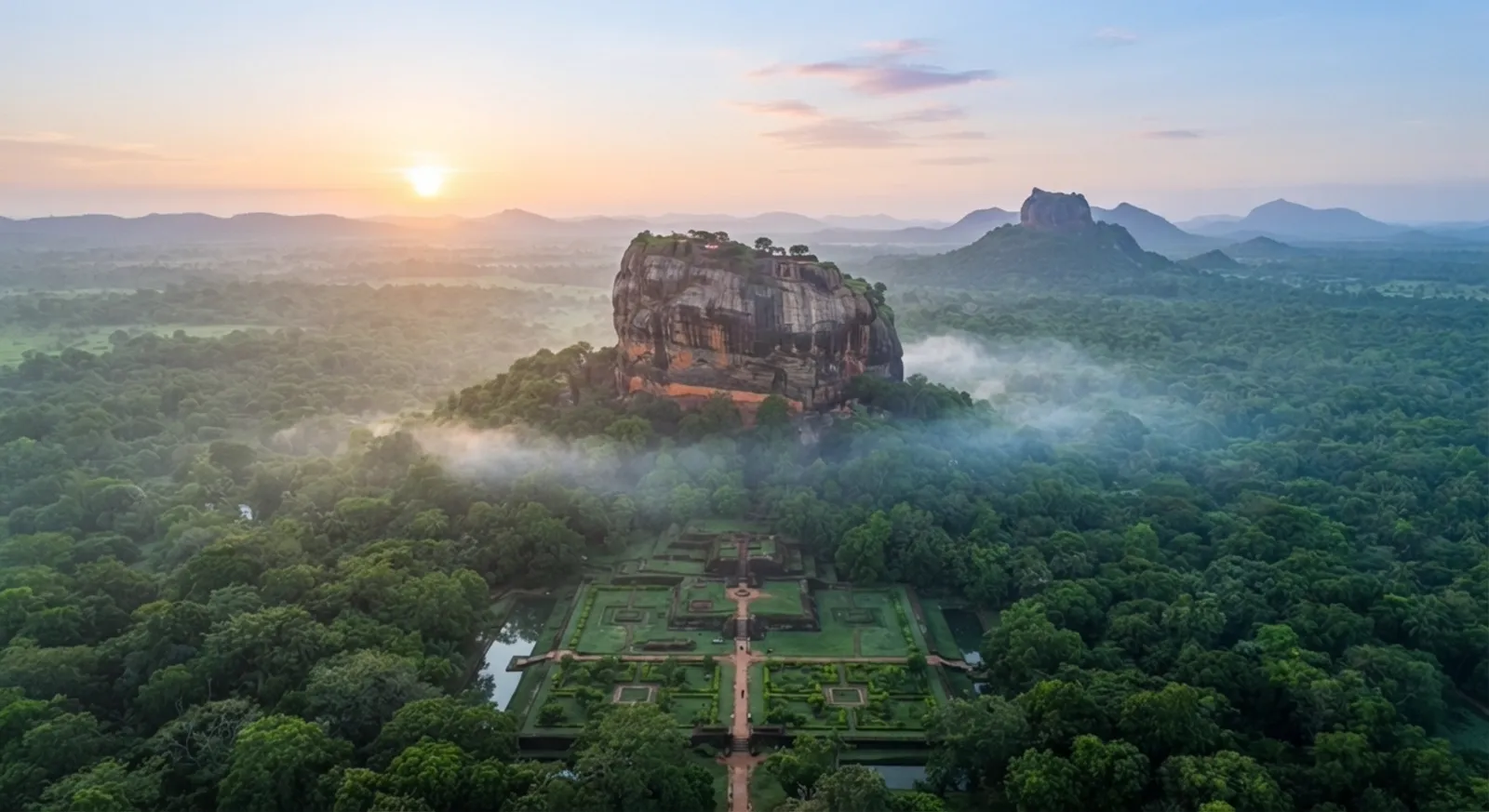
Cultural triangle (Sigiriya, Dambulla, Polonnaruwa, Anuradhapura) — hot, dry, good ruins light, with shorter queues than January’s peak crowds.
East coast and Arugam Bay — still inside the northeast monsoon: rough seas, regular rain, most surf schools and snorkelling operators closed or skeleton-hours. Not the month for this coast.
The practical case for February over December or January is almost entirely about price and crowds rather than weather, since the weather itself barely changes across the three months.
Past the Christmas surge. South coast accommodation has settled back from the double-to-triple rates of late December toward more typical peak-season pricing.
Thinner than January. January’s crowd peak has eased — the beach towns and major sights are still busy, just not at the year’s maximum.
Easier booking lead time. Rooms and whale-watching boats that needed two to three months’ notice in January are often bookable with four to six weeks’ lead.
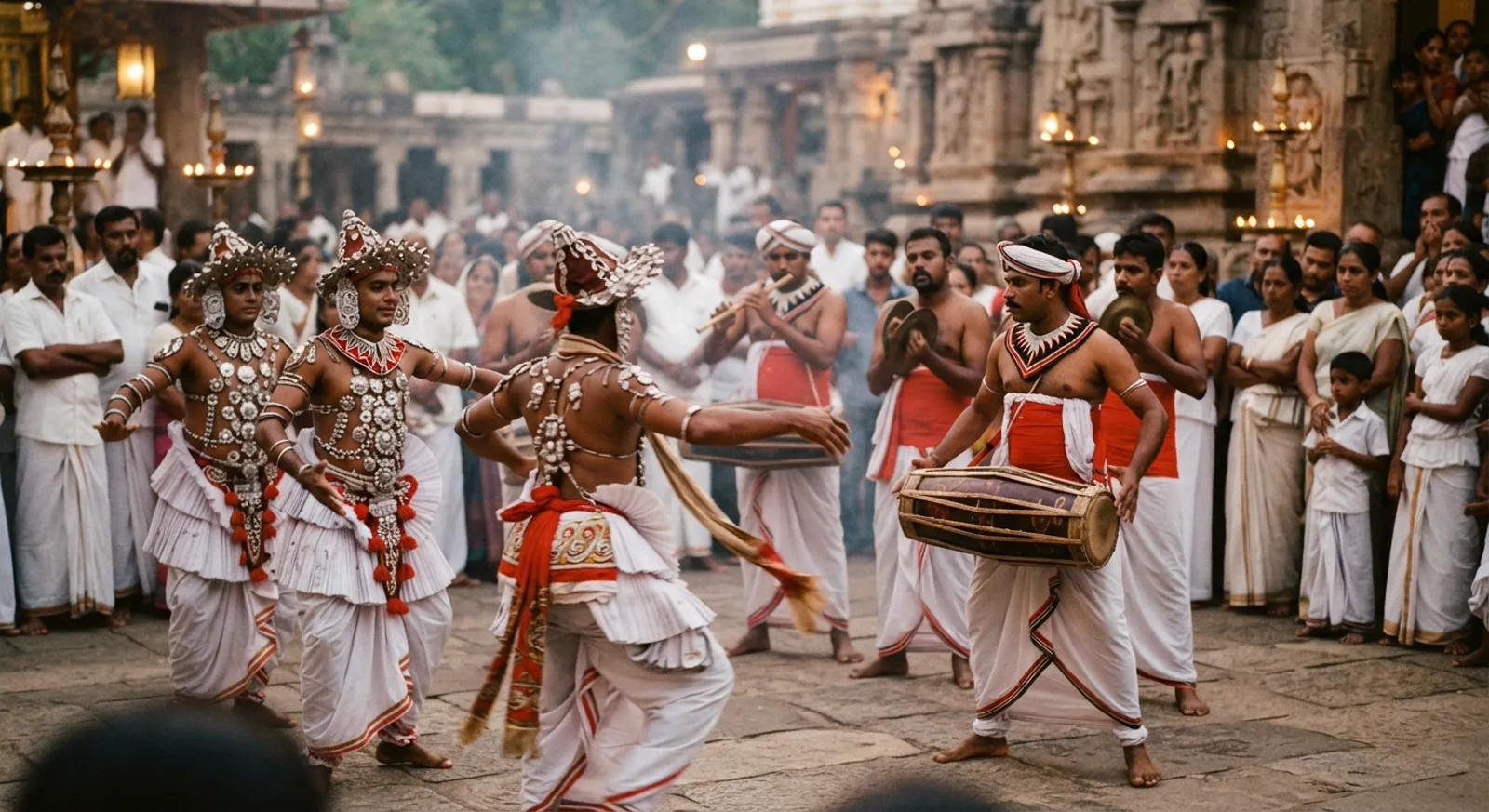
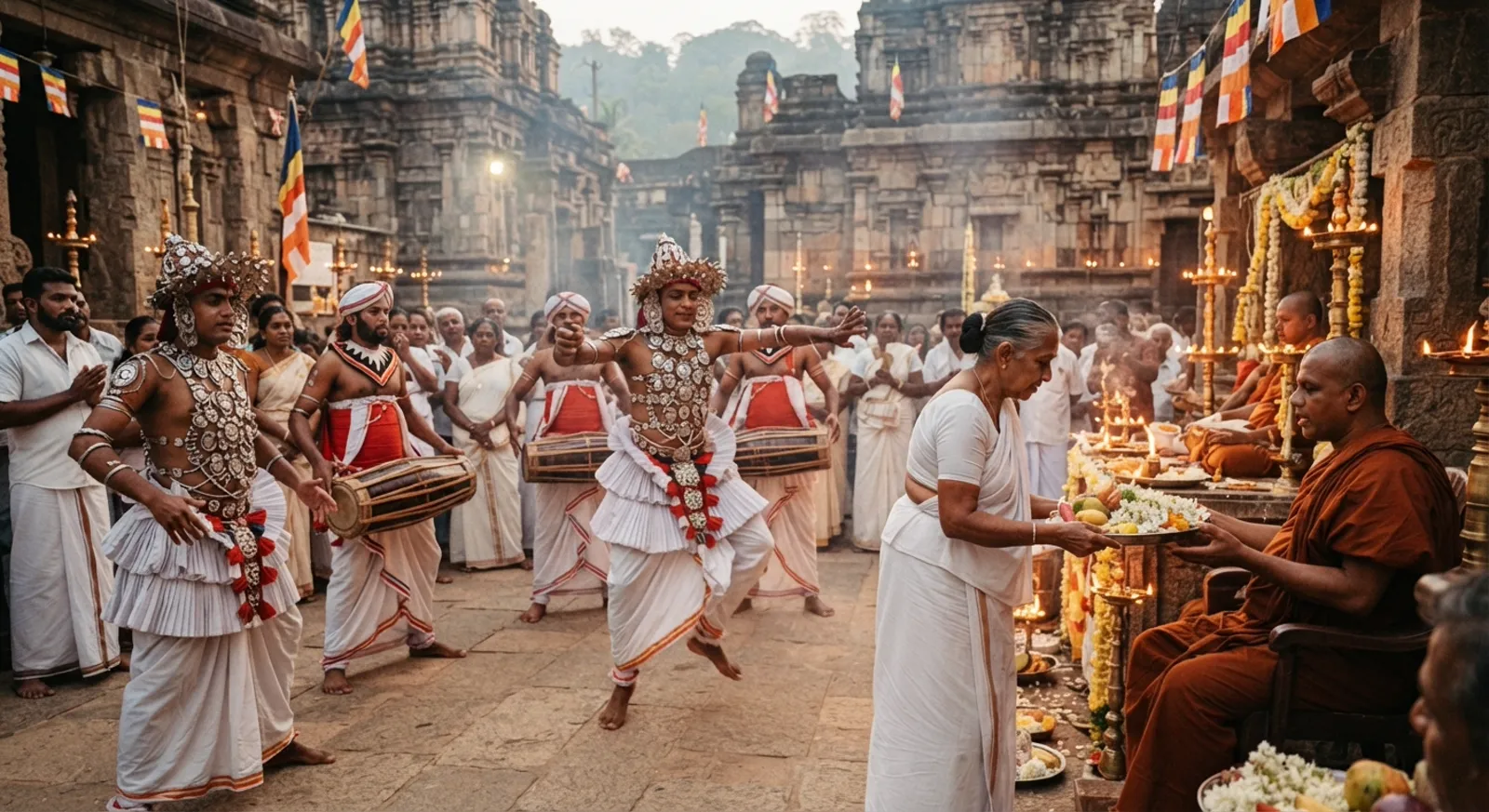
Colombo's Navam Perahera, held on February's full moon, is organized by the Gangaramaya Temple and draws elephants, dancers and drummers through the city.
Two events worth knowing about
Independence Day (February 4) — commemorates Sri Lanka’s 1948 independence from Britain with a military parade and presidential address, centered on Colombo. Worth knowing about mainly for road closures around the parade route, not a disruption to a wider itinerary.
Navam Perahera — held on February’s full moon and organized by Colombo’s Gangaramaya Temple: more than 50 decorated elephants alongside traditional Kandyan dancers, drummers and fire performers. Unlike Kandy’s July-August Esala Perahera, it doesn’t require booking hill-country accommodation months ahead to see.
What to book ahead
Whale watching at Mirissa — still a strong window through February; morning departures can sell out on weekends. Our whale watching guide covers what to check before choosing an operator.
Sigiriya entry — queues are shorter than January’s but a 7am start still beats the midday coach-tour crowd.
South-coast accommodation — well-reviewed rooms in Mirissa, Unawatuna or Weligama are worth booking four to six weeks out, less frantic than January’s two-to-three-month lead.
Kandy-Ella train, first class — the observation carriage still sells out on weekends; standard classes are more forgiving.
What’s still off the table this month
February follows the same regional split as the rest of peak season: the east coast and Arugam Bay remain in their wet season, the exact mirror of the south coast’s dry conditions. A February trip works well as a south-coast-plus-hill-country-plus-cultural-triangle route; it’s not the month for Trincomalee or Arugam Bay specifically. Browse experiences across the island for February dates, and see our whale watching guide for the Mirissa season.
If someone asks us for one month, without qualifications, February is usually the answer — not because any other month is worse, but because it's the one month that gets the full dry-season weather without either the Christmas price spike behind it or the New Year travel surge ahead of it. The trade-off is the east coast: still shut for the season, same as January.
Frequently asked
Is February the best month to visit Sri Lanka?+
For the most common first-time route — south coast, hill country, cultural triangle — yes, it's a strong candidate for the single best month: full dry-season weather, past the December-January crowd peak, and before the mid-April New Year surge.
What's the weather like in Sri Lanka in February?+
Dry and warm across the south and west coasts, hill country and cultural triangle, with Colombo averaging around 27°C. It sits squarely between the island's two rainy seasons for these regions, which is part of why it's considered such reliable weather.
What festivals happen in Sri Lanka in February?+
Independence Day on February 4, marked mainly by a military parade and presidential address in Colombo, and the Navam Perahera — a large Buddhist procession organized by Colombo's Gangaramaya Temple on February's full moon, featuring over 50 decorated elephants, Kandyan dancers, drummers and fire performers.
Is February cheaper than December or January in Sri Lanka?+
Generally yes — it's still peak season pricing, but without the specific Christmas-New Year surge that pushes December 20 through early January to double or triple normal rates. February settles back toward a more typical peak-season price, and rooms that needed two to three months' notice in January are often bookable four to six weeks out.
Is Sri Lanka crowded in February?+
Less than January, still busier than the shoulder months. The south coast beach towns and major attractions see meaningfully fewer visitors than the December-January peak while keeping identical weather.
Is whale watching still good in February?+
Yes — Mirissa's December-April season is still running strong, though February sits just past the January peak. Sighting odds stay high through March; see our full whale watching guide for what a responsible operator looks like before booking.
Is the east coast open in February?+
No. Trincomalee and Arugam Bay are still inside the northeast monsoon, same as January — rough seas and most tourist-facing operators closed or running reduced hours. Plan the east coast for May through September instead.