Every open sound healing training in Sri Lanka, with real dates, prices and what's included. Apply directly with the school.
Compare dates, prices and what's included, then apply directly with the school.
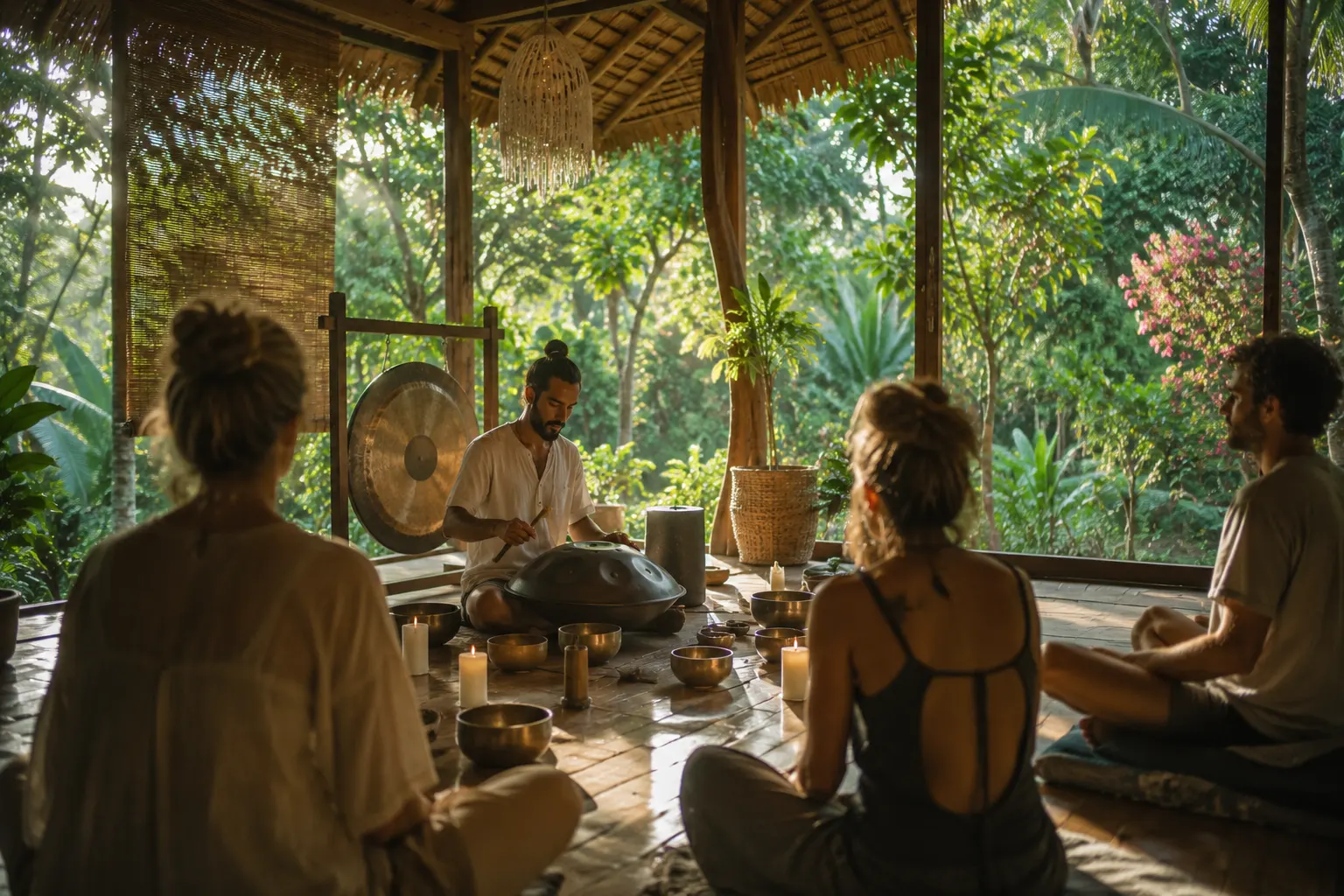
A sound healing training teaches you to lead group sound baths and one-to-one sessions with instruments such as Tibetan and crystal singing bowls, gongs, chimes, tuning forks and the voice. It is also sold as sound healing facilitator, practitioner or teacher training, and as sound healing certification. None of these labels is regulated, so compare the levels, the hours, the approach and the instruments instead of the title.
Most programs in Sri Lanka are four-day foundations courses of about 30 hours, followed by a deeper second level, or a residential Level 1 to 4 program of around eight days that is built on a traditional Tibetan lineage. They need no musical training. Sound healing is a wellness practice, not a medical treatment, and research on its effects is still early. A good training says so and teaches you to describe your work accurately. This page lists every program open on lankaspirit, then compares formats, approaches and total costs.
| Format | Duration | Hours | Price | Includes | Best for |
|---|---|---|---|---|---|
| Level 1 foundations | 4 days | About 30 hours | Around €650 | All instruments, manual and tuition. Accommodation and meals are extra. | A first certificate, or adding sound to yoga, breathwork or bodywork |
| Level 1 + Level 2 | 7 days | Level 1 plus a deeper level of up to 50 hours | €895 – €1,040 | Both levels back to back, instruments provided. Often cheaper than booking each separately. | People who already know they want to teach |
| Residential Level 1 – 4 | 8 – 9 days | About 80 hours | Roughly €2,600 – €3,600 (US$3,000 – $4,200 by room type) | Accommodation, organic breakfast and lunch, manual and certificate. Built on a traditional Tibetan approach. | A single immersive trip covering every level |
| Online modules | Weekends or self-paced | Varies | Varies | Theory and technique without the hands-on instrument time of an in-person level. | Adding one skill, or preparing before you travel |
Sound is the most natural addition to a yoga class or a closing savasana. Many schools are Yoga Alliance continuing-education providers, so the hours can count toward renewal. Check before you book if this matters to you.
Sound pairs well with other hands-on or somatic work. A training lets you offer a group sound bath alongside the one-to-one sessions you already run.
Musical skill helps with listening and timing, and some programs include applied music theory. Sound healing still relies on intention, pacing and safety more than technique.
No musical background is required. If you are drawn to sound and willing to practise, a Level 1 course is a reasonable place to start before deciding how far to take it.
The physics of sound and vibration, Tibetan and crystal bowls, an introduction to the gong, safety and contraindications, and building your first complete sound journey. Most people can book this level on its own.
Advanced gong technique, voice, overtone and mantra, applied music theory, layering longer ceremonies, reading a group as you play and the professional side of a practice. It usually requires Level 1 or equivalent prior training.
Residential programs built on a traditional lineage add tuning forks, one-to-one therapies, voice work and a teacher-level certificate, with around 80 hours in total.
Shorter courses focused on one instrument, such as the gong, or online theory courses. Useful for adding one skill, though they offer less supervised practice than an in-person level.
Layering many instruments into an intentional journey, with applied music theory, a nervous-system framing and trauma-informed facilitation. The emphasis is on holding a safe space and sequencing a session.
Handmade Tibetan singing bowls, chakra and energy-centre frameworks, tuning forks and one-to-one therapies. Some programs go on to tailor sessions for stress, anxiety or pain. Be cautious of any claim that sound treats a medical condition.
Gong baths and wave-building techniques that create immersive soundscapes. Gongs are loud, so these sessions need careful volume control and screening for sound sensitivity.
Using your own voice for toning, chanting and overtone work, with no singing ability needed. Often taught as a Level 2 component.
Programs that combine sound with bhakti, movement or somatic practices. A good fit if you already teach yoga and want sound to sit inside a broader offering.
| Item | Range | Note |
|---|---|---|
| Level 1 foundations (tuition) | Around €650 | Four days and about 30 hours. Instruments are provided. Accommodation and meals are extra. |
| Level 2 only (tuition) | Around €500 | Usually open to Level 1 graduates or people with earlier sound healing training. |
| Level 1 + Level 2 (tuition) | €895 – €1,040 | Seven days or so. Early-bird pricing of roughly €100 off is common on the first few places. |
| Residential Level 1 – 4 | Roughly €2,600 – €3,600 | Listed as US$3,000 to $4,200 depending on the room, with accommodation and some meals included. Aggregator sites sometimes show different prices from the school's own page, so confirm the total. |
| Accommodation and meals, if not included | €15 – €60 per night, €10 – €25 per day | Roughly a dorm bed to a private room, and café meals on the south coast. Prices rise from December to March. |
| Your own instruments afterwards | From about €150 | A starter set of Tibetan bowls can be modest, but crystal bowls and gongs cost considerably more. Some schools give students a discount on their sets. Most suggest buying after the training. |
| Deposit | About 25% | Often non-refundable, with the balance due a few weeks before the start. Check whether you can move to a later cohort. |
| Flights, visa and insurance | Varies | Budget for flights, the Sri Lanka ETA and travel insurance. Professional liability cover is a separate cost once you start offering sessions. |
Contemporary sound-journey facilitation and a traditional Tibetan lineage use different language and techniques. Decide whether you want to work with nervous-system and music concepts or with a chakra and therapy framework.
Ask how many instruments are available for the group and how much time each participant gets to play. A large group sharing one gong learns much less than a cohort of ten with a full set.
Check how long the lead facilitators have run real sessions and who trained them. Experience holding a room matters more than musical credentials.
A good school sends you the contraindications before you enrol and teaches screening. Common cautions include recent surgery, pacemakers, epilepsy, early pregnancy, severe mental health conditions and sound sensitivity such as tinnitus.
Be cautious of any program that promises to heal medical conditions. A good school teaches you to describe sound healing as a wellness practice and to stay within your scope.
Many schools issue a certificate of participation. Sound healing has no single accrediting body, and a Yoga Alliance label usually means continuing-education credit (YACEP) for yoga teachers. Yoga Alliance publishes school profiles, so you can verify the claim yourself.
Find out whether you can book Level 1 on its own, whether Level 2 accepts outside graduates, and what the combined programme saves.
Mentorship, an internship or the chance to assist public sessions helps you turn a certificate into real experience. Ask what is included and for how long.
Most new facilitators run community or donation-based sound baths first, then move to paid sessions once they feel steady.
Begin with a couple of instruments you know well. Adding a gong or crystal bowls later is easier once you have a sense of your style and your audience.
Yoga studios, retreats, hotels, corporate wellbeing events and private sessions all hire sound facilitators. Many people combine sound with yoga, breathwork or massage.
Describe sessions as relaxation and wellbeing experiences rather than treatments. This protects you and your participants.
Facilitators who teach in Sri Lanka can list experiences, retreats and trainings on lankaspirit and receive bookings directly.
The south coast is driest from roughly November to April, and most cohorts run between December and March. Dates fill ahead and accommodation costs the most then, so book both early.
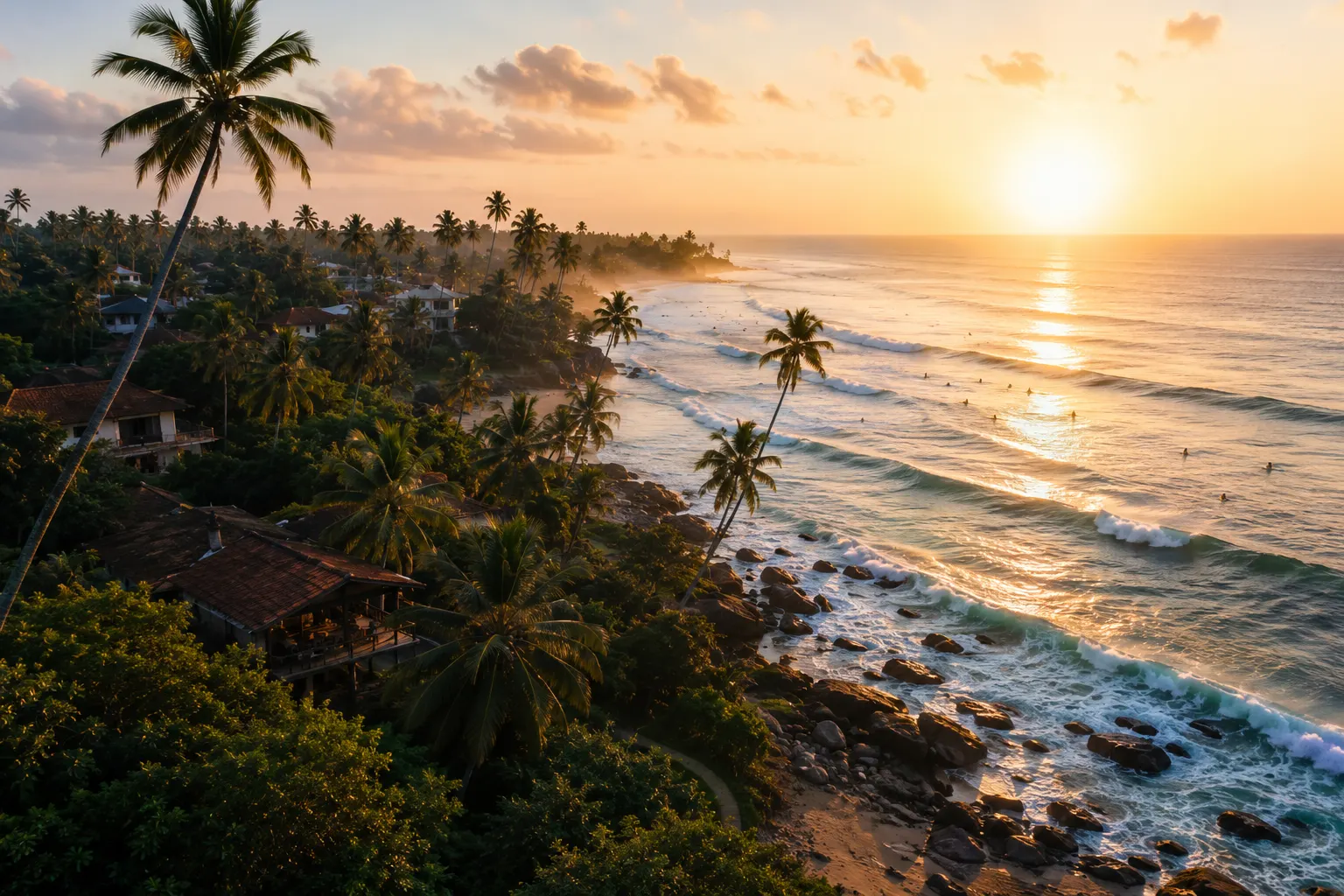
Programs run along the south and south-west coast, from Hikkaduwa through Ahangama and Mirissa. Choose accommodation within easy reach of the venue.
Colombo airport is about two to two and a half hours from Ahangama by car. The train from Colombo to the south coast is the cheaper option, but check the current timetable first.
Gongs and bowls can be loud in a small room. Bring earplugs for the first day if you are sensitive, and tell the facilitator about any hearing conditions.
Many nationalities need an ETA before travelling. Apply online before your flight and check the current rules for your passport.
Sound healing and breathwork are a popular combination. Some participants book both in one trip, with a few rest days between.
Level 1 foundations is usually four days and about 30 hours. A combined Level 1 and 2 programme runs about seven days, and residential Level 1 to 4 programs run eight or nine days for around 80 hours.
Level 1 tuition is around €650, Level 2 around €500, and the combined programme €895 to €1,040. Residential Level 1 to 4 programs with accommodation cost roughly €2,600 to €3,600. Add accommodation and meals if they're not included, plus flights, the ETA and insurance.
The terms are used interchangeably and none is regulated. Practitioner and facilitator usually refer to leading sessions, while teacher training suggests you can train others. Compare the levels, hours and what you'll be certified to do.
No. The instruments used, such as bowls, gongs and chimes, don't require conventional musical training. Courses start from fundamentals and focus on listening, intention and pacing rather than performance.
Not usually. Most schools provide every instrument for the duration of the training. They typically advise you to wait before buying your own set until you know which instruments you want to work with.
Level 1 covers foundations: the physics of sound, bowls, an introduction to the gong and your first complete sound journey. Level 2 goes deeper into gong technique, voice, music theory and layering longer ceremonies. Level 1 to 4 programs add tuning forks, one-to-one therapies and a teacher-level certificate.
Sound healing has no single global accrediting body, so most certificates are issued by the school and many are certificates of participation. Many schools are Yoga Alliance continuing-education providers, which helps yoga teachers count the hours. Ask what the certificate documents and whether your insurer will accept it.
Sound healing is offered as a wellness and relaxation practice. Research on its effects is still early and mostly small studies, so it shouldn't be presented as a treatment for medical conditions. A good training teaches you to describe it that way.
Common contraindications include recent surgery, pacemakers or serious cardiovascular conditions, epilepsy, early pregnancy, severe or unregulated mental health conditions, and sound sensitivity such as tinnitus. A good school sends this list before you enrol. If any applies, speak to a doctor and to the school first.
Yes, many graduates offer group sound baths or add sound to yoga, massage or retreat programs. Most start with community sessions and build experience before charging full rates. Check insurance and any local rules that apply where you will work.
The south coast is driest from about November to April, and most cohorts run between December and March. Colombo airport is two to two and a half hours from Ahangama by car, and the Colombo to south coast train is the cheaper option.