Every open breathwork facilitator training in Sri Lanka, with real dates, prices and what's included. Apply directly with the school.
Compare dates, prices and what's included, then apply directly with the school.
 Top
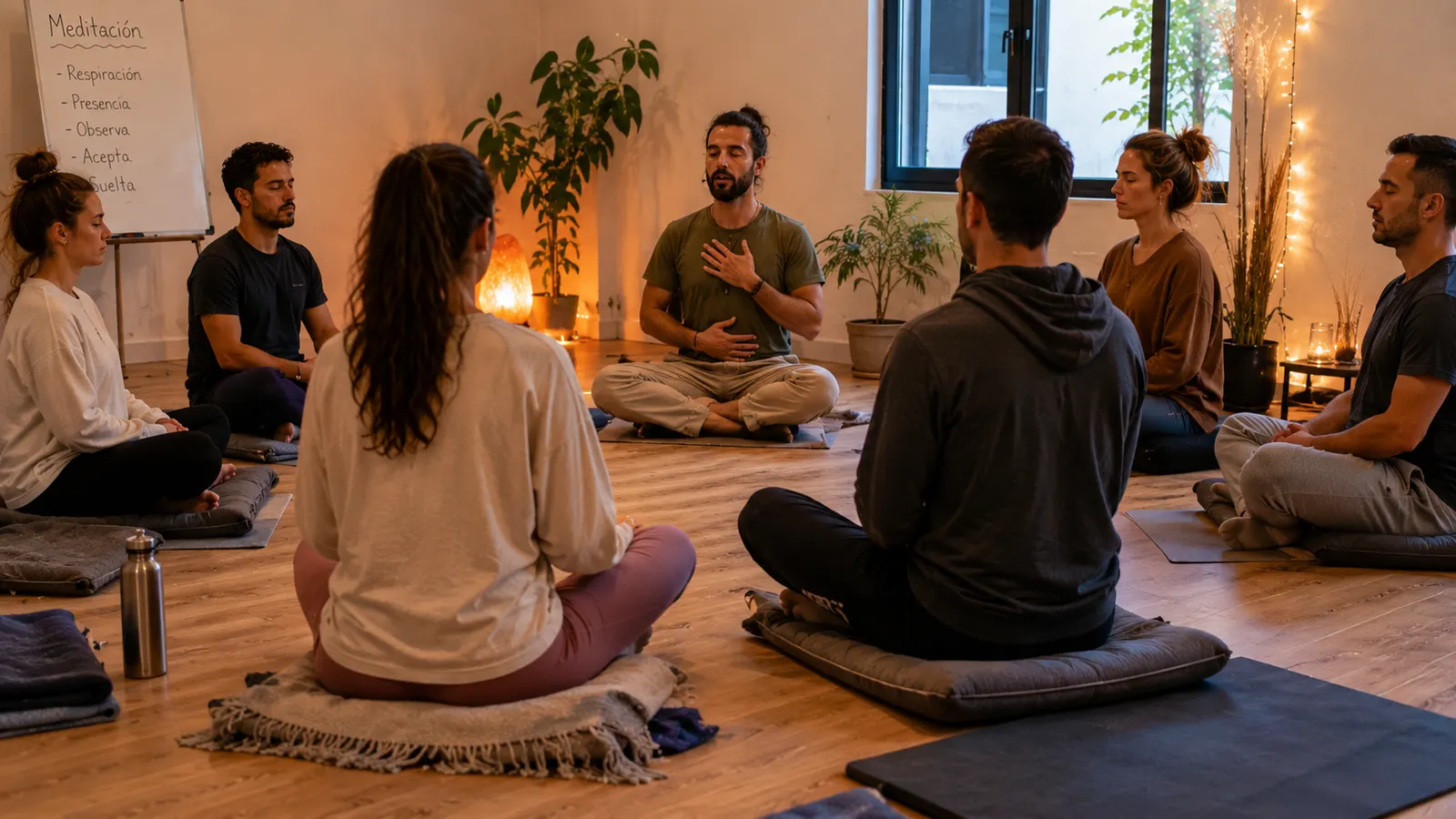
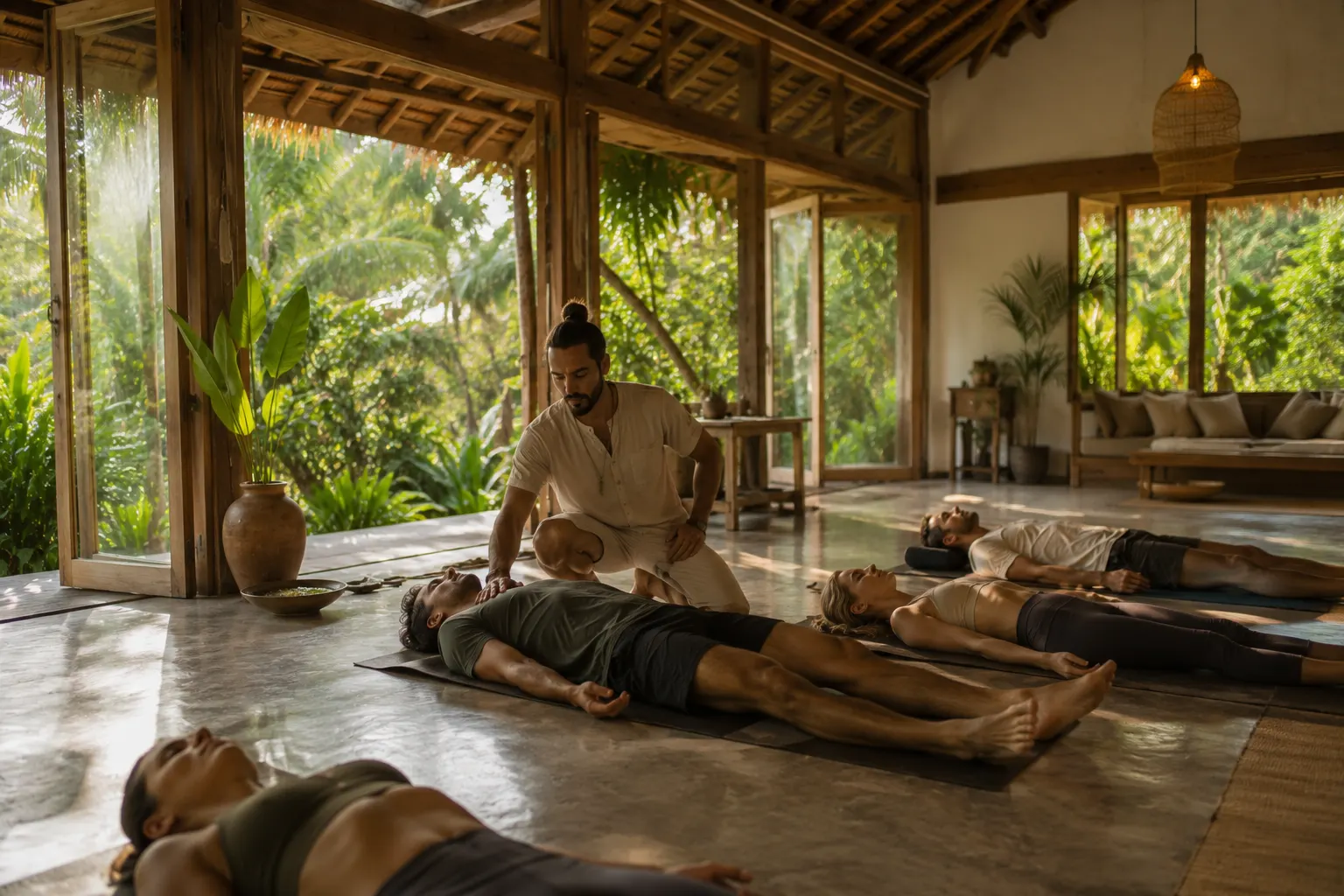
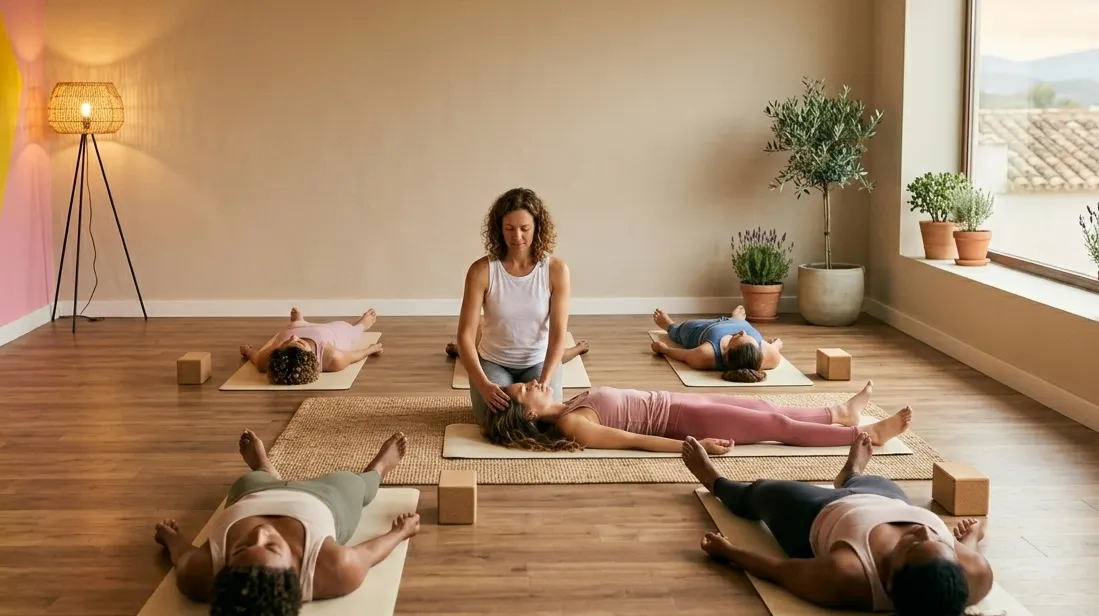
A breathwork facilitator training teaches you to guide other people through structured breathing practices safely: how to screen participants, set up the room, hold a session, support strong emotional or physical responses, and close with integration. The same training is also sold as breathwork teacher training, instructor training or breathwork certification. The labels are not regulated, so look at the hours, the supervised practice and the technique rather than the title.
In Sri Lanka there are four main kinds of program: short hybrid intensives of about three days on site plus online study, residential immersions of around six days with accommodation and meals included, live online cohorts of two months, and longer yoga-plus-breathwork teacher trainings. Most centre on conscious connected breathing, but not all of them. This page lists every program open on lankaspirit, then compares the formats, techniques, total costs and certificates so you can choose before you pay a deposit.
| Format | Duration | Hours | Price | Includes | Best for |
|---|---|---|---|---|---|
| Hybrid intensive | 3 days in person + about 20 hours online | 50 hours | €675 – €775 | Tuition, manual and lunch on training days. Accommodation and other meals are extra. | Keeping time away short and choosing where you stay |
| Residential immersion | About 6 days | 50 hours | €950 – €1,200 by room type | Accommodation, three meals a day and tuition. Some include optional ice baths. | Having everything arranged in one place |
| Live online cohort | 8 weeks | 100 hours | About €1,400 | Weekly live group calls, one-to-one mentorship slots and materials. A trip to Sri Lanka for an internship is optional. | People who can't travel, or who want a broader toolkit |
| Yoga + breathwork teacher training | 13 – 20 days | 100 – 200 hours | Roughly €1,500 – €2,400 | Accommodation, meals and a yoga teacher training with breathwork as one part. | Yoga teachers who want a recognised yoga credential |
Breathwork is the most common add-on for teachers who already hold a class. Many schools are Yoga Alliance continuing-education providers, so the hours can count toward renewal. Check this before you book if it matters to you.
A facilitator training gives you a structured somatic tool for existing one-to-one work. Scope-of-practice rules differ by country and profession, so confirm what you're allowed to offer clients before you build breathwork into a clinical setting.
If you've joined many sessions and feel ready to hold the room yourself, a facilitator training is the step from participant to guide. Several schools ask for prior breathwork experience and say so in the prerequisites.
Possible, but plan for a longer road. One short intensive rarely replaces a salary. Most new facilitators build their hours through community sessions and mentorship before charging full rates.
The standard first certificate in Sri Lanka: a core technique, safety and screening, session design and a supervised practicum. Usually a mix of in-person days and online study.
A broader toolkit over two months, often online, covering several techniques, the nervous system, trauma-informed facilitation and how to run a practice. Check that live practicum sessions are included.
Later levels cover larger groups, more complex responses, leading retreats and teaching other facilitators. They usually expect the first level or equivalent experience.
A yoga teacher training with breathwork as one component. The Yoga Alliance registration applies to the yoga teaching credential, not to breathwork as a separate profession.
A continuous, circular breath without pauses, usually led as a session of 30 to 90 minutes with music. It is the most widely taught technique here and the foundation of most facilitator trainings.
Cyclical breathing rounds separated by breath holds, drawn from Tibetan Tummo-style practice. Some schools teach it as their main method because the effect comes quickly and sessions can be shorter and gentler.
Longer sessions of two to three hours with evocative music, aimed at expanded states. They need stricter screening, and some schools exclude people with certain mental health conditions or medication.
The classical yogic breath practices, from calming to energising patterns. Many facilitator trainings include it as a complement to journey-style work.
Breath used for body-based release, inner-child and emotional work. Look for input from a licensed psychologist or therapist and clear guidance on what is outside a facilitator's scope.
Breathing methods used before and during ice baths, with protocols for recognising stress and early hypothermia. Usually an optional add-on of a day or less. See the ice bath guide for the practice itself.
| Item | Range | Note |
|---|---|---|
| Hybrid intensive (3 days on site + online hours) | €675 – €775 | Tuition only. Lunch on training days is usually included; accommodation and other meals are not. First sign-ups on each cohort often get about €100 off. |
| Residential immersion (about 6 days) | €950 – €1,200 | All-inclusive. The price depends on the room: a shared triple room sits at the bottom, a private room at the top. |
| Live online cohort (8 weeks, 100 hours) | About €1,400 | No travel needed. Travelling to Sri Lanka for an optional internship is a separate cost. |
| Yoga + breathwork teacher training | About €1,500 – €2,400 | 100 to 200 hours with accommodation and meals. Prices are often listed in US dollars on aggregator sites. |
| Accommodation, if not included | €15 – €60 per night | Roughly a dorm bed to a private room on the south coast. Prices rise from December to March, so book early. |
| Meals, if not included | €10 – €25 per day | Café and restaurant meals on the south coast. |
| Deposit | About 25%, or around €500 | Often non-refundable, with the balance due about 30 days before the start. Some schools offer credit towards a later cohort instead of a refund. |
| Flights, visa and insurance | Varies | Budget for flights, the Sri Lanka ETA and travel insurance. Professional liability cover is a separate cost once you start facilitating. |
Ask how many hours you will spend facilitating real people while an experienced teacher observes and gives feedback. If a program can't give you a number, treat that as an answer.
Conscious connected breathing, transformational breathing with holds and holotropic-style work are different practices with different screening rules. Choose the one you want to facilitate, then pick the school.
Look at where the lead facilitators trained, how long they have run sessions, and whether a licensed psychologist, therapist or medical professional contributes to the curriculum.
Breathwork has no single accrediting body. A Yoga Alliance label on a breathwork course usually means continuing-education credit (YACEP) for yoga teachers, not a regulated breathwork credential. Yoga Alliance publishes school profiles, so you can verify the claim yourself.
Rules vary. Some schools only ask you to seek medical advice for heart conditions, anxiety, epilepsy or pregnancy. Others exclude anyone with a diagnosed mental health condition or on related medication. Read them before you pay.
Cohorts of 12 to 14 leave room for individual feedback, and at least two facilitators in the room during group practice is a good sign for safety.
Mentorship calls, an internship or the chance to assist public sessions turn a certificate into real hours. Ask what is included and for how long.
Check the deposit, the refund window and whether you can move to a later cohort. Small cohorts are hard to refill, so late cancellations are usually costly.
Join a session with the lead facilitator or book an introductory call before you commit. How someone holds a room tells you more than any brochure.
Most new facilitators run community or donation-based sessions first, ideally with a mentor available, then raise their rates as their confidence grows.
One school's own figures put group sessions at around €15 per participant in Sri Lanka and €30 to €50 in Europe, with private sessions from about €150. At 15 participants that is roughly €225 per session in Sri Lanka. Treat these as marketing estimates and subtract venue hire, insurance and promotion.
Use a health screening and waiver for every participant, and ask an insurer about professional liability cover in the country where you will work.
Studios, retreats, corporate wellbeing programs, private clients and online sessions all work. Many facilitators combine breathwork with yoga, bodywork or sound.
Because there is no single credential, your hours and lineage matter. Advanced levels and supervision with an experienced facilitator are the usual next steps.
Facilitators who teach in Sri Lanka can list experiences, retreats and trainings on lankaspirit and receive bookings directly.
The south coast is driest from roughly November to April, and most cohorts run between November and March. Popular dates fill weeks ahead and accommodation costs the most then, so book both early.
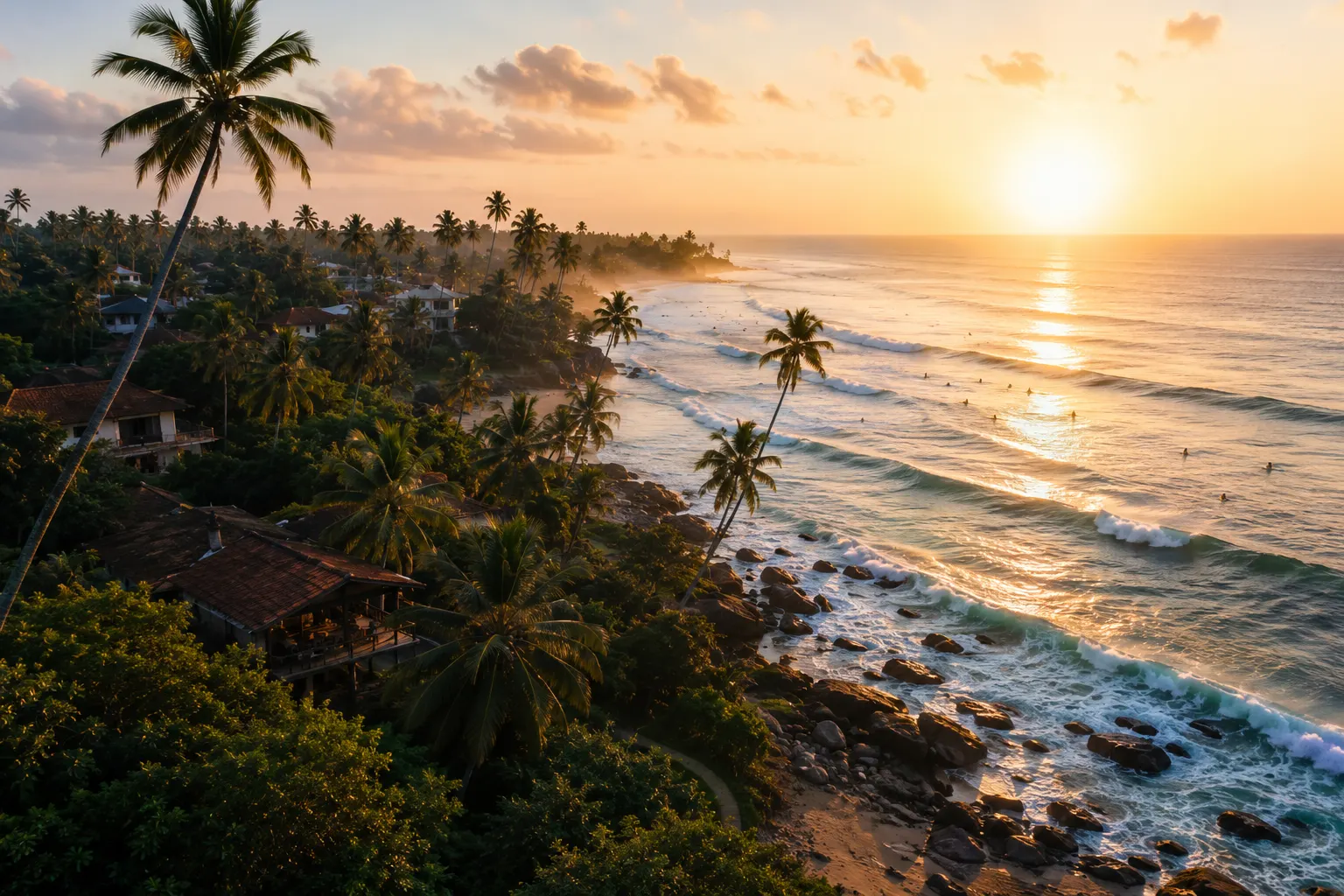
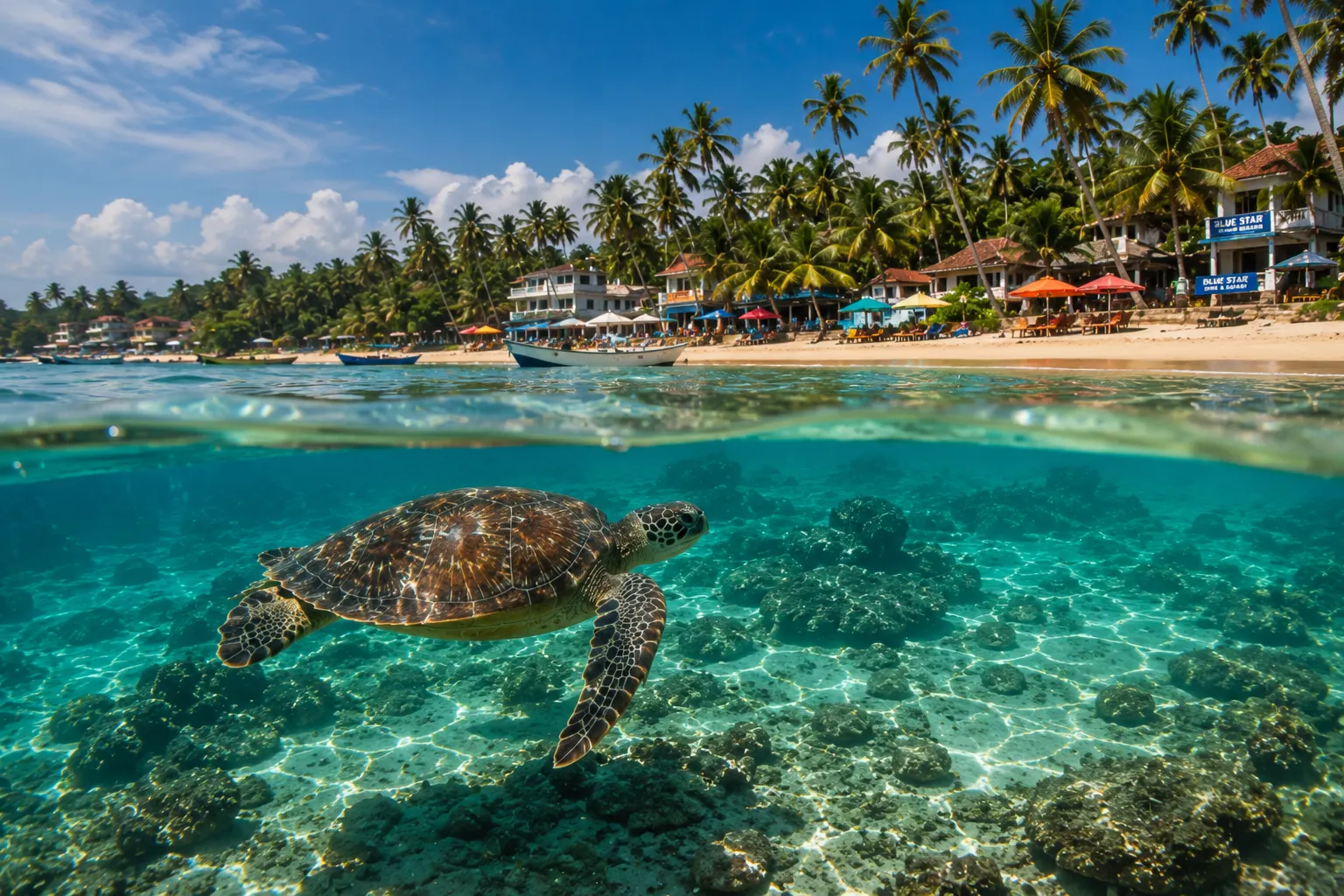
Most programs run in the Ahangama–Midigama–Weligama–Mirissa area or around Hikkaduwa. Pick accommodation within walking or scooter distance of the venue, since training days start early.
Colombo airport is about two to two and a half hours from Ahangama by car. The train from Colombo to the south coast is the cheaper option, but check the current timetable first.
Plan to land one or two days early. Intensive schedules are dense and jet lag makes breathwork feel stronger than it otherwise would.
Many nationalities need an ETA before travelling. Apply online before your flight and check the current rules for your passport.
Many participants pair a training with a retreat week before or after, so the intensity of the course is balanced by a slower stretch.
In-person programs run three to six days, usually with around 20 hours of online study so the total comes to about 50 hours. Live online cohorts run about eight weeks for 100 hours, and yoga-plus-breathwork teacher trainings run 13 to 20 days.
Hybrid intensives with tuition only cost about €675 to €775, residential six-day immersions with accommodation and meals €950 to €1,200, and live online cohorts around €1,400. Yoga-plus-breathwork teacher trainings cost roughly €1,500 to €2,400. Add accommodation and meals if they're not included, plus flights, the ETA and insurance.
The terms are used interchangeably and none is regulated. Facilitator usually emphasises holding space for someone's experience, while teacher or instructor can emphasise teaching technique. Compare the hours, supervised practice and curriculum rather than the title.
It depends on the school. Some ask for a foundation in breathwork, meditation or somatic practice and encourage an intro call first. Others accept beginners and expect you to have teaching or practice experience. Prerequisites and health exclusions vary, so read them on each listing.
Most Sri Lanka programs centre on conscious connected breathing. Some teach a transformational method with breath holds, and others add holotropic-style work, pranayama or cold-exposure breathing. Ask which technique you will be certified to lead.
Breathwork has no single global accrediting body, so most certificates are issued by the school. Many schools are Yoga Alliance continuing-education providers (YACEP), which gives yoga teachers continuing-education hours. Some are members of professional networks. Ask what the certificate documents and whether your insurer will accept it.
A 50-hour training gives you a safety and technique foundation for one-to-one and small-group work. Whether you need more hours before charging depends on your country and profession. One school's figures suggest around €15 per participant for group sessions in Sri Lanka and €30 to €50 in Europe, but real income depends on your audience and costs.
Intense breathing practices are generally not recommended for people who are pregnant or have epilepsy, cardiovascular conditions, glaucoma, a recent surgery or injury, or certain mental health conditions, and some schools set stricter limits. A good training teaches screening and contraindications. If any of these apply to you, speak to a doctor and to the school before enrolling.
In-person training gives you supervised practice with real people and live feedback, which is the most important part of learning to facilitate. Online programs work well for theory, breadth and flexibility, especially with weekly live calls and one-to-one mentoring. Some schools offer a free internship in Sri Lanka to add practice after an online course.
Some do, usually as an optional day or morning practice. A cold-exposure module should cover protocols, early signs of hypothermia and contraindications. If you don't want to take part, most schools let you skip it.
A deposit of about 25%, or around €500, is common and is often non-refundable, with the balance due around 30 days before the start. Some schools refund part of the fee if you cancel early and others offer credit towards a later cohort. Check the terms before paying.
The south coast is driest from about November to April, and most cohorts run between November and March. Colombo airport is two to two and a half hours from Ahangama by car, and the Colombo to south coast train is the cheaper option.