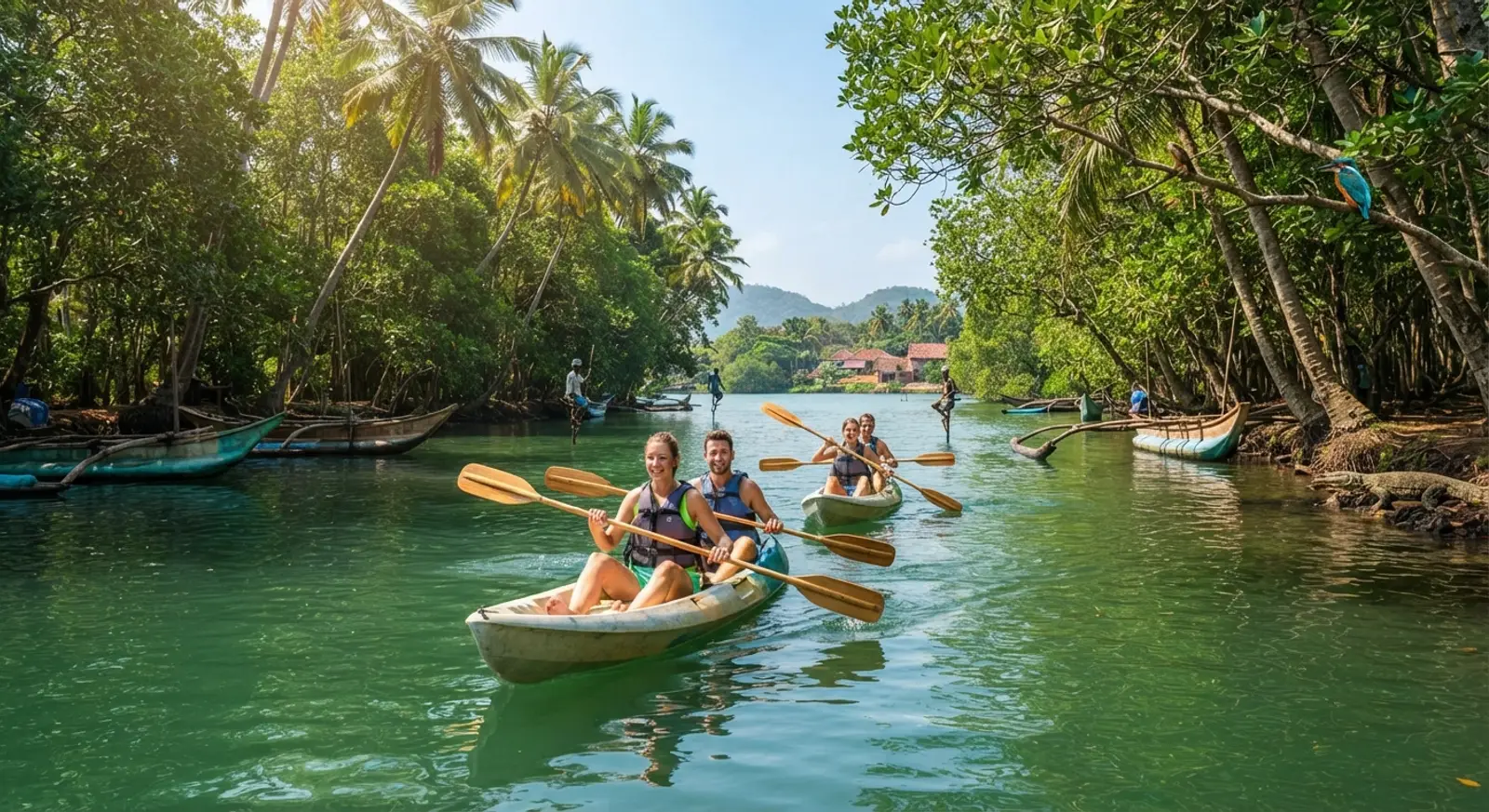
Thailand has more beaches and cheaper backpacking. Sri Lanka has more wildlife and fewer crowds on a smaller island. A breakdown to help you decide.
Sri Lanka and Thailand both offer beaches, temples and tropical weather, but they're built for different trips. Thailand has far more beach destinations, cheaper backpacker infrastructure, and easier point-to-point transport (domestic flights, trains, ride-shares). Sri Lanka is smaller and more compact, with significantly less crowding at its main sites, a wildlife offering (wild leopards, elephant herds, blue whales) Thailand doesn't match, and a country small enough to combine jungle, mountains, ancient cities and coast in under two weeks. Neither is objectively better — the choice depends on whether you want a developed beach holiday or a compact, wildlife-heavy circuit.
Sri Lanka and Thailand show up in the same “best of Asia” lists constantly, and travelers weighing one against the other usually land on a flat, unhelpful answer: “Thailand is more developed” or “Sri Lanka is less crowded.” Both are true and neither settles anything on their own. The two islands — well, island and peninsula — are built for genuinely different trips, and the useful comparison runs category by category, not toward a single verdict.
| Sri Lanka | Thailand | |
|---|---|---|
| Size | 65,610 km² | 513,120 km² (about 8x larger) |
| Annual visitors | 1.5-2 million | 28-35 million |
| UNESCO World Heritage Sites | 8 | 6 |
| Domestic transport | No domestic flights; private driver or slow scenic train | Domestic flights, trains, buses, ride-shares |
| Best land wildlife | Wild leopards, elephant herds | Sanctuary elephants, primates |
| Visa (most Western nationalities) | ETA required, applied online before arrival | Visa-free for most short stays |
At the budget end, Thailand still runs cheaper — its backpacker infrastructure has had decades longer to mature, with hostel dorms and street food available at a density Sri Lanka hasn’t built up. Sri Lanka’s costs rose noticeably after its 2022 economic crisis and haven’t fully reverted, narrowing what used to be a wider gap. At the mid-range and boutique/luxury tiers, the two countries land close together, and Sri Lanka’s independent design-led properties — jungle villas, restored colonial estates, south-coast boutique stays — are genuinely competitive with anything Thailand offers at the same price. See our travel budget guide for real Sri Lanka day-rate numbers by tier.
This is Thailand’s clearest category win. With over 3,000 km of coastline and dozens of islands — Koh Samui, Koh Tao, Krabi, Phuket, Koh Lanta, Koh Chang among them — Thailand offers a scale and variety of beach destinations Sri Lanka’s more modest coastline can’t match, backed by world-class snorkelling and diving infrastructure in the Gulf of Thailand and the Andaman Sea.
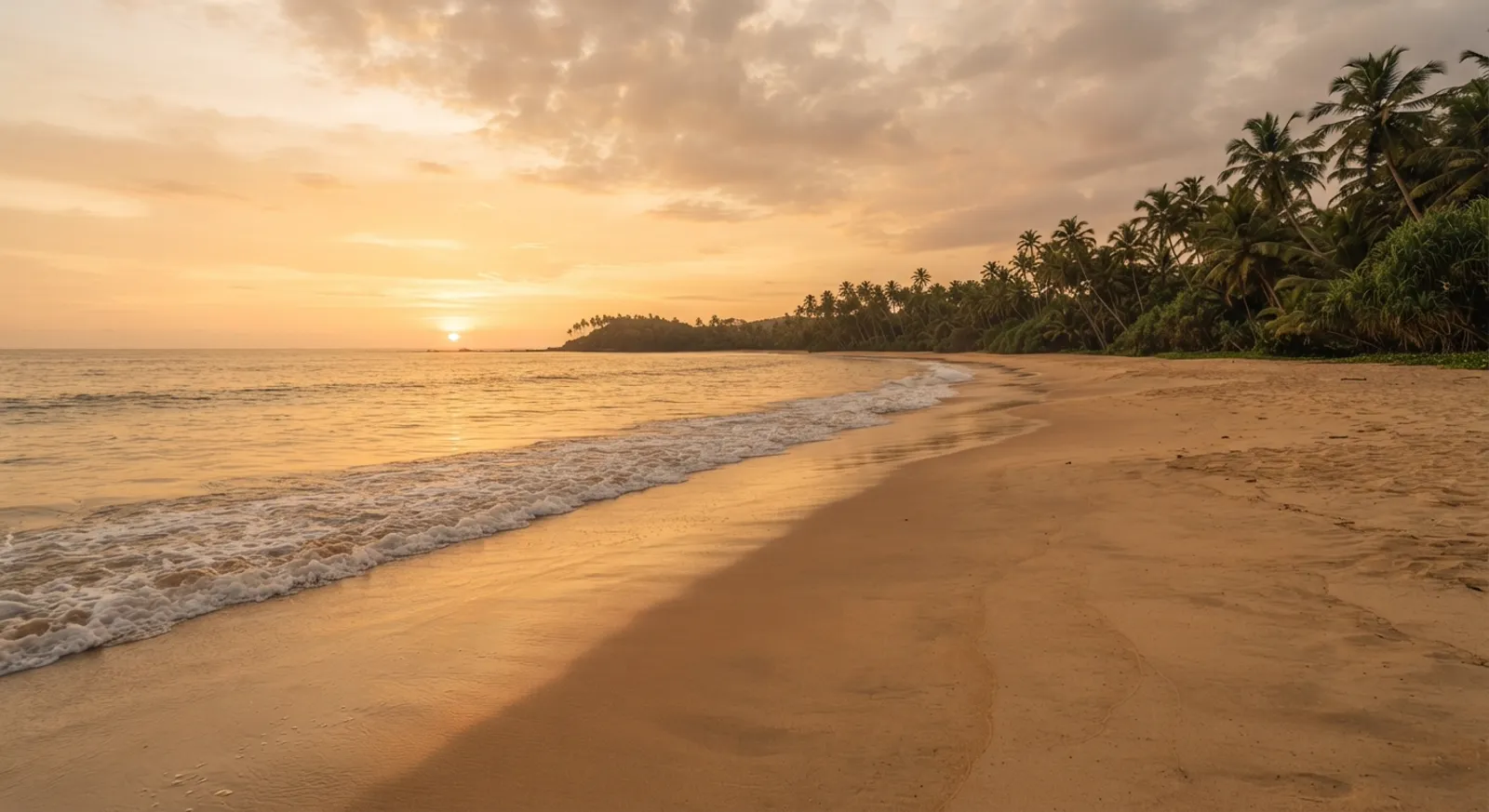
Sri Lanka’s south coast (Mirissa, Weligama, Ahangama, Tangalle) and east coast (Arugam Bay, Trincomalee, Pasikudah) are genuinely beautiful and swap which side is calm depending on the monsoon, but the country simply has fewer of them. What Sri Lanka offers instead is space: its most popular beaches draw tens of thousands of visitors a year against Thailand’s millions at Phuket or the Phi Phi Islands, so a quiet stretch of sand is easier to find without hunting for it.
Both cuisines are excellent and genuinely different, and this category is closer to a draw than most comparisons suggest. Thai food — pad thai, green curry, tom kha, som tam — is globally familiar, available at every price point, and arguably the easier entry point into Asian cuisine for a first-time visitor. Sri Lankan food is rice-and-curry built on coconut and chili, less internationally known, and rewards curiosity: a proper rice and curry plate with five or six rotating curries costs almost nothing at a local wayside restaurant, and hoppers, kottu roti and string hoppers are dishes most first-time visitors haven’t encountered before landing. Thailand edges ahead on street food density and accessibility; Sri Lanka’s food culture is smaller but no less distinct. See our Sri Lanka food guide for what to eat and where.
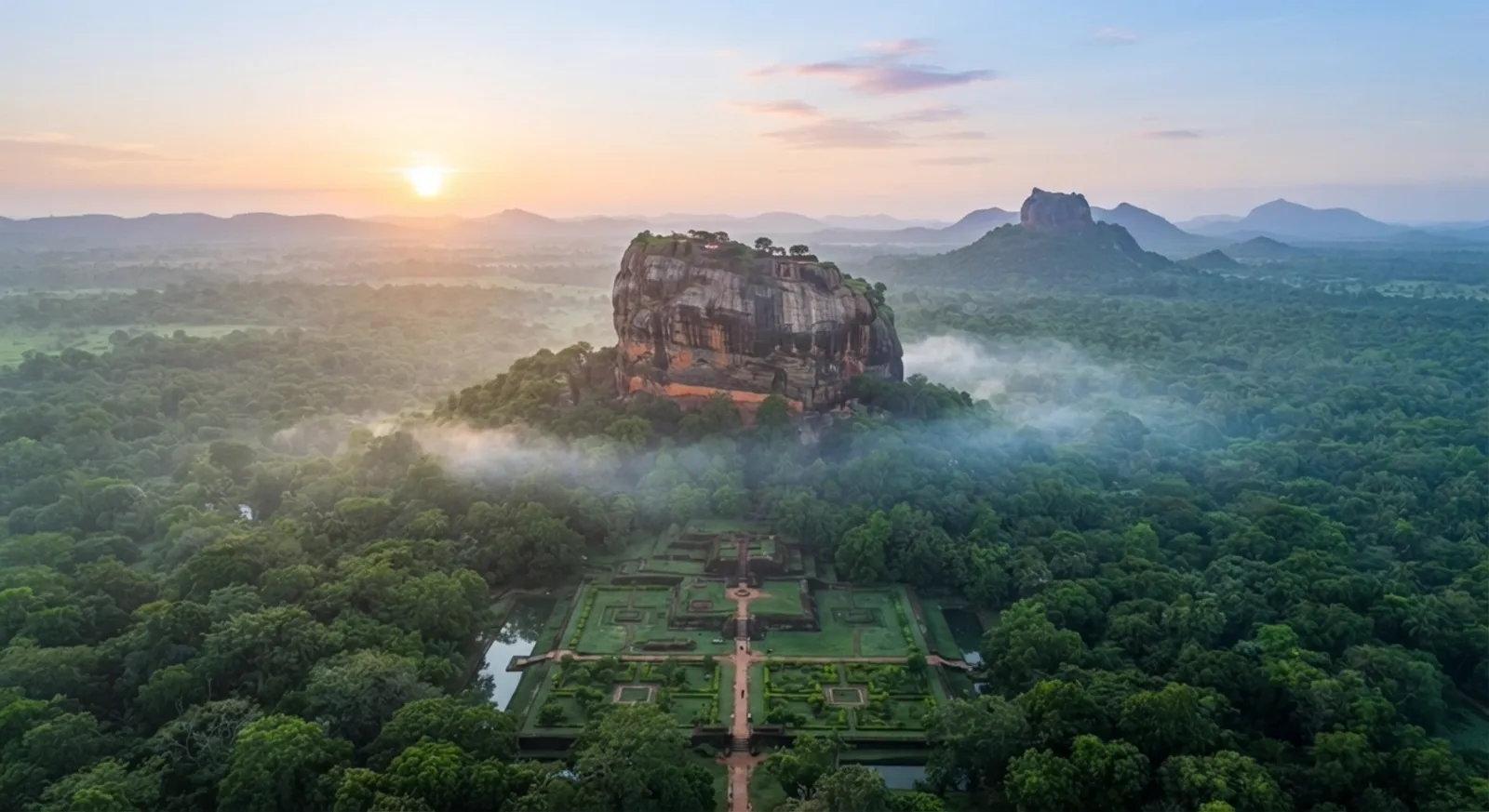
Sri Lanka packs an unusual amount of ancient history into a small footprint: eight UNESCO World Heritage Sites on an island roughly the size of Ireland, including three ancient capitals — Anuradhapura, Polonnaruwa, and the rock fortress of Sigiriya — reachable within a 90-minute drive of each other. The country has been continuously inhabited for over 100,000 years and holds one of South Asia’s oldest written chronicles.
Thailand’s cultural highlights — the Grand Palace and old city in Bangkok, Chiang Mai’s temple circuit, the ruins of Ayutthaya and Sukhothai — are outstanding in their own right, particularly across the north, but spread across a country eight times Sri Lanka’s size, so reaching them typically costs more travel time. The trade-off is straightforward: Sri Lanka for concentrated, easy-to-string-together cultural depth; Thailand for a wider spread of major sites paired with a more developed beach south.
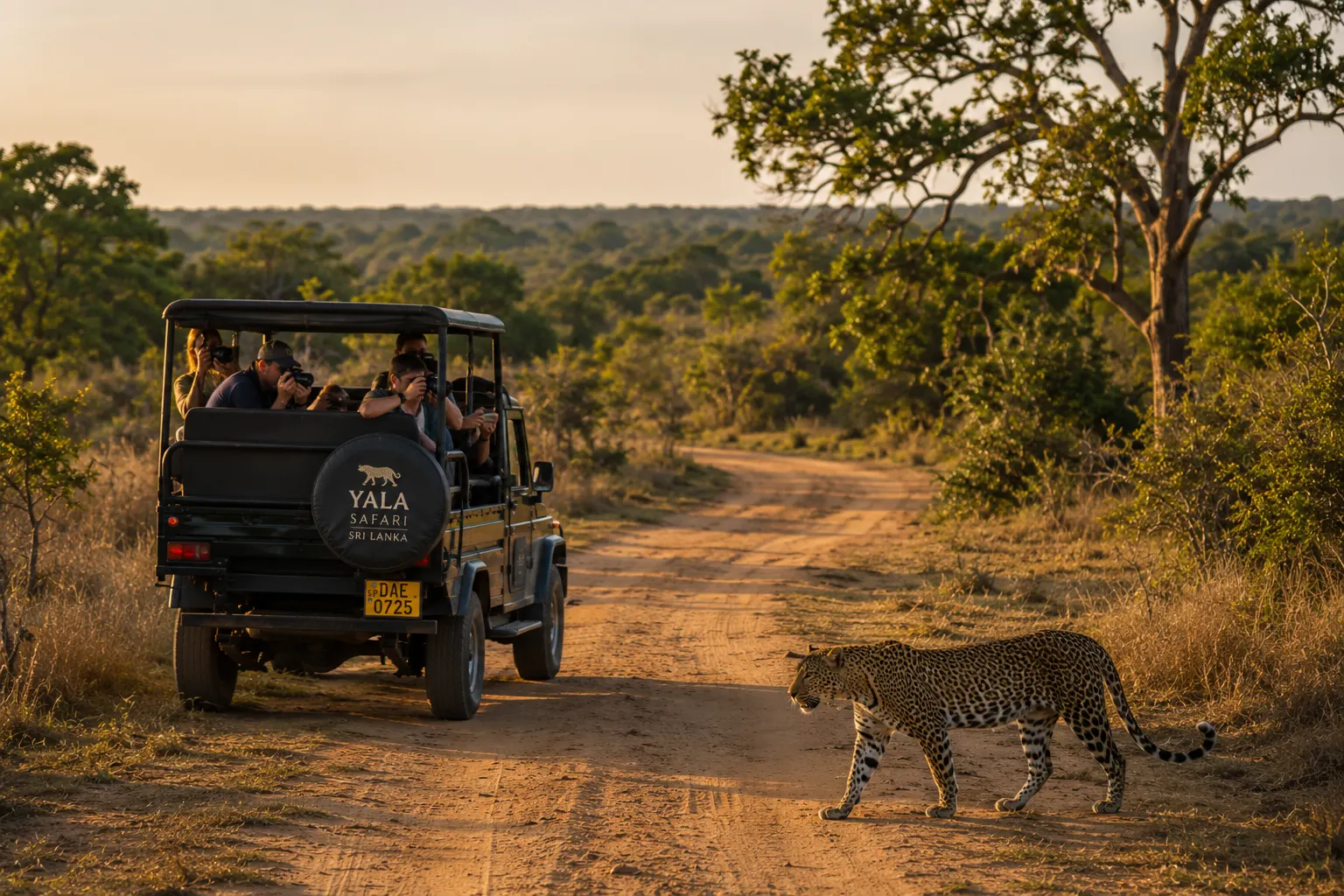
This is where the two destinations diverge most sharply, and it’s the strongest argument for choosing Sri Lanka specifically. Yala National Park holds one of the highest wild leopard densities of any protected area on earth, with sighting rates on a good game drive running 65-75% — see our Yala vs Wilpattu comparison for the details. Udawalawe and Minneriya produce near-guaranteed wild elephant sightings, including Minneriya’s “Gathering,” when several hundred elephants converge on a single lake in August and September. Off the south coast, blue whale sightings within a few kilometres of shore are routine from November to April.
Thailand’s wildlife tourism runs differently: strong marine life (whale sharks, manta rays, extensive reef diving) and elephant encounters that are almost entirely sanctuary-based rather than wild safari sightings. For land-based megafauna specifically, Sri Lanka isn’t a close comparison — it’s simply in a different category.
Thailand’s roughly 28-35 million annual visitors concentrate heavily around Bangkok, Phuket, Chiang Mai and Koh Samui, giving those destinations a level of tourism infrastructure — and tourism density — that took decades to build. It’s a real strength: seamless transport, huge accommodation choice, well-worn travel routes. It’s also a real cost: crowding, commercialization, and long-time visitors’ common complaint that popular areas have changed unrecognizably over the past decade.
Sri Lanka’s 1.5-2 million annual visitors are a fraction of that. Sigiriya, Galle Fort and Yala all see real crowds at peak times, but nothing approaching Phuket’s beaches or the Grand Palace on a busy day. For travelers who specifically value an uncrowded experience over maximum choice, Sri Lanka is the clearer pick.
Both destinations are broadly safe for tourists. See our Sri Lanka safety guide and your government’s Thailand travel advisory for specifics. Sri Lanka’s main practical risks are road safety on shared mountain roads, ocean rip currents during monsoon season, and low-grade tourist-area scams (gem-shop redirects, inflated tuk-tuk fares). Thailand’s tourist-area scam culture is somewhat more developed (gem scams, tailor-shop redirects), and its drug laws are strict enough that penalties for offences are severe — worth knowing regardless of your own habits, given how casually it sometimes comes up in traveler conversation. Both countries are considered safe for solo travelers, including solo women.
Thailand wins this category clearly. Domestic flights connect its major regions in under two hours, its long-distance train and bus network is extensive and reliable, and ride-shares operate in every major city — getting around rarely requires much planning. Sri Lanka has no domestic flight network; its rail line is scenic but slow, and most multi-region trips run on a private driver rather than public transport. The compact size partly compensates — nothing in Sri Lanka is genuinely far from anything else — but the day-to-day experience of moving around favors Thailand’s more developed infrastructure.
Most Western nationalities need an Electronic Travel Authorization for Sri Lanka, applied online before departure — see our visa and ETA guide for the current process and fees. Thailand offers visa-free entry for many nationalities on short stays, generally the simpler of the two on paper. Flight connectivity slightly favors Thailand for travelers connecting through Southeast Asian hubs; both require a layover for most European and North American departures.
Choose Sri Lanka if wildlife is a real priority, you want a compact circuit that fits jungle, mountains, ancient cities and coast into 9-14 days, you’re a repeat Asia visitor looking for something different from the standard beach-and-temple route, or uncrowded sites matter more to you than maximum choice. Choose Thailand if you’re a first-time Asia traveller who wants an easy, well-developed destination to navigate, a pure beach-and-island holiday is the point, budget backpacking infrastructure matters, or nightlife and diving are part of the plan. Plenty of travelers do both — Colombo and Bangkok sit close enough (roughly a 3-4 hour flight) that pairing a Sri Lanka circuit with a Thailand stretch is a genuinely practical way to build a longer trip. See our Sri Lanka vs Maldives comparison if a pure-relaxation add-on is more what you’re weighing instead. If yoga or wellness is part of the decision, our yoga in Sri Lanka guide shows what the scene looks like.
Most 'Sri Lanka vs Thailand' content we've read leans on whichever destination the site sells, then backfills the comparison to fit. We think the more useful lens is trip shape, not island quality: Thailand rewards picking one or two resort bases and settling in, while Sri Lanka rewards a circuit — the country is compact enough that moving through it, rather than staying put, is where its advantage actually shows up.